

Coffee or Cacao?
A conversation about energy, the nervous system, and how we choose to show up
One of the questions that comes up again and again, usually in quiet moments after a session, or while someone is holding a warm cup in both hands, is this:
“What’s the real difference between coffee and ceremonial cacao?”
It’s such a simple question, and yet the answer isn’t really about drinks at all. It’s about how we live, how we regulate ourselves, and how we meet the world when no one is asking us to perform.
Most of us know what coffee feels like. It’s woven into the fabric of modern life. Morning routines, work culture, social catch-ups, the unspoken agreement that productivity starts with caffeine. Coffee wakes us up, sharpens us, gets us moving.
Cacao does something else entirely. And once you’ve felt that difference in your body, it’s hard to un-feel it.
Two plants, one family, very different conversations with the body
On a chemical level, coffee and cacao are related. They both contain compounds from the same family; methylxanthines. That shared lineage is why they’re often compared.
But family resemblance doesn’t mean identical behaviour as we know!
Coffee’s primary active compound is caffeine. Cacao’s is theobromine. And while they sound similar, they speak very differently to the nervous system.
Caffeine is fast. It moves quickly into the bloodstream, crosses into the brain, and blocks adenosine which the neurotransmitter that tells us we’re tired. When adenosine is blocked, we feel alert, even if the body is exhausted. That’s part of why caffeine can feel so effective, especially in the short term.
But there’s an important nuance here. Caffeine doesn’t create energy. It temporarily silences the signals asking us to slow down. Depending where you are in this dialogue of mine here, that can be a good or a bad thing right? Practically that is, anyway.
For many people, that’s fine occasionally. For others, especially those already living under pressure, it becomes a pattern of overriding the body rather than listening to it.
Theobromine works differently. It doesn’t rush the brain. It gently widens blood vessels, supports circulation, and creates a more even, grounded sense of energy throughout the body. Instead of pulling us upward into the head, it spreads energy outward and downward, into the chest, the limbs, the breath.
This is why people often describe cacao as heart-opening rather than head-stimulating. The experience is less about focus and more about connection.
What actually happens when you drink coffee
When you drink coffee, caffeine is metabolised by the liver, primarily through an enzyme called CYP1A2. During this process, caffeine breaks down into a few different compounds. One of them is theobromine, but only in a very small amount.
This is often misunderstood, so it’s worth being clear.
Caffeine does not meaningfully “turn into” theobromine in a way that replicates the experience of cacao. The quantity is small, the effect is brief, and it’s overshadowed by the dominant stimulant effects of caffeine itself.
If you’ve ever wondered why coffee doesn’t suddenly feel like cacao halfway through the morning, this is why.
The experience of ceremonial cacao comes from consuming theobromine directly, alongside a rich matrix of other supportive compounds including magnesium, antioxidants, and molecules that support mood and emotional openness.
Why the timing feels so different in the body
Another subtle but powerful difference between coffee and cacao is how long they stay active in the system.
Caffeine has a relatively short half-life. It rises quickly, peaks, and then drops off. For some people, that drop feels like a crash. For others, it shows up later as restlessness, anxiety, or disrupted sleep. Let’s say around 2-3 hours.
Theobromine moves more slowly. Its effects build gently and last longer, often creating a steady sense of openness and vitality without the sharp edges. This slower rhythm is one of the reasons cacao feels more compatible with nervous system regulation, especially for people who are sensitive, burnt out, or already running on empty. I’d say around 6-8 hours Cacao stays with you (chemically that it – mumma Cacao is always with you of course!)
It doesn’t demand anything from you. It offers support and waits to see how you want to meet it.
A nervous system conversation, not a moral one
It’s important to say this clearly: this isn’t about coffee being bad and cacao being good.
It’s about context.
Coffee tends to activate the sympathetic nervous system which is the part of us designed for action, problem-solving and response. In a world that constantly asks us to do more, think faster and react quicker, that activation often becomes chronic.
Cacao, on the other hand, tends to support a more balanced state. It encourages awareness of the body, of sensation, of emotion. It helps people feel without becoming overwhelmed.
This is why cacao is often chosen for moments of reflection, creativity, healing, and connectio, not because it dulls the mind, but because it softens the armour.
Why cacao has always been ceremonial
Long before cacao was sweetened, packaged and sold as chocolate, it was used intentionally. In indigenous cultures, cacao wasn’t consumed casually. It was shared in moments of gathering, prayer, transition and truth-telling.
Cacao didn’t push people into altered states. It helped them arrive more fully in their own.
That lineage matters. Not because we’re trying to recreate the past, but because it reminds us that plants are not just substances — they’re relationships.
Ceremonial cacao doesn’t override the body. It creates enough safety for what’s already there to be felt.
That might be joy.
It might be grief.
Often, it’s honesty.
Modern life, stimulation, and the cost of constant doing
Many of us are living with nervous systems that never truly power down. Even rest is often productive. Even silence is filled with stimulation.
In that landscape, coffee can become less of a choice and more of a coping mechanism. A way to keep up with a pace that doesn’t always feel sustainable.
Cacao offers a different invitation.
It doesn’t ask, “What do you need to get done today?”
It asks, “How are you actually feeling?”
That question alone can be unsettling at first. And then, over time, deeply relieving. But you need to go on that journey to understand it properly.
Why we work with cacao at I AM BEING
At I AM BEING, cacao is not a trend or a replacement for coffee. It’s a tool for remembering how to be with ourselves.
We work with cacao because it supports nervous system safety. Because it encourages people to stay present with their inner experience. Because it opens conversation; with self, with others, with what really matters.
Cacao helps people slow down without shutting down. And in a world that rewards constant output, that kind of slowing is quietly radical. I see it and I feel it in my space with myself and with others.
From stimulation to presence
Coffee helps us do. Cacao helps us be.
There’s space for both in a human life; if you want both. Some choose just one – I’m not here to tell you what to do, just give my take and knowledge on the subject. But what I will say is that only one of these drinks consistently brings people back into relationship with their body, their breath, and their heart.
And often, that’s where the real work begins.
See you at the next cacao ceremony maybe? Click here.
Being,
Gizelle Renee Xx
Why I’m Bringing Cacao to WeWork Locations Across London and Why Your Workday Needs It
The Modern Workday Needs a New Kind of Ritual Imagine this: it’s mid-afternoon in a bright WeWork
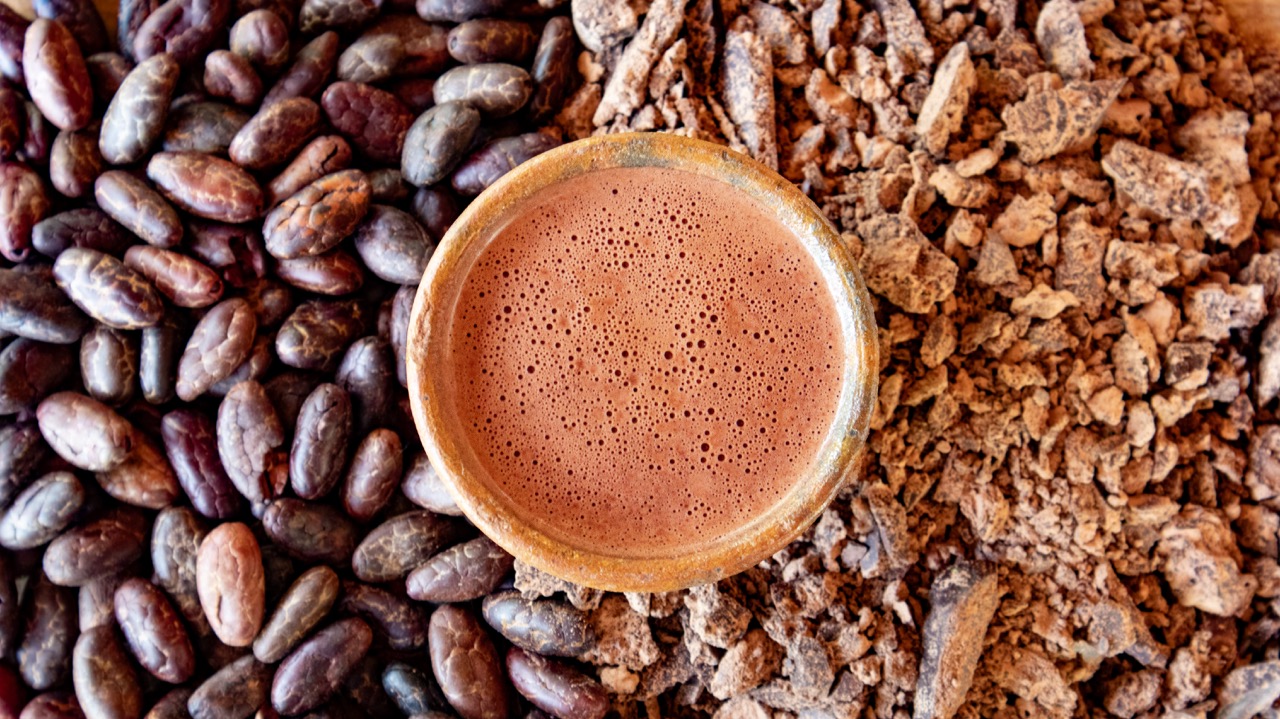
Cacao: Not a Psychedelic, But a Gentle Plant Medicine for the Heart
We are defintiely going through a phase of rediscovering ancient medicines and ways of connecting wi

Entrainment in Alchemy Sound Bowls — what it is, the science behind it, and why a bath + water afterwards matters
If you’ve ever left a sound bath feeling gently spaced-out, blissfully calm and a little tingly, y