Magnesium, Motherhood, Hormones and the Heart: Why I Turn to Ceremonial Cacao
Discover magnesium benefits for heart health, hormones, energy and stress, plus magnesium-rich foods and the role of ceremonial grade cacao.
There comes a point in life, particularly as a woman, when you begin to realise just how much you are asking of your body every single day. We wake up, we work, we parent, we organise, we care for others, we make decisions, we carry emotional responsibilities, and somewhere amongst all of that, we are expected to look after ourselves too.
I am a mother of two boys, a woman navigating the changes that come with perimenopause, and the founder of a business that I have poured my heart and soul into. I understand what it feels like to be tired, to have a mind that doesn’t always switch off, to carry the mental load of motherhood while trying to build something meaningful, and to wonder whether the energy we once took for granted has quietly disappeared.
I also understand that sometimes we become so accustomed to feeling tired or overwhelmed that we begin to accept it as normal.
Over the years, through my work in wellness, my studies in psychology, my training in different healing modalities and my personal relationship with ceremonial cacao, I have become increasingly fascinated by the connection between what we put into our bodies and how we experience our lives.
Not simply what we eat, but how we nourish ourselves, how we support our nervous systems, how we create moments of rest, and how we begin to understand what our bodies actually need.
One mineral that deserves far more attention in this conversation is magnesium.
Magnesium is involved in more than 300 enzyme systems in the human body, supporting processes ranging from energy production and muscle function to normal heart rhythm, blood glucose regulation and the maintenance of healthy bones. It is essential to life, yet it is something many of us rarely think about when considering our everyday wellbeing.
And perhaps one of the loveliest discoveries is that magnesium is naturally present in some of the foods I already love, including cacao.
At I AM BEING, I have always believed that wellbeing should be something we experience rather than another thing we feel we have to achieve. My relationship with 100% ceremonial grade cacao is very much part of that philosophy.
So I wanted to explore magnesium properly, looking at what it does inside our bodies, why it matters particularly to women, how it relates to our hearts, hormones, nervous systems and energy, and whether receiving magnesium through food, including ceremonial cacao, offers something different from taking a supplement.
Because sometimes understanding what our bodies need is the beginning of treating ourselves with a little more kindness.
What Exactly Is Magnesium, and Why Does Our Body Need It?
Magnesium is an essential mineral, which means our bodies need it to function but cannot manufacture it themselves. We therefore have to obtain it through our diet, whether from leafy green vegetables, nuts, seeds, whole grains, legumes or foods such as cacao.
What makes magnesium so extraordinary is the sheer number of processes in which it participates.
Inside our cells, magnesium helps enzymes carry out chemical reactions that allow us to produce energy, build proteins, regulate nerve signals, contract and relax muscles, and maintain the structures that keep our bodies functioning.
It also plays an important role in the movement of calcium and potassium across cell membranes, a process that is essential for communication between nerves and muscles, including the muscle that works continuously throughout our lives: the heart.
Think about how much your body does without you consciously asking it to. Your heart beats, your lungs breathe, your muscles respond, your cells generate energy and your nervous system processes an extraordinary amount of information. Magnesium is one of the minerals helping these systems work as they should.
The NHS recommends that women aged 19 to 64 consume approximately 270 mg of magnesium daily, while men in the same age group require approximately 300 mg.
These amounts may sound small, but the biological importance of magnesium is anything but.
What fascinates me is that our bodies are constantly carrying out complex processes to keep us alive, and yet we often only start paying attention when something feels wrong.
We notice the exhaustion, the disrupted sleep, the tension, the difficulty concentrating or the feeling that we are constantly running on empty, without necessarily considering the nutritional foundations that help support normal physiological function.
Of course, these experiences can have many causes, and magnesium deficiency should never be assumed to be the explanation. However, understanding our intake of essential nutrients is a sensible place to begin when thinking about our long-term health.
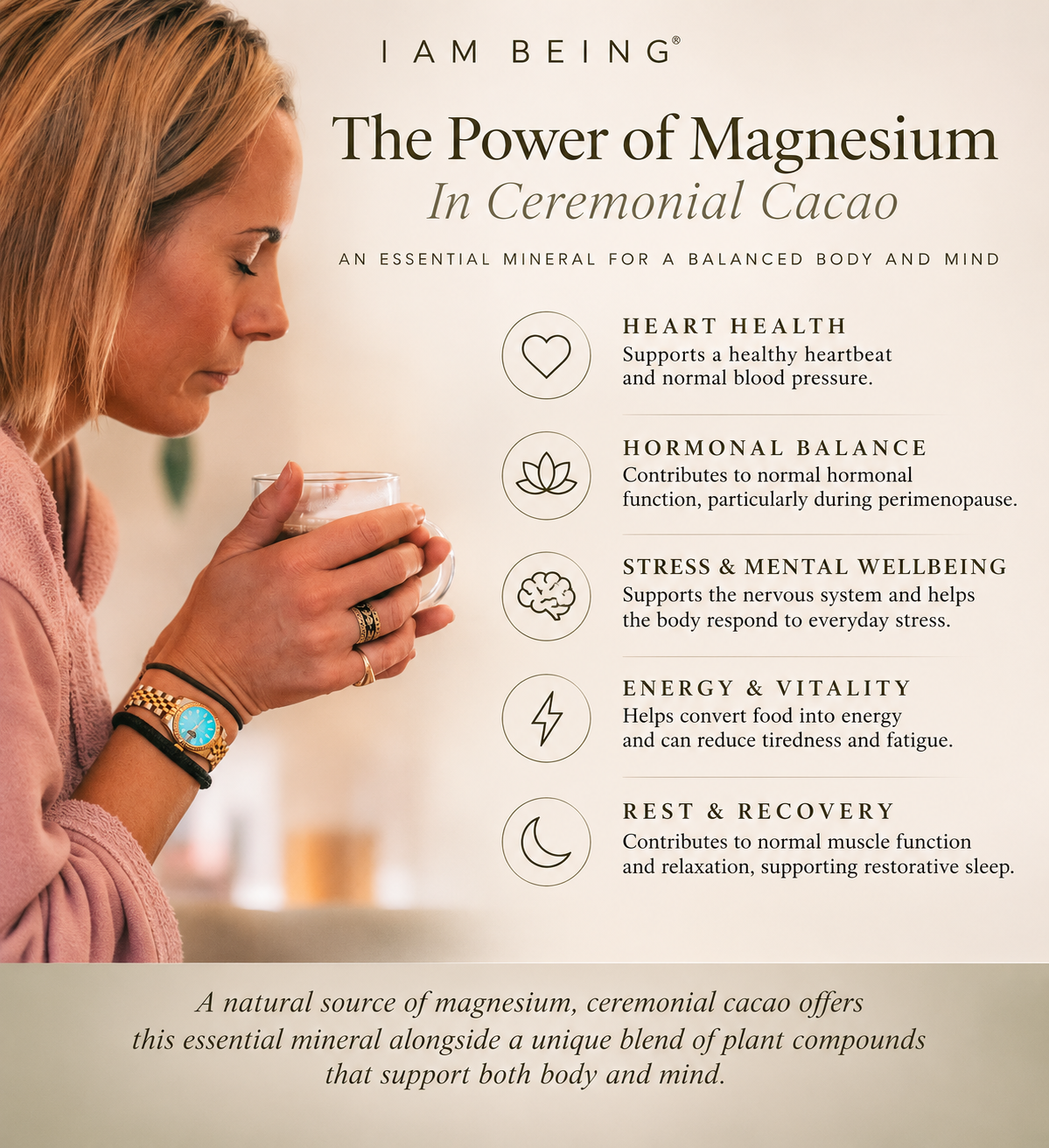
1. Magnesium and the Heart: Supporting the Muscle That Never Stops
There is something rather beautiful about the fact that the heart, an organ we associate so strongly with love, connection and emotion, depends on a careful balance of minerals to function.
Our hearts beat approximately 100,000 times each day, contracting and relaxing in a rhythm that allows blood to circulate throughout the body.
Magnesium contributes to the electrical signalling and muscle activity that help maintain this rhythm. Alongside calcium, potassium and sodium, it supports the movement of charged particles across cell membranes, which allows heart muscle cells to communicate and contract appropriately.
It also contributes to normal muscle function and plays a part in the regulation of blood pressure.
Researchers have explored whether people who consume more magnesium have better cardiovascular outcomes, with some observational studies finding associations between higher magnesium intake and a lower risk of certain cardiovascular conditions.
However, this is where I think it is important to distinguish between supporting normal heart function and claiming that a particular food or supplement prevents heart disease.
Magnesium is unquestionably essential for the heart, but consuming additional magnesium beyond what your body needs does not automatically make your heart healthier. Research on magnesium supplements and blood pressure suggests that any average reductions are generally modest, and the evidence for preventing cardiovascular disease remains incomplete.
For me, this reinforces the importance of looking at the bigger picture.
A heart-supportive lifestyle involves good nutrition, regular movement, adequate sleep, stress management, avoiding smoking and looking after our emotional wellbeing. Magnesium is one part of that picture, not a replacement for everything else.
Cacao also contains naturally occurring compounds called flavanols, which have been studied for their relationship with blood vessel function. Their amounts vary substantially depending on the cacao and how it has been processed, so we cannot assume that every cacao product delivers the same physiological effects.
What I love about ceremonial cacao is the opportunity to bring together an interesting whole food with a moment of conscious rest. Sitting quietly with a warm cup, taking a few slower breaths and giving ourselves permission to stop is meaningful in its own right.
For me, caring for the heart means caring for both its physical health and the emotional life we carry within it.
2. Magnesium, Hormones and Perimenopause: Why Women Need to Understand Their Bodies
I want to spend some time here because I think this conversation is particularly important for women.
Perimenopause can be a confusing stage of life, especially when you are already managing a demanding career, raising children, supporting family members or trying to maintain some sense of balance.
Hormones begin to fluctuate, and experiences can include changes in sleep, mood, menstrual cycles, concentration and temperature regulation. Some women experience anxiety, irritability or an unfamiliar sense of exhaustion, while others find that their bodies simply respond differently to the routines that once worked for them.
As a woman navigating this stage myself, I understand the desire to find ways of supporting the body without turning wellbeing into another complicated responsibility.
Magnesium is involved in normal nervous system function, energy metabolism and bone maintenance, all of which remain important throughout midlife.
It also participates in many of the enzyme-driven processes involved in human metabolism, including pathways relevant to hormone production and signalling.
However, it is important to understand that magnesium is not a treatment for declining oestrogen, nor is there strong evidence that consuming more magnesium through cacao will directly balance reproductive hormones or resolve perimenopausal symptoms.
What magnesium can do is help us meet the nutritional requirements that underpin normal physiological function.
One particularly important consideration during the menopause transition is bone health. As oestrogen levels decline, women become more vulnerable to reductions in bone density. Magnesium contributes to maintaining normal bones, working within a broader nutritional picture that includes calcium, vitamin D, protein and appropriate physical activity.
Magnesium is also being investigated in relation to premenstrual symptoms, mood and sleep, although the evidence for specific symptom improvements remains mixed.
I think this is where we need to be careful about the language surrounding women’s health. There is so much information telling us that one supplement, one diet or one product will fix our hormones, restore our energy or eliminate our symptoms.
Our bodies are more complicated than that, and we deserve information that respects this complexity.
For me, supporting myself through perimenopause means paying attention to the foundations: eating nourishing foods, moving my body, prioritising sleep where possible, creating moments of stillness and seeking appropriate medical guidance when symptoms become difficult.
A cup of ceremonial cacao can be part of that experience, not because it magically changes our hormones, but because it provides an opportunity to nourish ourselves and reconnect with what we need.
And sometimes, particularly when we have spent years putting everyone else first, that reconnection is incredibly valuable.
3. Magnesium and the Nervous System: Understanding Stress Rather Than Simply Living With It
If there is one subject I return to repeatedly in my work, it is the nervous system.
As a Reiki practitioner, yoga teacher, meditation teacher, breathwork facilitator and sound healer, I spend a great deal of time exploring how our bodies respond to stress and how we can create conditions that encourage rest and recovery.
I also know that understanding stress intellectually does not mean we are immune to experiencing it.
Running a business brings uncertainty, responsibility and a constant stream of decisions. Motherhood brings love beyond measure, but also emotional demands, interrupted routines and the feeling that your mind is always keeping track of something.
There are days when I can feel how much I am holding, even when nothing particularly dramatic has happened.
Magnesium contributes to normal nervous system function and plays a role in the communication between nerve cells. It is involved in processes that regulate neuronal excitability, including interactions with receptors associated with glutamate, one of the brain’s principal excitatory neurotransmitters.
Researchers have also investigated the relationship between magnesium status, stress and the body’s hormonal stress-response systems.
Some studies suggest that inadequate magnesium intake may be associated with greater vulnerability to stress-related symptoms, while certain supplementation studies have reported improvements in perceived stress among particular groups of participants.
Nevertheless, the research is not sufficiently consistent to conclude that increasing magnesium intake will reliably reduce cortisol or treat anxiety.
And this distinction matters.
We cannot supplement our way out of every stressful situation, particularly when the source of our stress is a demanding lifestyle, difficult relationship, financial uncertainty or a lack of adequate rest.
What we can do is support our bodies nutritionally while also addressing the circumstances that may be contributing to our stress.
This is one reason I find the practice of preparing ceremonial cacao so meaningful.
When I make a cup, I am doing something that requires me to stop for a moment. I warm the water, prepare the cacao, stir it slowly and allow myself to move away from the constant activity of the day.
Sometimes I sit in silence. Sometimes I meditate. Sometimes I simply drink it while looking out of the window.
The cacao itself contains magnesium and other naturally occurring compounds, but the experience also creates a pause.
I would never claim that cacao is a treatment for stress or anxiety, and it is worth remembering that cacao contains stimulating compounds, including theobromine and caffeine, which some people may find activating rather than relaxing.
Yet the combination of nourishment, intention and a quieter moment has become something I genuinely value.
Perhaps we need to stop asking how we can become better at tolerating constant stress and begin asking how we can create lives that give our nervous systems more opportunities to rest.
4. Magnesium and Energy: Why Feeling Tired Isn’t Always Just About Sleep
I know tiredness.
Not simply the tiredness that follows a busy day, but the kind that comes from balancing children, work, responsibilities, emotional demands and a mind that continues planning long after the day should have ended.
There are times when we tell ourselves that we just need another coffee, another early night or a little more determination.
But energy is not simply a matter of motivation.
At a cellular level, our bodies produce and use a molecule called adenosine triphosphate, or ATP, which acts as a principal energy carrier.
Magnesium is essential to many reactions involving ATP. In fact, ATP commonly functions within cells in association with magnesium ions, which help stabilise the molecule and allow enzymes to use it effectively.
Magnesium is also involved in the metabolic pathways through which our bodies convert carbohydrates, fats and proteins into usable energy.
This is why magnesium is recognised as contributing to normal energy-yielding metabolism and the reduction of tiredness and fatigue.
It is a fascinating example of how something we cannot see plays such an important role in how our bodies function.
However, consuming extra magnesium does not necessarily provide an immediate energy boost if our intake is already adequate. Persistent fatigue can be associated with many factors, including poor sleep, iron deficiency, thyroid problems, stress, hormonal changes and other medical conditions.
If tiredness becomes persistent, unexplained or disruptive, it deserves proper investigation rather than simply another supplement.
What I find helpful is thinking about energy as something we need to support consistently rather than something we can endlessly borrow from tomorrow.
This means eating regularly, consuming sufficient nutrients, staying hydrated, resting appropriately and recognising when our bodies are asking us to change the pace.
Ceremonial cacao has become one of my favourite ways of creating a deliberate pause within my working day.
Unlike a conventional sweet hot chocolate, my I AM BEING 100% Ceremonial Grade Cacao contains just one ingredient: cacao.
It naturally contains theobromine, a compound related to caffeine, alongside smaller amounts of caffeine. These substances can influence alertness, although their effects vary between individuals and depend on the amount consumed.
For me, the appeal is not simply the possibility of feeling more alert. It is having a moment that feels nourishing and intentional rather than reaching automatically for something because I am exhausted.
And I think there is an important difference between those two experiences.
5. Magnesium, Sleep and Muscle Relaxation
Sleep is another subject that becomes increasingly important as we move through different stages of life.
Many women notice changes in sleep during perimenopause, whether that means difficulty falling asleep, waking during the night or feeling less refreshed in the morning.
Magnesium is involved in normal muscle and nerve function, and researchers have investigated whether supplementation may influence sleep quality, particularly in people experiencing insomnia or low magnesium intake.
Some small studies have reported benefits, but systematic reviews generally describe the evidence as limited, with differences in study quality, supplement doses and participant characteristics.
It would therefore be misleading to suggest that cacao is a natural sleeping tablet or that consuming magnesium automatically produces deeper sleep.
There is another important consideration: cacao naturally contains caffeine and theobromine, both of which may interfere with sleep in sensitive individuals.
I often speak about listening to our bodies, and this is a perfect example of why that matters.
Some people enjoy a small amount of cacao later in the day without noticing any disruption, while others find that even modest amounts of stimulating compounds affect their sleep.
For those who are sensitive, I would suggest enjoying cacao earlier in the day and choosing a caffeine-free evening drink instead.
Magnesium-rich foods can still form part of an evening meal, whether through leafy greens, beans, whole grains or seeds.
And when it comes to sleep, I believe the practices surrounding bedtime deserve just as much attention as the nutrients we consume.
Gentle restorative yoga, meditation, reducing evening stimulation and creating a consistent routine may all help us develop healthier sleep habits.
In my own work, I love combining restorative movement, breathwork and sound because they provide an opportunity to step away from the demands of everyday life.
Sometimes the most valuable thing we can offer ourselves is permission to rest without feeling that we should be doing something more productive.
6. Magnesium, Blood Sugar and Metabolic Health
Another fascinating role of magnesium is its involvement in glucose metabolism and insulin function.
Insulin is the hormone that helps regulate blood glucose by allowing cells to take up and use glucose appropriately.
Magnesium participates in the activity of enzymes involved in glucose metabolism and insulin signalling, making it important for normal metabolic function.
Research has found associations between higher dietary magnesium intake and a lower risk of developing type 2 diabetes, although observational associations cannot establish that magnesium alone is responsible.
Supplementation may improve certain measures of glucose regulation in some groups, particularly where magnesium status is inadequate, but it is not a substitute for appropriate diabetes treatment or dietary guidance.
For women navigating midlife, metabolic health is an important consideration because changes in body composition, sleep and hormonal patterns can influence how we experience our bodies.
Once again, I believe the most helpful approach is to focus on sustainable everyday habits rather than searching for a single miracle ingredient.
Eating a varied diet containing vegetables, legumes, whole grains, nuts and seeds provides magnesium alongside fibre and many other beneficial nutrients.
And although pure cacao contains naturally occurring magnesium, we should distinguish it from commercially sweetened chocolate drinks, which may contain substantial amounts of added sugar.
I AM BEING cacao is a single-ingredient product, allowing you to decide how to prepare it and whether to add anything at all.
I personally love the simplicity of that.
7. Why Magnesium Matters for Our Bones, Muscles and Healthy Ageing
When we think about strong bones, calcium is often the first mineral that comes to mind.
Yet magnesium is also essential for maintaining normal bone structure and participates in processes related to bone mineral metabolism.
A significant proportion of the magnesium in our bodies is stored in our bones, where it contributes to their structure and serves as part of the body’s mineral reserves.
Magnesium also interacts with the systems involved in calcium regulation and vitamin D metabolism.
For women, particularly during and after menopause, this becomes increasingly relevant because declining oestrogen levels are associated with accelerated bone loss.
Ensuring adequate magnesium intake is therefore one component of supporting skeletal health, alongside sufficient calcium, vitamin D, protein and regular weight-bearing and resistance exercise.
Magnesium is equally important for muscle function.
Muscle contraction and relaxation depend on carefully regulated interactions between calcium, magnesium and cellular proteins. Without adequate magnesium, normal neuromuscular function can be disrupted.
It is sometimes suggested that magnesium supplements will automatically prevent muscle cramps or dramatically improve exercise recovery, but the evidence for these specific outcomes is not consistently convincing.
What we can say confidently is that magnesium contributes to normal muscle function, making adequate dietary intake important for anyone who wants to maintain physical health throughout life.
As a yoga teacher, I find this relationship between movement, strength, nourishment and ageing particularly interesting.
We often speak about exercise as something we do to change how our bodies look, when perhaps the more meaningful conversation is about maintaining the freedom to move, the strength to live independently and the confidence to inhabit our bodies as we grow older.
8. Where Can We Find Magnesium Naturally in Food?
One of the things I love about learning more about nutrition is discovering that supporting our bodies does not necessarily require complicated routines or expensive products.
Magnesium is present in many ordinary foods, and a varied diet can provide meaningful amounts throughout the day.
Some particularly useful sources include:
- Pumpkin seeds: Approximately 156 mg of magnesium in a 28 g serving.
- Chia seeds: Approximately 111 mg in a 28 g serving.
- Almonds: Approximately 80 mg in a 28 g serving.
- Cooked spinach: Approximately 78 mg in half a cup.
- Cashew nuts: Approximately 74 mg in a 28 g serving.
- Cooked black beans: Approximately 60 mg in half a cup.
- Edamame: Approximately 50 mg in half a cup.
- Peanut butter: Approximately 49 mg in two tablespoons.
- Cooked brown rice: Approximately 42 mg in half a cup.
- Bananas: Approximately 32 mg in a medium banana.
These are approximate values from standard food composition data, and actual amounts vary with portion size, preparation and the food itself.
I find it encouraging that magnesium can be incorporated into everyday meals without requiring us to rethink everything we eat.
A breakfast of oats, chia seeds and fruit, a lunch containing leafy greens and beans, or a dinner with whole grains and vegetables can all contribute to our daily intake.
Nuts and seeds are particularly convenient for busy days when preparing elaborate meals simply isn’t realistic.
And, of course, there is cacao.
How Much Magnesium Is Actually in Cacao?
Cacao naturally contains magnesium, but the exact amount depends on the product.
For example, standard food composition data for unsweetened cocoa powder reports approximately 499 mg of magnesium per 100 g. However, cocoa powder is not the same as whole cacao mass.
Cocoa powder has had much of its fat removed, whereas ceremonial cacao generally retains the naturally occurring cocoa butter, which changes the concentration of nutrients by weight.
It would therefore be incorrect to assume that a 30 g serving of ceremonial cacao contains the same magnesium as 30 g of cocoa powder.
To establish the precise amount in I AM BEING cacao, we would need a magnesium-specific nutritional analysis of the finished product.
What we do know is that cacao is a naturally occurring dietary source of magnesium, and that whole cacao also contains a range of other nutrients and plant compounds.
I think it is important to be transparent about these distinctions because good nutrition education should help us make informed decisions rather than simply present the most impressive number.
9. Magnesium From Ceremonial Cacao Versus Magnesium Tablets: Is Natural Better?
This is a question I find particularly interesting because we live in a world where supplements have become such a normal part of everyday wellbeing.
Magnesium supplements are available in numerous forms, including magnesium citrate, glycinate, oxide and chloride, and they are often marketed for everything from relaxation and sleep to muscle recovery and hormonal support.
But is obtaining magnesium through food better than taking it in tablet form?
The answer is more nuanced than we might expect.
Magnesium from food and magnesium from supplements ultimately contribute to the same essential mineral requirements within the body. The body does not recognise magnesium as inherently superior simply because it came from a natural source.
However, the context in which we consume magnesium can be very different.
When we eat magnesium-rich foods, we generally receive other nutrients at the same time. Nuts and seeds contain fats, fibre and protein; leafy vegetables contain vitamins and plant compounds; legumes provide fibre and complex carbohydrates; and cacao contains polyphenols, minerals and naturally occurring methylxanthines, including theobromine.
This is what nutrition scientists sometimes describe as the food matrix, the combination of components within a food that may influence digestion, absorption and broader nutritional effects.
That does not mean every nutrient in a whole food is more easily absorbed than its supplemental equivalent.
In fact, certain magnesium supplements are relatively well absorbed. Forms such as magnesium citrate and chloride generally have better demonstrated bioavailability than magnesium oxide, although absorption also depends on dose, individual physiology and other factors.
Magnesium glycinate is another commonly used form, but claims that it is universally superior for sleep or relaxation go beyond the available comparative evidence.
Supplements can be genuinely useful when someone is unable to meet their nutritional needs through food alone, has a diagnosed deficiency or has been advised to take them by an appropriate healthcare professional.
They can also deliver a much larger and more predictable quantity of magnesium than a normal serving of cacao.
The disadvantage is that taking high doses can cause side effects, particularly diarrhoea, and certain supplements can interact with medications. People with kidney disease should seek medical advice before using magnesium supplements because impaired kidney function can affect the body’s ability to remove excess magnesium.
The NHS advises that most people should be able to obtain the magnesium they need through a varied, balanced diet and cautions against excessive supplementation.
For me, this is where the real value of food becomes apparent.
Rather than viewing cacao as a replacement for magnesium tablets, I prefer to think of it as one of many nourishing foods that can contribute to our overall intake.
When I prepare ceremonial cacao, I am not simply trying to consume a particular number of milligrams of magnesium.
I am choosing a whole food, enjoying its flavour, taking time to prepare something for myself and creating a moment of connection within my day.
A supplement may be the right choice for someone who needs a specific dose. A cup of cacao offers a different experience, one that combines nutrition with the pleasure of slowing down.
And I think there is room for both, depending on what our bodies genuinely need.
10. Why I Choose I AM BEING 100% Ceremonial Grade Cacao
My relationship with cacao goes far beyond its nutritional composition.
I have spent years studying, working with and sharing cacao, and it has become deeply connected to the way I approach wellbeing, both personally and professionally.
When I founded I AM BEING, I wanted to create something that encouraged people to reconnect with themselves and one another.
Not through pressure, perfection or the idea that we need to become better versions of ourselves, but through the simple experience of being present.
Our I AM BEING 100% Ceremonial Grade Cacao comes from Flores Island in Indonesia, where cacao is grown within a multi-layered forest agroforestry environment.
It is a single-ingredient cacao mass, without added sugar, milk powder or unnecessary ingredients.
Its flavour is beautifully rich and smooth, with soft notes of vanilla and warm spice, and I love that it can be enjoyed simply with warm water or prepared with your favourite milk.
We have also developed our ceremonial cacao coins, each weighing approximately 9.5 g, to make preparing cacao a little easier and more accessible.
For someone juggling a busy morning, the school run, meetings and everything else that comes with daily life, I understand the importance of convenience.
The coins allow you to portion your cacao without needing to chop a larger block, making it easier to create a cup that suits your preferences.
I often encourage people to begin with a smaller amount and discover what feels appropriate for them, particularly if they are unfamiliar with cacao or sensitive to caffeine.
For me, cacao has made a difference to my daily experience, not because I believe it has solved every challenge or transformed my physiology overnight, but because it has become part of how I care for myself.
It gives me a reason to stop, reconnect and remember that I deserve moments of nourishment too.
I would love others to discover what that experience might mean for them.
11. Five Simple Ways to Bring More Magnesium Into Everyday Life
One of the biggest lessons I have learned through motherhood and running a business is that wellbeing needs to be realistic.
It is wonderful to have elaborate morning routines, beautifully prepared meals and uninterrupted time for meditation, but life does not always allow for those things.
Sometimes we need small, manageable changes that fit into the lives we actually lead.
The first is to begin noticing how much variety exists within our diets. Adding pumpkin seeds to breakfast, including beans or lentils at lunch, choosing whole grains and incorporating leafy greens into meals can all help increase magnesium intake.
The second is to remember that nourishment is cumulative. We do not need to obtain every nutrient from one perfect meal, and there is no requirement to consume an enormous amount of any single food. A balanced pattern across the day matters far more.
The third is to reconsider the relationship between food and convenience. Keeping nuts, seeds and other simple nutritious ingredients available can make it easier to eat well during busy periods, particularly when we are tempted to skip meals because work or family responsibilities feel more urgent.
The fourth is to create a little space around the way we eat and drink. I know this is not always possible, but even a few minutes away from a screen can help us reconnect with the experience of nourishing ourselves.
And the fifth, which is especially close to my heart, is to find something you genuinely enjoy.
For me, that is ceremonial cacao.
For someone else, it might be preparing a nourishing breakfast, making a beautiful evening meal or sitting down with a favourite herbal tea.
The goal is not to turn nutrition into another obligation, but to make caring for ourselves something that feels achievable and enjoyable.
12. The Bigger Conversation: Learning to Listen to Ourselves
The more I learn about the human body, the more extraordinary I find it.
We are made up of interconnected systems that communicate constantly, responding to our environment, our nutrition, our sleep, our movement and the experiences we have throughout our lives.
Magnesium is a wonderful example of this complexity.
One essential mineral contributes to hundreds of biochemical reactions, helping our hearts function, our muscles move, our nerves communicate, our bones remain healthy and our cells produce energy.
Yet I think the most important lesson is not simply that we should consume more magnesium.
It is that our bodies deserve attention.
As women, particularly those of us navigating motherhood, perimenopause, careers and the countless responsibilities that come with everyday life, we can become incredibly skilled at recognising what everyone else needs while overlooking ourselves.
We notice when our children are tired, when our partners or friends need support, when work requires more attention or when something in the household needs organising.
But how often do we stop and ask what we need?
Are we eating properly? Are we resting enough? Are we moving our bodies in ways that feel good? Are we allowing ourselves moments of joy, stillness and connection?
And are we paying attention when our bodies begin telling us that something needs to change?
I believe wellbeing begins with curiosity rather than judgement.
It begins when we stop treating exhaustion as a badge of honour, when we recognise that rest is not something we need to earn, and when we understand that caring for ourselves allows us to participate more fully in the lives we are creating.
Ceremonial cacao has become part of that journey for me.
I love the taste, the warmth, the simplicity and the sense of occasion that comes from preparing something with intention.
I love knowing that cacao is a food with a fascinating nutritional composition, and I love sharing it with people who are curious about exploring a different relationship with their everyday routines.
But perhaps most importantly, I love what the experience represents.
A moment to stop.
A moment to reconnect.
A moment to remember that we matter too.
A Final Note From Me
If you have reached the end of this article, I hope you take away a greater appreciation for the extraordinary work your body carries out every single day.
Magnesium is essential, and understanding how to obtain enough of it through food is a valuable part of supporting our long-term health. It is not a miracle cure, and ceremonial cacao is not a substitute for medical care, a balanced diet or supplementation when genuinely required.
But I do believe that the way we nourish ourselves matters, and that we can find enormous value in making everyday wellbeing more intentional.
If you have never tried ceremonial cacao, I would love you to explore it.
You can discover my I AM BEING 100% Ceremonial Grade Cacao, including our cacao blocks and convenient cacao coins, and begin experimenting with a way of preparing it that feels right for you.
Perhaps it becomes part of your morning, a moment between meetings or an opportunity to sit quietly before the day begins.
I cannot promise it will transform your hormones, eliminate stress or resolve exhaustion, but I can tell you that incorporating cacao into my own life has made a meaningful difference to how I create space for myself.
And perhaps it could become something meaningful for you too.
If you would like to explore cacao further, understand how to prepare it, or simply have a conversation about wellbeing, connection and finding your way back to yourself, please do get in touch.
Whether that is through the work I do with individuals, in the workplace through corporate wellbeing experiences, or anywhere else we might have the opportunity to connect, I would love to hear from you.
You can explore my work at www.iambeing.co.uk or email me directly at gizelle@iambeing.co.uk.
Because ultimately, I believe that wellbeing is not about doing more.
It is about learning how to be.
Being, and being together.
With love,
Gizelle x
Founder, I AM BEING
Frequently Asked Questions About Magnesium and Ceremonial Cacao
Does ceremonial cacao contain magnesium?
Yes. Cacao naturally contains magnesium, an essential mineral involved in normal muscle function, nervous system activity, energy metabolism and bone maintenance. The exact amount varies depending on the cacao product and its processing. Whole ceremonial cacao and defatted cocoa powder should not be assumed to contain identical amounts.
Is ceremonial cacao better than magnesium supplements?
Ceremonial cacao provides magnesium as part of a whole food that also contains other nutrients and plant compounds. Supplements can provide more precise and concentrated amounts of magnesium, which may be useful for people with specific nutritional requirements. Neither is universally better; the appropriate choice depends on individual needs.
Can magnesium help with perimenopause?
Magnesium supports normal nervous system function, energy metabolism, muscle function and bone health, all of which remain important during perimenopause. However, there is insufficient evidence that magnesium supplements or cacao directly correct hormonal fluctuations or reliably treat perimenopausal symptoms.
Which foods are highest in magnesium?
Pumpkin seeds, chia seeds, almonds, cashews, leafy green vegetables, beans, whole grains and certain cacao products are useful dietary sources. Eating a variety of these foods throughout the day can help meet daily magnesium requirements.
Can I drink ceremonial cacao every day?
Many healthy adults can enjoy moderate amounts of cacao as part of a balanced diet, although appropriate portions depend on individual tolerance and health circumstances. Cacao naturally contains caffeine and theobromine, so people with stimulant sensitivity, certain heart conditions, pregnancy-related concerns or relevant medication use should seek individual advice when appropriate.
Where can I buy ceremonial grade cacao in the UK?
You can explore I AM BEING Ceremonial Grade Cacao, a single-ingredient cacao sourced from Flores Island, Indonesia, available in blocks and convenient cacao coins.
Research and Further Reading
For anyone interested in understanding the science behind magnesium, these are useful starting points:
- NHS — Vitamins and Minerals: Magnesium — UK dietary recommendations, food sources and supplement guidance.
- National Institutes of Health — Magnesium Fact Sheet for Health Professionals — Detailed information on magnesium physiology, absorption, dietary sources and clinical research.
- MedlinePlus — Magnesium in Diet — An accessible overview of magnesium’s role in the body and food sources.
Health note: This article is intended for general education and personal reflection. It is not medical advice. Persistent fatigue, significant perimenopausal symptoms, palpitations or other health concerns should be discussed with a qualified healthcare professional. The nutritional and physiological roles of magnesium described here do not establish that I AM BEING cacao treats or prevents any medical condition.