Yoga and Cacao: Two Ancient Practices, One Beautiful Philosophy of Being
Discover what yoga and ceremonial cacao have in common, from ancient philosophy to mindful rituals. Explore cacao ceremonies and buy ceremonial cacao in the UK.
There are two things in my life that have taught me more about slowing down, listening to myself and understanding what it really means to be present than almost anything else: yoga and cacao.
And no, I don’t mean drinking a delicious cup of ceremonial cacao while attempting a headstand. Although, knowing me, I would probably give it a go.
I mean the philosophies behind them. The wisdom, the rituals, the connection to ourselves, to others and to the natural world. The invitation to stop doing quite so much and simply be.
As both a qualified yoga teacher and cacao practitioner, I’ve spent years exploring these two practices, separately and together. I’ve studied the physical, psychological and philosophical aspects of yoga, and I’ve immersed myself in the history, cultural traditions, composition and ceremonial practices surrounding cacao.
And what I’ve discovered is that although they originate from very different parts of the world, they have some rather beautiful things in common.
Both encourage us to become more aware of ourselves. Both invite us to slow down. Both can create a sense of connection, not only to our own bodies and minds but to the people around us. And both remind us that sometimes the most important thing we can do is absolutely nothing at all.
Which, in a world obsessed with productivity, is surprisingly revolutionary.
So, make yourself a cup of I AM BEING ceremonial cacao, find somewhere comfortable and join me as I explore the wonderful relationship between yoga and cacao, their shared philosophies and why I believe they make such beautiful companions.
Two Ancient Traditions, Two Different Worlds
Before exploring what yoga and cacao have in common, I think it’s important to understand where they come from.
Yoga has its roots in ancient India, developing through a rich collection of spiritual, philosophical and contemplative traditions over thousands of years. Although many people today associate yoga with stretching, postures and perhaps a particularly ambitious downward dog, its foundations extend far beyond the physical body.
Yoga is a philosophy and a way of living. It explores the relationship between our thoughts, our actions, our awareness and our experience of the world.
Cacao, meanwhile, has a completely different geographical and cultural heritage.
The cacao tree, Theobroma cacao, is native to the tropical Americas, and cacao has held an important place in the lives of Indigenous communities across Mesoamerica for thousands of years. It has been used as food, drink, a valued commodity and within ceremonial and social traditions.
For the Maya and other Mesoamerican cultures, cacao carried meanings that extended beyond its nutritional value. It could be associated with hospitality, celebration, status, relationships and ritual.
I find this fascinating because the histories are different, yet both traditions recognise that our everyday experiences can carry deeper meaning.
It’s important not to suggest that cacao ceremonies and yoga share an identical ancient philosophy, because they don’t. Modern cacao ceremonies, particularly those practised in Western wellness spaces, often combine contemporary meditation, intention-setting and group facilitation with inspiration from older cacao traditions.
But when we explore how yoga and cacao are experienced today, there are wonderful parallels.
And perhaps the most significant is the one that sits at the heart of I AM BEING.
The art of presence.
1. The Philosophy of Being Rather Than Doing
If you have ever attended one of my yoga classes or cacao ceremonies, you’ll know that I talk a lot about being.
After all, I did name my business I AM BEING.
It wasn’t an accidental choice.
For much of my previous corporate career, I lived in a world where success was measured by what I achieved, how much I could accomplish and how efficiently I could move from one responsibility to the next.
I was very good at doing.
Being was another matter entirely.
And I suspect I’m not alone.
We live in a society that celebrates busyness. We fill our diaries, chase the next milestone and somehow convince ourselves that resting is something we must earn.
Yoga challenges that way of thinking.
In the classical Yoga Sutras of Patanjali, yoga is described in terms of quietening the fluctuations of the mind. The aim is not simply to make the body more flexible but to develop greater clarity and awareness.
For me, this is one of the most powerful aspects of yoga. It gives us permission to stop identifying ourselves entirely with our thoughts, our achievements and our never-ending to-do lists.
Cacao offers a complementary experience.
When I prepare ceremonial cacao, I deliberately slow down. I notice the aroma, the warmth of the cup, the texture of the cacao and the simple act of taking a sip.
It’s a moment in which I don’t have to achieve anything.
I’m not running a business, answering emails, organising the children or planning my next event.
I’m simply there.
Of course, cacao doesn’t magically make our responsibilities disappear. Unfortunately, I’ve tested this theory, and the washing still needs doing.
But it creates an opportunity to change our relationship with the moment.
Yoga invites us to be present through awareness. Cacao invites us to be present through ritual.
And together, they remind us that being is enough.
2. Ahimsa: Kindness Towards Ourselves and Others
One of my favourite principles from yoga philosophy is ahimsa, commonly translated as non-harming or non-violence.
Ahimsa is one of the five yamas, the ethical disciplines described in classical yoga philosophy.
It encourages us to consider how our thoughts, words and actions affect ourselves, other people and the world around us.
And I think this is particularly relevant to modern life.
How often do we speak to ourselves in ways we would never speak to someone we love?
We criticise our bodies, question our abilities and push ourselves when we’re exhausted.
Even yoga can become another arena for self-criticism.
We look at the person on the mat beside us, effortlessly folding themselves into a position that resembles a neatly packed suitcase, and suddenly decide our own practice isn’t good enough.
But yoga was never supposed to be a competition.
Ahimsa asks us to approach ourselves with kindness.
To recognise when we need to rest. To understand that our bodies change. To remember that our worth has absolutely nothing to do with whether we can touch our toes.
This philosophy is something I bring into my cacao ceremonies.
When people arrive, I want them to feel that they can show up exactly as they are.
Happy, sad, exhausted, excited, uncertain or somewhere in between.
There is no correct emotional state to bring to a ceremony.
There is no expectation to have a profound revelation or suddenly discover the meaning of life.
Sometimes the most meaningful experience is simply feeling comfortable enough to relax.
I also believe ahimsa extends to the way we source and share cacao.
When I developed my own I AM BEING ceremonial grade cacao, understanding its origins and the people involved in growing it was incredibly important to me.
Our cacao comes from Flores Island in Indonesia, where it is grown by a community of approximately 400 farming families.
Knowing where our cacao comes from and considering the people and environment behind it is part of practising care beyond ourselves.
Kindness, after all, shouldn’t stop at the edge of our yoga mat.
3. Svadhyaya: The Art of Getting to Know Yourself
Another beautiful yogic principle is svadhyaya, often understood as self-study.
Traditionally, this includes the study of sacred teachings as well as the examination of our own thoughts, habits and patterns.
In modern yoga practice, I find it particularly meaningful as an invitation to become curious about ourselves.
Not judgemental. Curious.
Why do certain situations make us anxious? Why do we find it difficult to rest? Why do we repeat particular behaviours, even when we know they aren’t serving us?
With my background in psychology, this is an area I find endlessly fascinating.
Our minds are extraordinary, but they are also creatures of habit.
We develop ways of thinking and behaving that can become so familiar that we stop questioning them.
Yoga creates space to observe these patterns.
Perhaps you notice that you become frustrated when you can’t balance in a posture. Perhaps you find stillness uncomfortable. Perhaps you discover that your mind immediately starts planning tomorrow’s activities whenever you close your eyes.
All of this is information.
And none of it is a failure.
Cacao ceremonies can offer a similar opportunity for reflection.
I often incorporate journalling, guided meditation and gentle questions into my ceremonies because I believe we sometimes need a little encouragement to listen to ourselves.
Questions such as:
What do I need more of in my life?
What am I holding on to that no longer feels right?
When do I feel most like myself?
What would happen if I stopped trying to control everything?
That last one is particularly interesting for anyone who, like me, has spent years organising people, businesses, schedules and approximately seventeen things simultaneously.
Through both yoga and cacao, I’ve learnt that self-discovery doesn’t always come from finding answers.
Sometimes it begins with asking better questions.
And sometimes it begins with recognising that we don’t need an answer immediately.
4. Santosha: Finding Contentment in What Already Exists
If there is one yogic principle I think our modern world could benefit from embracing, it is santosha, or contentment.
Santosha is one of the niyamas, the personal observances within yoga philosophy.
It encourages us to cultivate contentment rather than constantly looking outside ourselves for satisfaction.
Now, I want to be clear that contentment doesn’t mean abandoning ambition.
I love building my business. I love creating new experiences, meeting people and exploring possibilities.
I also have a very active mind, which regularly comes up with approximately twelve new ideas before breakfast.
But I’ve learnt that there is a difference between being excited about the future and believing we can only be happy once we get there.
Yoga teaches us to appreciate where we are in our practice today.
Not where we were five years ago. Not where we hope to be next year.
Today.
Cacao rituals encourage a similar appreciation of the present.
There is something wonderfully satisfying about holding a warm cup in your hands and allowing yourself to enjoy it without needing anything else.
No complicated equipment. No expensive retreat. No dramatic life transformation required.
Just a moment of attention.
And perhaps this is one of the reasons I love cacao so much.
It reminds me that pleasure and contentment can exist in very simple things.
A warm drink. A quiet morning. A conversation with someone you love. A moment of stillness before the day begins.
We spend so much time searching for extraordinary experiences that we sometimes forget how extraordinary ordinary life can be.
5. The Breath: Our Most Accessible Connection to the Present
Breathwork is one of the places where yoga and modern cacao ceremonies meet particularly naturally.
In yoga, pranayama refers to practices involving the regulation and expansion of the breath.
The breath has long been recognised within yogic traditions as an important bridge between physical experience, attention and mental awareness.
From a physiological perspective, breathing patterns can also influence how we experience stress and relaxation.
Gentle, comfortable breathing practices can help some people feel calmer and more settled, although the effects depend on the technique and individual.
In my yoga teaching, breath is central.
It helps us move with awareness, notice how we’re feeling and recognise when we might be pushing ourselves too hard.
And I bring that same awareness into my cacao ceremonies.
Before drinking cacao, I often invite people to close their eyes, feel the cup in their hands and take a few gentle breaths.
Nothing complicated.
Just an opportunity to arrive.
It’s remarkable how often we move through the day without noticing our breathing.
We rush from one activity to another, holding tension in our shoulders, our jaws and sometimes seemingly every muscle in our bodies.
Then we sit down, breathe a little more slowly and suddenly notice how much we’ve been carrying.
I love combining cacao with gentle breathwork because the two practices offer different ways to focus our attention.
The cacao gives us a sensory experience to connect with, while the breath helps us notice what’s happening within.
Together, they can create a lovely beginning to meditation, restorative yoga or a quiet moment at home.
6. Ritual: Making the Ordinary Feel Extraordinary
One of the things I find most beautiful about yoga is that it can transform ordinary movements into something meaningful.
Standing still becomes mountain pose.
Sitting quietly becomes meditation.
Breathing becomes a conscious practice.
The physical actions themselves might be simple, but the intention we bring to them changes our experience.
Cacao offers something similar.
At its most basic, preparing cacao involves heating water or milk, mixing in cacao and drinking it.
Not particularly complicated.
But when we approach the process as a ritual, something shifts.
We pay attention to what we’re doing.
We notice the smell of the cacao as it warms, the rich colour, the texture and the feeling of holding the cup.
We might choose an intention for the day or simply acknowledge how we’re feeling.
And suddenly an everyday drink becomes a moment of connection.
I think this is why I love teaching people how to create their own cacao rituals at home.
You don’t need to attend a formal ceremony every time you drink cacao.
Although, of course, I would love to see you at one of mine!
You can create a meaningful experience in your own kitchen.
I particularly love using our I AM BEING cacao coins because they make preparing ceremonial cacao beautifully simple.
Each coin weighs approximately 9.5g, making it easy to adjust the amount depending on the experience you’re looking for.
For a gentle evening ritual, I might choose a smaller serving. For a morning meditation or a longer ceremony, I may use more.
The important thing is to understand your own preferences and tolerance, particularly because cacao naturally contains caffeine and theobromine.
For me, the beauty of ritual isn’t about following a perfect set of rules.
It’s about bringing intention to something we might otherwise do automatically.
7. Connection: The Meaning of Union
Yoga is often associated with the Sanskrit root yuj, meaning to yoke or join.
Although yoga has many philosophical interpretations, the idea of connection is deeply woven into how many people experience the practice today.
Connection between movement and breath.
Connection between attention and action.
Connection with ourselves and, in group settings, with others.
Cacao ceremonies can also be wonderful experiences of connection.
And this is something I’ve witnessed repeatedly through my work.
I’ve facilitated cacao ceremonies for individuals, intimate groups and gatherings of hundreds of people, and one of the things that continues to move me is how quickly people can connect when they feel safe enough to be themselves.
We live in a world where we are more digitally connected than ever before, yet genuine human connection can sometimes feel surprisingly difficult to find.
We communicate constantly, but how often do we really listen?
How often do we sit with someone without checking our phone, thinking about what to say next or wondering what time we need to leave?
During a cacao ceremony, I encourage people to step away from those distractions.
We might share intentions, reflect together or simply sit in comfortable silence.
And there is something rather lovely about a group of people holding warm cups of cacao, knowing that nobody needs to impress anybody else.
It’s one of the reasons my philosophy at I AM BEING is being and being together.
I believe both are important.
We need opportunities to reconnect with ourselves, but we also need spaces where we feel connected to other people.
Yoga and cacao offer different pathways towards these experiences, and I think that makes them wonderful companions.
8. The Heart: More Than a Romantic Idea
If you’ve ever heard someone describe cacao as a heart-opening drink, you might have wondered what that actually means.
Is it a spiritual concept? A physical effect? Or simply a rather poetic way of describing a delicious cup of chocolate?
The answer depends on how the phrase is being used.
Within contemporary cacao ceremonies, heart-opening is often used metaphorically to describe feelings of warmth, emotional openness, compassion and connection.
I think it’s a beautiful description of how some people experience cacao, but I also believe it’s important to distinguish personal experiences from scientific claims.
Cacao contains naturally occurring compounds, including theobromine, caffeine and flavanols, which have different physiological effects.
However, there isn’t strong evidence that drinking ceremonial cacao directly produces emotional openness or a particular spiritual state.
For me, the experience is about much more than the cacao itself.
It’s the combination of intention, environment, attention, connection and the opportunity to slow down.
And this is where I see another parallel with yoga.
In many modern yoga practices, we explore the idea of opening the heart through posture, breath and emotional awareness.
But I don’t think opening the heart needs to be dramatic.
Sometimes it means allowing ourselves to feel something we’ve been avoiding.
Sometimes it means being kinder to ourselves.
Sometimes it means having an honest conversation.
And sometimes it means simply recognising how much we appreciate the people around us.
If yoga teaches us to listen to our bodies, cacao rituals can encourage us to listen to our emotional experiences.
Both can help us practise being a little more compassionate, a little more curious and perhaps a little less guarded.
9. Aparigraha: Learning to Let Go
Another yogic principle that has become increasingly meaningful to me is aparigraha, often translated as non-grasping or non-possessiveness.
At its heart, it encourages us to examine our attachment to things, outcomes and expectations.
And I think this is something many of us struggle with.
We want to know what’s going to happen.
We want reassurance that everything will work out.
We want our plans to unfold exactly as we’ve imagined.
As someone who spent many years in corporate leadership, managing businesses, projects and people, I know this tendency rather well.
Planning and organisation are useful skills.
But life has an irritating habit of not always following the spreadsheet.
Yoga teaches us to practise without becoming completely attached to the outcome.
Some days our bodies feel strong and balanced. Other days we wobble, lose concentration or discover that our hamstrings have apparently decided to take annual leave.
The practice is learning to meet ourselves where we are.
I bring a similar approach into my cacao ceremonies.
I encourage people to arrive with an intention but without a rigid expectation of what they should experience.
Not every ceremony needs to be emotional.
Not every meditation needs to reveal something profound.
Sometimes we feel peaceful. Sometimes we feel distracted. Sometimes we simply enjoy the cacao.
And that’s absolutely fine.
In fact, I think the moment we stop trying to manufacture a particular experience is often the moment we begin to enjoy what’s actually happening.
10. Nature, Sustainability and Remembering Where Things Come From
Both yoga and cacao can encourage a greater awareness of our relationship with the natural world, although they approach this from different cultural traditions.
Many contemporary yoga practitioners explore themes of interconnectedness, compassion and living more consciously.
Cacao gives us a wonderfully tangible way to consider these ideas.
Because cacao begins with a tree.
Not a supermarket shelf. Not a beautifully designed packet. Not even a delicious cup.
A tree.
Cacao trees grow in tropical environments, producing colourful pods that contain the beans from which cacao is made.
The process of growing, harvesting, fermenting, drying and preparing cacao involves considerable knowledge, care and labour.
When I was developing I AM BEING cacao, understanding that journey was incredibly important to me.
Our cacao comes from Flores Island in Indonesia, where farming families cultivate cacao without chemical inputs.
It has a beautiful smooth, rich flavour, with gentle notes of vanilla and warm spice.
And every time I prepare it, I like to remember that there is a much bigger story behind the cup.
This is one of the reasons I encourage people who are looking to buy ceremonial cacao in the UK to consider more than simply the price or packaging.
Where does the cacao come from?
How has it been processed?
What do you know about the people who grow it?
What does the brand understand about the traditions and responsibilities associated with cacao?
I believe that approaching cacao with curiosity and respect makes the experience richer.
And it reminds us that what we consume connects us to people and places far beyond our immediate surroundings.
11. Yoga, Cacao and the Nervous System
With my background in psychology, I’m particularly interested in what happens when we create environments where people feel comfortable enough to relax.
Our nervous systems are constantly responding to information from the world around us.
Noise, deadlines, social interactions, uncertainty and physical sensations can all influence how we feel.
Yoga, particularly gentle and restorative practices, can offer opportunities to develop body awareness and relaxation.
Research suggests that yoga may help with perceived stress and wellbeing for some people, although outcomes vary depending on the person and the practice.
Cacao is a little different.
Because cacao contains naturally occurring stimulants, it isn’t technically a sedative or a guaranteed way to calm the nervous system.
In fact, larger servings may make some people feel more alert, and those sensitive to caffeine may prefer smaller amounts or avoid cacao later in the day.
But I find the ritual surrounding cacao can be deeply grounding.
The warmth of the cup, the familiar aroma, the opportunity to sit quietly and the gentle structure of a ceremony can all contribute to a sense of comfort.
When I combine cacao with restorative yoga, meditation or sound healing, I’m not expecting the cacao to do all the work.
I’m creating an environment where people can slow down, become more aware of their bodies and experience a moment away from their usual demands.
This is an important distinction.
The benefits of a beautiful cacao ceremony aren’t necessarily explained by one magical ingredient.
Often, they’re found in the experience as a whole.
The setting, the intention, the facilitator, the people, the breathing, the movement and the time we give ourselves.
And I think that’s rather wonderful.
12. Why Yoga and Cacao Work So Beautifully Together
One of the things I love most about my work is being able to combine different modalities in a way that feels natural.
As a yoga teacher, Reiki Master, cacao practitioner, sound healer and breathwork facilitator, I’ve had the opportunity to explore how different practices complement one another.
But I don’t believe that more is always better.
Sometimes a simple experience, thoughtfully held, can be far more meaningful than trying to squeeze six different activities into an hour.
When I combine yoga and cacao, I think carefully about the experience I want to create.
For example, a gentle restorative yoga and cacao session might begin with everyone arriving and settling into the space.
We might take a few moments to notice our breathing before introducing the cacao, explaining its origins, preparation and the intention behind sharing it.
Once everyone has had time to enjoy their drink, we might move into gentle yoga postures, supported by cushions, blankets and bolsters.
The focus isn’t on achieving anything physically impressive.
It’s about creating comfort, awareness and space.
From there, we might explore a guided meditation, journalling or a sound bath.
And finally, we allow time to integrate the experience before returning to the outside world.
What I particularly love about this combination is that it engages different aspects of our experience.
Yoga brings awareness to movement, posture and breath.
Cacao brings taste, warmth, aroma and ritual.
Meditation invites us to observe our thoughts.
And sharing the experience with others can create a beautiful sense of community.
None of these elements needs to be complicated.
In fact, I think simplicity is often where the magic lies.
13. Creating Your Own Yoga and Cacao Ritual at Home
You don’t need to attend a retreat or a formal cacao ceremony to explore the relationship between yoga and cacao.
You can begin at home, with a few simple ingredients and a little time.
I would suggest starting with a comfortable space where you won’t be interrupted.
Although, as a mother of two boys and the owner of a dog, I appreciate that uninterrupted time can sometimes feel like a luxury reserved for very special occasions.
Prepare a cup of ceremonial cacao using an amount that suits you. If you’re new to cacao, begin with a modest serving and see how you feel.
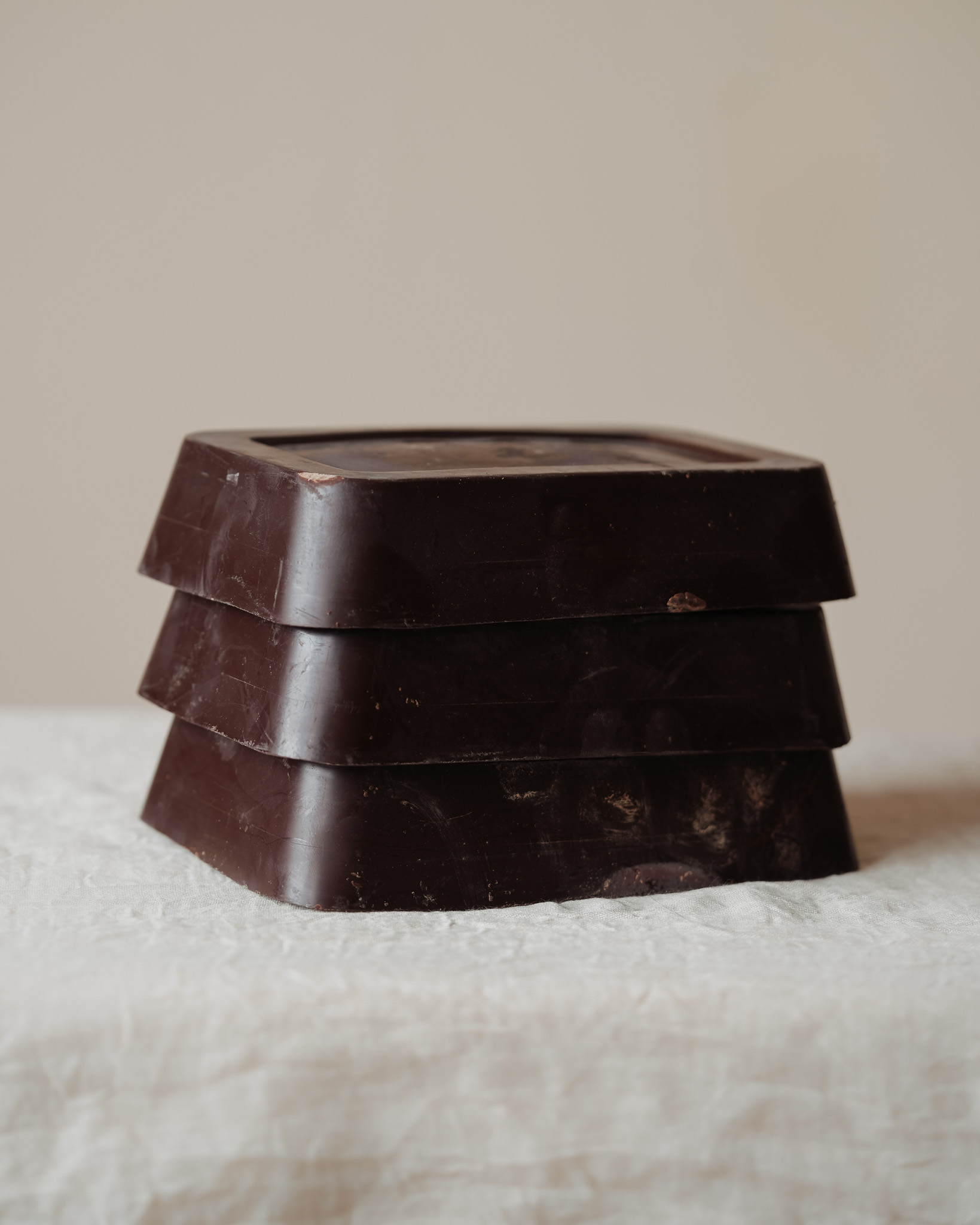
You can explore our 100% ceremonial grade cacao, available in traditional blocks and convenient cacao coins.
Once your cacao is ready, sit somewhere comfortable and take a moment to notice the warmth of the cup.
Before drinking, ask yourself how you’re feeling.
Not how you think you should be feeling.
How you’re actually feeling.
Take a few gentle breaths, allowing your attention to settle.
Then enjoy your cacao slowly.
Notice the flavour, the aroma and the sensations of drinking something warm.
Afterwards, you might spend ten or fifteen minutes practising gentle yoga.
Perhaps a comfortable seated position, a few slow spinal movements, child’s pose or simply lying down with your knees supported.
Choose movements that feel appropriate for your body.
Then finish with a few minutes of stillness.
You might reflect on something you’re grateful for, an intention you’d like to carry into your day or simply the experience of having made time for yourself.
There is no need to make the ritual elaborate.
You don’t need candles, crystals or a perfectly curated meditation corner.
Although I do love a candle.
All you really need is a willingness to give yourself a little attention.
And perhaps the most important part is remembering that this isn’t another task to complete.
It’s an opportunity to enjoy being.
14. Why I Teach Both Yoga and Cacao
People sometimes ask me why I work across so many different modalities.
Why yoga? Why cacao? Why Reiki, meditation, breathwork and sound healing?
And I think the answer is actually quite simple.
Because people are wonderfully complex.
We all arrive with different experiences, different needs and different ways of connecting with ourselves.
Some people find stillness through movement.
Others find it through meditation.
Some love the sensory experience of cacao, while others connect most deeply through music, sound or conversation.
I don’t believe there is one perfect pathway to wellbeing.
What matters is finding practices that feel meaningful, accessible and supportive to us.
My journey into this work came after years of living and working in a very different environment.
I understand what it feels like to be constantly busy, to carry responsibility and to find it difficult to switch off.
And I also understand how transformative it can feel to begin making space for yourself again.
Not because yoga or cacao suddenly solves every problem.
But because these practices can change how we relate to ourselves and our lives.
They remind us to notice.
To listen.
To be curious.
To recognise that we don’t always need to be striving towards something.
And perhaps most importantly, they remind us that we’re human.
Not machines designed to achieve maximum productivity.
Just human beings, trying to navigate life with a little more awareness, compassion and connection.
15. Come and Experience Yoga and Cacao with Me
If you’ve never experienced a cacao ceremony before, I would love to welcome you to one.
At I AM BEING, I hold cacao ceremonies in London and at events, retreats and festivals across the UK.
My ceremonies often bring together ceremonial cacao, guided meditation, breathwork, journalling and immersive sound healing, creating a space where people can reconnect with themselves and one another.
I also teach yoga, including restorative and slow-flow practices, and love exploring how movement, breath and ritual can complement one another.
Whether you’re completely new to cacao or already have a regular practice, you’re welcome.
You don’t need to know anything about meditation.
You don’t need to be flexible.
And you certainly don’t need to arrive feeling calm and enlightened.
Just come as you are.
For those who would like to explore cacao more deeply, I also offer I AM BEING Cacao Practitioner Training, where we explore cacao’s history, cultural heritage, sourcing, composition, preparation and the practical skills involved in facilitating safe, thoughtful ceremonies.
And if you’d simply like to begin enjoying cacao at home, you can shop our ceremonial cacao and create your own little moments of ritual.
Because you don’t need to wait for a special occasion to make time for yourself.
The Beautiful Simplicity of Being
When I reflect on what yoga and cacao have taught me, I keep returning to the same idea.
We spend so much of our lives looking outside ourselves.
For success, reassurance, validation, happiness, connection and the next thing that might finally make us feel complete.
Yet both yoga and cacao, in their different ways, invite us to turn our attention inward.
To notice what’s already here.
To listen to our bodies.
To become more aware of our thoughts.
To appreciate the people around us.
And to remember that life isn’t simply a collection of things we need to accomplish.
It’s something we’re here to experience.
I love the philosophy of yoga because it gives us a framework for exploring how we live.
I love cacao because it offers a beautiful, sensory and accessible way to create moments of intention and connection.
And I love bringing them together because, for me, they represent so much of what I AM BEING is about.
Not escaping life.
Not trying to become someone different.
Not endlessly striving for a better version of ourselves.
But learning to meet ourselves, exactly where we are, with a little more kindness, curiosity and awareness.
And preferably with a delicious cup of cacao in hand.
Because sometimes the most meaningful thing we can do isn’t to add something else to our lives.
It’s to create enough space to appreciate the life we’re already living.
Being and being together.
With love,
Gizelle x
Frequently Asked Questions About Yoga and Ceremonial Cacao
Can you drink ceremonial cacao before yoga?
Yes, many people enjoy ceremonial cacao before gentle yoga, meditation or breathwork. However, cacao naturally contains caffeine and theobromine, so it’s worth considering your personal tolerance, the amount you drink and the type of yoga you’re practising. Smaller servings may be preferable before movement, particularly if you’re new to cacao.
What is the connection between yoga and cacao?
Although yoga and cacao originate from different cultural traditions, contemporary practices often share themes of mindfulness, intention, self-awareness, connection and ritual. Yoga explores these through philosophy, movement, breath and meditation, while modern cacao ceremonies often incorporate sensory awareness, reflection and community.
What happens at a cacao ceremony?
A cacao ceremony typically involves drinking prepared cacao in a thoughtfully facilitated setting, often alongside meditation, breathwork, journalling, music or group reflection. At I AM BEING, ceremonies are designed to encourage connection, relaxation and personal exploration. You can discover our cacao ceremonies in London.
Where can I buy ceremonial grade cacao in the UK?
You can buy ceremonial grade cacao from I AM BEING. Our 100% cacao is sourced from Flores Island in Indonesia and is available in 500g blocks, convenient 500g cacao coins and travel packs.
Do I need yoga experience to attend a cacao ceremony?
Absolutely not. Cacao ceremonies are open to beginners, and yoga experience isn’t required. At I AM BEING, the emphasis is on creating a welcoming environment where everyone can participate in a way that feels comfortable.
Can cacao help with meditation?
Some people find that preparing and drinking cacao creates a useful ritual before meditation. Its warmth, flavour and aroma can provide a sensory focus, although cacao itself is not proven to induce a meditative state. The combination of intention, environment and mindful attention is often what makes the experience meaningful.
Love,
Gizelle Renee x