How to Choose the Best Ceremonial Cacao in the UK
Looking for ceremonial cacao in the UK? Learn what to check for, from ingredients and origin to serving format, preparation and cacao coins.
Ceremonial cacao has become easier to find in the UK, but not every cacao product is made in the same way. If you are buying cacao for drinking at home, the most useful place to start is not with bold claims or complicated language. Start with the basics: what is in the pack, where the cacao comes from, how it has been processed and whether the serving format works for your routine.
At I AM BEING, we think choosing cacao should feel straightforward. A good product page should tell you what you are buying and give you enough practical information to prepare it with confidence.
What is ceremonial cacao?
Ceremonial cacao is generally used to describe a minimally processed cacao product made from the whole cacao bean, including its natural cacao butter. Unlike drinking chocolate, it is typically sold without added sugar, milk powder, flavourings or sweeteners.
The phrase “ceremonial cacao” is used by different producers in different ways, so it is worth looking beyond the name on the front of the pack. Check the ingredients list. A pure cacao product should be simple. I AM BEING Ceremonial Cacao contains one ingredient: cacao.
You may also see products described as cacao paste, cacao mass or 100% cacao. These terms can overlap. The key question is whether the product contains the whole ground cacao bean rather than a sweetened cocoa drink mix.
1. Check the ingredients first
For a simple drinking cacao, the ingredients list is one of the quickest ways to compare products. Look for 100% cacao if that is what you want. If the product contains sugar, dairy, emulsifiers or flavourings, it is a different style of drink.
I AM BEING cacao is 100% pure cacao with no added sugar, sweeteners, additives or preservatives. It is also vegan, dairy-free and gluten-free.
This does not mean you have to drink it plain. At home, you can prepare cacao with hot water or a plant-based milk and add ingredients such as cinnamon, vanilla, honey or maple syrup according to your taste.
2. Look at where the cacao comes from
Origin matters because cacao grown in different places can have different flavours and characteristics. It also helps you understand the supply chain behind the product.
I AM BEING cacao comes from Flores Island in Indonesia. The cacao is grown within an agroforestry environment across a community of family farms. The beans are fermented and roasted before being stone-ground into cacao.
When comparing products, look for a producer that clearly names the country or region of origin rather than using vague language. If a brand can explain where its cacao comes from and how it is processed, that gives you much more useful information than a long list of lifestyle claims.
3. Understand the format you are buying
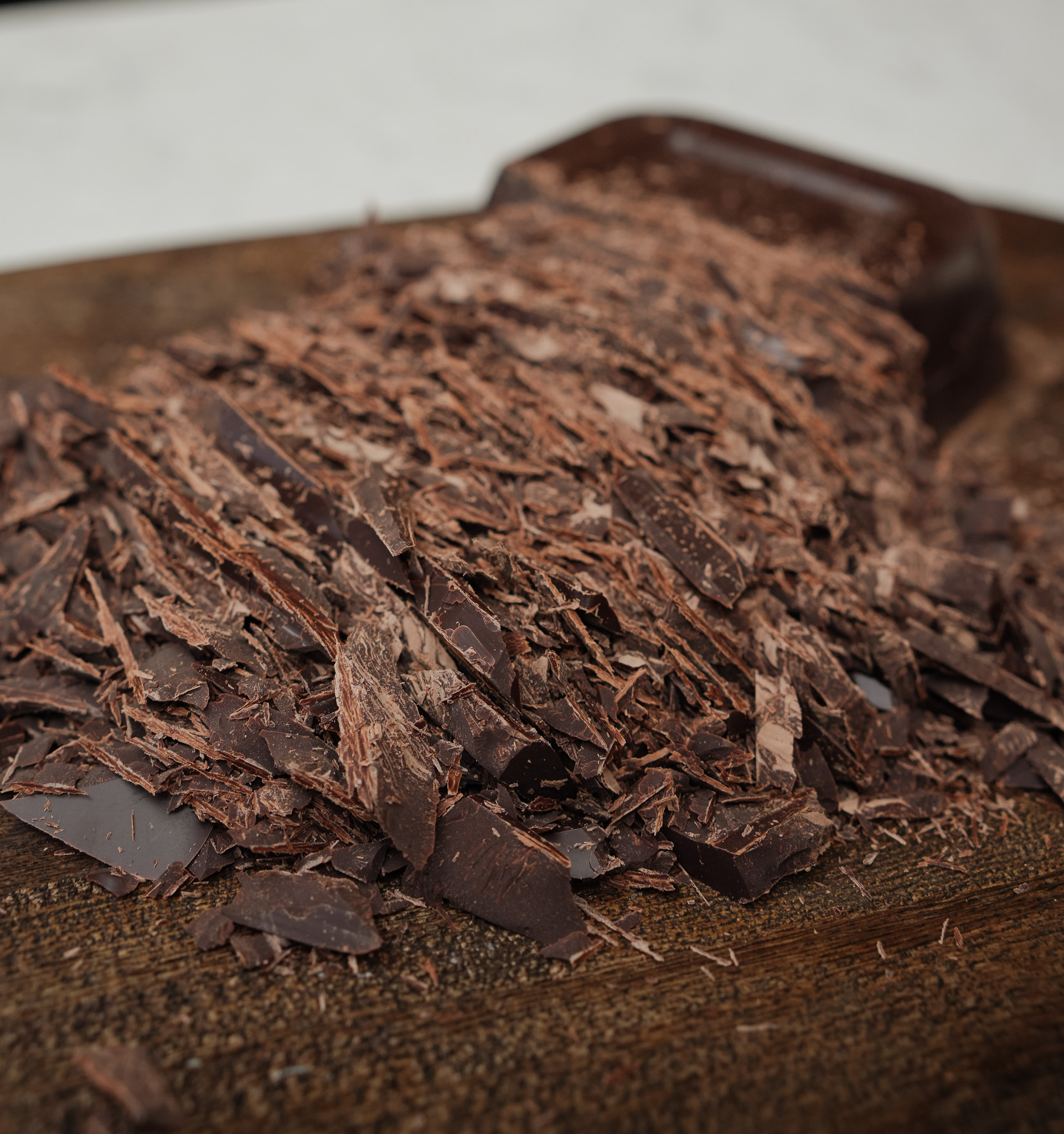
Traditional cacao is often sold as a large block. This works well, but it usually needs to be chopped and weighed before each serving.
Our new I AM BEING cacao coins were designed to make this step easier. Each coin is approximately 9.5g, with around 52–53 coins in a 500g pack. Instead of cutting from a block, you can simply choose the number of coins you want to prepare.
For people who drink cacao regularly, this can make the process quicker and less messy. It also makes it easier to repeat a serving size once you have found the amount you prefer. These will be out in October and until then, it’s our 500g Ceremonial Cacao Blocks which we will still continue to sell.
4. Check the serving guidance
A clear cacao brand should explain how to prepare the product and how much to use. There is no need for serving guidance to feel complicated.
At I AM BEING, we use approximately 25g as an everyday serving guide and around 40–42g for a fuller serving. Individual preferences vary, so customers can choose a smaller amount when trying cacao for the first time.
With 9.5g coins, two to three coins create a lighter everyday cup, while four coins give you approximately 38g. The coin format makes it easy to adjust without reaching for kitchen scales every time. You can find out a lot more about ways in which to make cacao here.
5. Think about taste, not just terminology
Cacao should ultimately be something you enjoy drinking. Processing, origin and natural cacao butter all influence texture and flavour.
Our Flores cacao has a smooth texture with natural vanilla-like notes, depth and a long finish. It can be prepared simply with hot water, or made creamier with plant-based milk.
If you are new to pure cacao, remember that it is not the same as a sweet hot chocolate. It has a deeper, more complex and naturally bitter profile. Adding a little sweetness or spice can be a useful way to find the preparation you enjoy most.
6. Look for practical quality information
Useful product information can include origin, ingredient details, batch information, storage guidance, preparation instructions and laboratory testing where relevant.
For I AM BEING, we have tested the cacao for a range of elements and monitor product safety as part of our food-business processes. We also work with our supply chain on documentation relating to production and quality.
Customers do not need to become food scientists to choose cacao. The point is simply that factual, checkable information is more useful than vague promises.
7. Be careful with “organic” claims
If organic certification matters to you, check whether the product is actually certified rather than assuming that traditional or chemical-free growing methods automatically mean certified organic.
Our cacao is not currently certified organic, so we do not market it as certified organic. The cacao is grown without chemical inputs within the farming network we work with, and the longer-term process of organic certification is being explored at farm level. Because the network includes several hundred family farms, that process takes time.
We prefer to be precise about the distinction between farming practice and formal certification.
8. Choose a pack size that fits how you will use it
A 500g pack is useful for people who want cacao to become a regular home drink rather than a one-off purchase. At an everyday serving of around 25g, a 500g pack provides roughly 20 servings. At a fuller 40g serving, it provides around 12 servings.
The new coin format keeps the same 500g pack size while making portioning easier. This can be especially useful if more than one person in a household drinks cacao or if you alternate between lighter and fuller servings.
How should you prepare ceremonial cacao at home?
A simple starting method is to warm water or plant-based milk without bringing it to a hard boil. Add your cacao and whisk or froth until smooth. Then adjust the flavour to your preference.
You can keep it very simple or add cinnamon, vanilla, a small amount of honey or another sweetener. The best preparation is the one you will genuinely enjoy making again.
What should you look for when buying ceremonial cacao in the UK?
For a quick checklist, look for a clear ingredients list, named origin, transparent processing information, practical serving guidance, straightforward preparation instructions and a format that suits the way you want to use it.
For I AM BEING, that means 100% Flores cacao, no added sugar, a 500g pack and a pre-portioned coin format designed for easy preparation at home.
If you are ready to try it, explore our ceremonial cacao shop to see the current 500g cacao format, preparation information and serving suggestions. If you prefer to come to a Cacao Ceremony and try it together, pop over to Seven Lion Yard in Clapham, South West London. You can book your spot here.
Love, Gizelle x