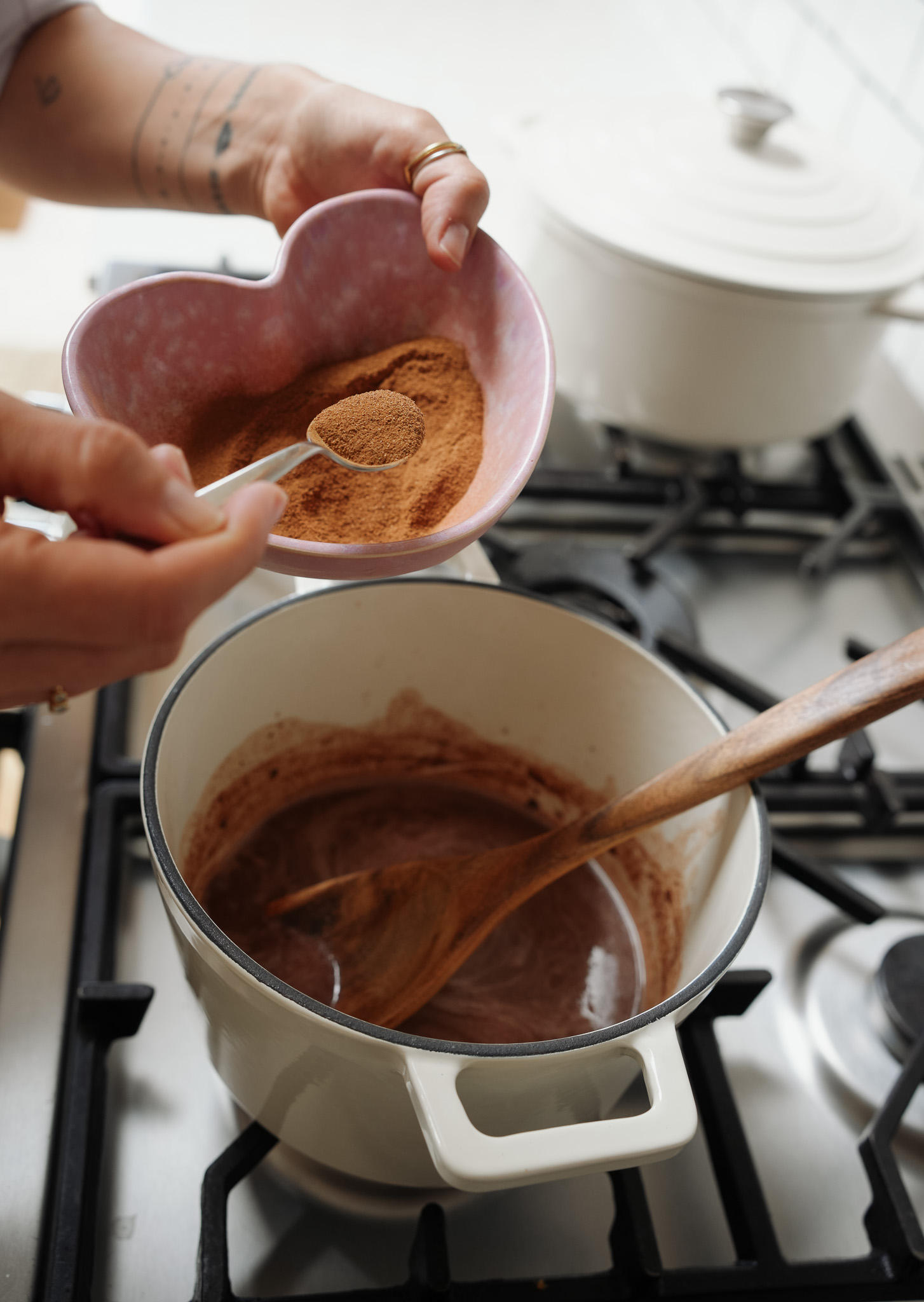
The Happy Chemicals in Ceremonial Cacao: The Science of Feeling Good
Explore anandamide, PEA, tryptophan and the happy chemicals in cacao. Discover I AM BEING ceremonial cacao, London ceremonies and SSRI safety.
There is something rather beautiful about cacao, isn’t there? And I don’t just mean its rich, comforting taste, the warmth of holding a cup between your hands or the way it encourages us to slow down for a moment. I mean what is actually happening within this extraordinary plant, and the fascinating relationship between its natural compounds, our brains, our nervous systems and how we feel.
If you’ve ever joined me for one of my cacao ceremonies in London, you’ll know that I love exploring the science behind cacao just as much as the experience of drinking it. With my background in applied psychology, I have always been fascinated by how our brains work, why we experience certain emotions and how the smallest changes in our environment, behaviour and biology can influence the way we feel.
And cacao is particularly interesting because it contains a wonderful collection of naturally occurring compounds, many of which have become associated with happiness, pleasure, motivation, relaxation and connection.
You may have heard people talk about anandamide, often called the bliss molecule, or phenylethylamine, sometimes described as the love chemical. Then there is tryptophan, which our bodies use to make serotonin, and theobromine, the naturally occurring stimulant that gives cacao some of its distinctive characteristics.
But what do these compounds actually do? Do they genuinely make us happier? Can drinking ceremonial cacao influence serotonin or dopamine? And why do some people describe feeling uplifted, focused or deeply relaxed after drinking it?
I wanted to explore these questions properly, because while I absolutely love the beauty and experience of cacao, I believe we should understand the science rather than simply repeat the claims we see online.
So let’s explore the chemistry behind cacao, what research tells us and why this remarkable plant has become such an important part of my life and the work I do through I AM BEING.
1. Anandamide: The Bliss Molecule in Cacao
Let’s begin with one of my favourite compounds, partly because its name is so beautiful.
Anandamide takes its name from the Sanskrit word ananda, meaning bliss or joy. It is a naturally occurring substance produced within our own bodies and belongs to a family of compounds known as endocannabinoids.
Our endocannabinoid system is an incredibly interesting network of chemical messengers, receptors and enzymes that helps regulate numerous processes within the body, including appetite, memory, pain, emotional responses and our ability to adapt to changing circumstances.
Anandamide is one of the chemical messengers involved in this system.
What makes cacao particularly fascinating is that researchers have identified small quantities of anandamide in cacao and chocolate, alongside other compounds that may influence how anandamide is broken down.
These include N-oleoylethanolamine and N-linoleoylethanolamine, two naturally occurring fatty-acid derivatives that have been investigated for their potential influence on anandamide metabolism.
This has led to the popular suggestion that cacao is a natural source of bliss.
However, there is an important scientific distinction here. Although anandamide is present in cacao, the quantities are relatively small, and there is not currently convincing evidence that drinking a normal serving of cacao increases anandamide activity in the human brain sufficiently to create a measurable feeling of bliss.
Our bodies also metabolise anandamide rapidly.
So while the chemistry is fascinating, it would be misleading to say that cacao simply floods our brains with happiness.
What I find particularly interesting is the relationship between this biological system and our emotional experiences more generally. Our bodies are constantly working to regulate themselves, responding to everything from sleep and nutrition to stress, movement and social connection.
And perhaps this is why the experience of drinking cacao can feel so meaningful. We are not simply consuming a plant; we may also be creating an opportunity to notice how we feel, become more present and reconnect with ourselves.
2. Phenylethylamine (PEA): The Love Chemical
Now, this is a compound that I think deserves a little more attention, particularly because it is so frequently mentioned in conversations about cacao.
Phenylethylamine, or PEA, is a naturally occurring trace amine found in the human body and certain foods, including cacao.
It is sometimes referred to as the love chemical because of its association with neurotransmitter pathways involved in attention, motivation and reward.
Within the brain, phenylethylamine can influence signalling associated with dopamine and noradrenaline. These chemical messengers play important roles in how we respond to rewarding experiences, maintain attention and prepare ourselves for activity.
This connection has contributed to the romantic idea that cacao creates feelings similar to falling in love.
And while I rather love that description, the science is more complicated.
When phenylethylamine is consumed through food, much of it is rapidly broken down by an enzyme called monoamine oxidase B, or MAO-B.
As a result, relatively little dietary PEA is expected to reach the brain intact.
There is currently insufficient evidence to suggest that the small quantities naturally found in cacao produce a significant romantic or euphoric effect.
But I think there is something lovely about understanding why the association exists in the first place.
Our brains respond to pleasurable experiences through complex networks involving sensory information, memory, anticipation and reward.
The smell of cacao warming gently, the pleasure of tasting something rich and delicious, or the anticipation of sharing a cup with someone we love can all contribute to how we experience that moment.
And sometimes the feelings we associate with cacao may be influenced as much by the experience surrounding it as by the compounds themselves.
3. Tryptophan: The Building Block of Serotonin
Tryptophan is another fascinating component of cacao, and one that brings us into the wonderful world of neurotransmitters.
Tryptophan is an essential amino acid, which means our bodies cannot manufacture it independently. Instead, we obtain it through food.
It is found in many dietary sources, including eggs, dairy products, nuts, seeds, meat and cacao.
What makes tryptophan particularly interesting is that it is a precursor to serotonin.
Serotonin is a neurotransmitter involved in mood regulation, appetite, sleep and several other physiological processes.
Our bodies convert tryptophan into 5-hydroxytryptophan, often abbreviated to 5-HTP, before converting it into serotonin.
This process requires several enzymes and nutritional cofactors, and it is carefully regulated by the body.
You may have heard serotonin described as our happiness hormone. While this is a convenient way of explaining its relationship with mood, serotonin has a much broader role in human physiology.
It is involved in communication between nerve cells, gastrointestinal function, sleep regulation and other essential processes.
Interestingly, a substantial proportion of the body’s serotonin is produced in the gut, although serotonin produced outside the brain does not simply cross into the brain.
So where does cacao fit into all of this?
Cacao contains tryptophan, meaning it contributes to our overall dietary intake of this essential amino acid.
However, consuming tryptophan does not automatically increase serotonin levels in the brain.
Tryptophan must compete with other amino acids for transport across the blood-brain barrier, and serotonin production is influenced by many different physiological factors.
The quantities found in a normal serving of cacao should not be compared with concentrated tryptophan supplements.
This is an important distinction because cacao is sometimes promoted as a natural antidepressant or a way to boost serotonin.
While some studies have investigated the effects of cocoa-rich products on mood, we do not have sufficient evidence to conclude that ceremonial cacao directly raises brain serotonin levels or treats depression.
What I do find interesting is that cacao contains several different compounds that contribute to its nutritional profile, and understanding them helps us appreciate just how complex this plant really is.
4. Serotonin: Does Cacao Actually Contain It?
This is where things become even more interesting.
Cacao and chocolate have been found to contain small quantities of serotonin itself, as well as compounds associated with serotonin metabolism.
However, there is a very important difference between consuming serotonin in food and increasing serotonin activity within the brain.
Serotonin does not readily cross the blood-brain barrier.
This means that serotonin consumed through food does not simply travel into our brains and create feelings of happiness.
Our brain’s serotonin system is regulated through complex biological pathways, and its relationship with mood is considerably more sophisticated than the idea that more serotonin automatically means more happiness.
In fact, this is one of the reasons I think we should be careful with the language we use when discussing cacao.
I often see statements suggesting that cacao releases serotonin or naturally increases our happiness hormones.
While these phrases sound appealing, they can oversimplify what is actually happening.
What we can say is that cacao contains substances associated with serotonin-related pathways, and researchers continue to investigate how cocoa consumption may influence mood.
And that is interesting enough without needing to exaggerate it.
5. Dopamine: Pleasure, Motivation and Reward
Dopamine is another neurotransmitter that has become incredibly popular in conversations about wellbeing.
We often hear it described as the pleasure chemical, but dopamine is involved in much more than pleasure alone.
It plays important roles in motivation, learning, attention, movement and how our brains respond to rewards.
Dopamine helps us learn which experiences may be worth repeating and contributes to the anticipation of something enjoyable.
Cacao contains amino acids such as tyrosine, which the body can use in the production of dopamine.
It also contains small quantities of other compounds associated with dopamine-related signalling.
One of these is salsolinol, a naturally occurring compound that has been investigated for its interactions with certain dopamine receptors.
However, research into these mechanisms is still developing, and the presence of such compounds in cacao does not establish that drinking it directly increases dopamine activity in the human brain.
I think this is an important point because we are often encouraged to look for quick ways to increase dopamine.
But our reward systems are incredibly complex.
They respond to our environment, relationships, experiences, expectations and behaviours.
For example, when you prepare a cup of cacao and take the time to enjoy it, the smell, taste, warmth and anticipation may all contribute to a pleasurable sensory experience.
And perhaps this is something worth appreciating.
Not everything needs to be about increasing a particular neurotransmitter. Sometimes, creating more opportunities to experience pleasure, connection and presence is meaningful in its own right.
6. Theobromine: The Compound That Makes Cacao So Distinctive
Of all the naturally occurring compounds in cacao, theobromine is one of the most significant.
Theobromine belongs to a group of substances called methylxanthines, alongside caffeine.
Its name is derived from Theobroma cacao, the botanical name of the cacao tree, which is often translated as food of the gods.
Unlike anandamide or phenylethylamine, which are present in relatively small quantities, theobromine is a major naturally occurring constituent of cacao.
Theobromine has stimulating properties, although it is generally considered a milder central nervous system stimulant than caffeine.
Both substances interact with adenosine receptors, which are involved in processes including sleepiness and alertness.
However, theobromine and caffeine differ in their potency, metabolism and physiological effects.
This is one reason why people may describe cacao as feeling different from coffee.
Some people report feeling more gently alert or experiencing a different quality of stimulation after drinking cacao.
However, these descriptions are subjective, and the effects depend on the individual, the quantity consumed and the composition of the cacao.
Theobromine has also been studied for its effects on cardiovascular function, including blood vessels and heart rate.
At higher doses, it can cause unwanted effects such as palpitations, nausea or discomfort.
This is why I always encourage people to understand the cacao they are drinking and to recognise that larger servings are not necessarily better.
When developing I AM BEING Ceremonial Grade Cacao, I became particularly interested in the composition of our cacao and the importance of knowing what we are consuming.
Our cacao comes from Flores Island, Indonesia, and is made from 100% pure cacao mass.
It contains naturally occurring theobromine and caffeine, although the exact theobromine content of a particular serving should only be stated when supported by product-specific testing.
For me, understanding the science helps us make more informed decisions about how we enjoy cacao.
7. Caffeine: Why Cacao Can Feel Different from Coffee
Although cacao is often described as an alternative to coffee, it is important to remember that it does contain caffeine.
Caffeine is a naturally occurring stimulant that primarily works by blocking certain adenosine receptors in the nervous system.
Adenosine is involved in the regulation of sleep pressure, and blocking its receptors can temporarily reduce feelings of tiredness and increase alertness.
The amount of caffeine in cacao varies depending on its origin, genetics and processing.
Our own I AM BEING cacao has been laboratory tested and contains approximately 1,122 mg of caffeine per kilogram.
That means a 30 g serving contains approximately 34 mg of caffeine.
This is generally less than a typical cup of brewed coffee, although coffee strength and serving sizes vary considerably.
What I find interesting is that cacao contains caffeine alongside theobromine and other naturally occurring substances.
Together, these contribute to its distinctive composition.
However, cacao is not automatically suitable for everyone simply because it contains less caffeine than coffee.
People who are particularly sensitive to stimulants may experience restlessness, palpitations, anxiety or difficulty sleeping.
And this is why I think it is so important to understand our own bodies rather than follow a universal recommendation.
8. Polyphenols and Flavanols: The Less Talked About Compounds
While anandamide and phenylethylamine tend to receive the most attention, I think some of the most interesting research into cacao and mood actually involves its polyphenols.
Polyphenols are naturally occurring plant compounds found in many foods, including berries, tea, vegetables and cacao.
Cacao contains a family of polyphenols known as flavanols, including epicatechin and catechin.
These compounds have been investigated for their effects on vascular function, circulation and aspects of cognitive performance.
Some research has also explored whether consuming cocoa-rich products may influence mood.
One particularly interesting randomised controlled trial, published in the Journal of Psychopharmacology in 2013, examined the effects of cocoa polyphenols in healthy middle-aged adults.
Participants consumed a cocoa drink containing different quantities of polyphenols or a placebo over 30 days.
The researchers found that the group receiving the higher-polyphenol drink reported improvements in calmness and contentedness compared with the placebo group.
However, the study did not demonstrate improvements in cognitive performance, and the results do not establish that every cacao product produces the same effects.
A later systematic review and meta-analysis also found promising evidence that cocoa-rich products may positively influence certain short-term mood measures.
But the research involved relatively small studies, different cocoa preparations and varying amounts of active compounds.
We therefore need larger, longer-term studies before drawing firm conclusions about cacao and mental health.
I find this particularly interesting because it reminds us that the most heavily marketed compounds are not always the ones with the strongest human research behind them.
The chemistry of cacao is far more complex than a single bliss molecule.
9. Magnesium: An Important Mineral in Cacao
Alongside its more unusual compounds, cacao also provides essential minerals, including magnesium.
Magnesium is involved in hundreds of enzymatic processes throughout the body.
It contributes to normal nervous system function, normal psychological function, muscle function and energy metabolism.
These are established physiological roles of magnesium, rather than evidence that cacao itself treats anxiety or depression.
The amount of magnesium supplied by cacao depends on the product and serving size.
I think it is useful to remember that cacao is a food with a broader nutritional composition, not simply a collection of substances associated with mood.
Our brains and bodies depend on a varied diet that supplies sufficient energy, amino acids, vitamins and minerals.
No single food can replace that.
But cacao can certainly be enjoyed as part of a balanced and nourishing approach to eating.
10. Tyramine, Tryptamine and Other Naturally Occurring Amines
There are a few additional compounds that I think deserve mentioning, particularly because they help explain why cacao’s processing and individual sensitivities matter.
Cacao can contain small quantities of biogenic amines, including tyramine, tryptamine and histamine.
These substances may be formed or altered during processes such as fermentation and roasting.
Their concentrations can vary between cacao varieties and processing methods.
Tyramine is particularly important because it can interact with certain medications, especially monoamine oxidase inhibitors, or MAOIs.
In people taking some MAOI medications, consuming excessive tyramine can cause a potentially dangerous increase in blood pressure.
This is a different concern from the interactions associated with SSRIs, which I will explain at the end of this article.
Tryptamine is chemically related to serotonin and belongs to a broader family of naturally occurring amines.
However, its presence in cacao does not mean that drinking cacao produces psychedelic or strongly psychoactive effects.
I think this is an important reminder that chemical names can sound dramatic, but their effects depend on the quantities consumed, how they are metabolised and whether they reach relevant tissues.
Understanding cacao means looking beyond the name of a compound and asking what it actually does within the human body.
11. Why Do People Feel So Good After Drinking Ceremonial Cacao?
So, having explored all these fascinating compounds, we return to the question that began this article.
Why does ceremonial cacao sometimes make people feel so good?
The answer is that several things may be contributing to the experience.
Cacao contains methylxanthines that can influence alertness, polyphenols that are being investigated for their physiological effects, and smaller quantities of compounds associated with various neurotransmitter pathways.
Its flavour, aroma and texture can also create an enjoyable sensory experience.
And then there is everything that happens around the cup itself.
When we prepare cacao slowly, sit down, breathe and give ourselves permission to be present, we are creating a different experience from consuming something hurriedly while distracted.
This is something I explore regularly during my cacao ceremonies in London.
As a cacao practitioner, Reiki Master, yoga teacher, meditation and breathwork facilitator and sound healer, I love bringing together the science of cacao with practices that encourage us to become more aware of ourselves.
During a ceremony, we may explore gentle breathwork, guided meditation, reflective journalling or an immersive sound bath using alchemy crystal singing bowls.
These experiences are not dependent on cacao producing a particular chemical reaction.
Instead, they provide opportunities to slow down, notice our thoughts and feelings, and connect with ourselves and others.
I think this is where the real beauty of cacao lies.
It is not about promising happiness in a cup.
It is about understanding the remarkable plant we are drinking and appreciating the experience we create around it.
12. Why I Created I AM BEING Ceremonial Grade Cacao
When I began developing my own ceremonial cacao, I wanted to create something that brought together quality, transparency and simplicity.
I had spent years exploring cacao through my own practice and through the ceremonies I was facilitating, and I wanted people to have access to a product they could enjoy confidently at home.
Our I AM BEING Ceremonial Grade Cacao comes from Flores Island, Indonesia, where cacao is grown through forest-based agroforestry by farming families.
It contains one ingredient: 100% cacao mass.
No added sugar, no dairy and no unnecessary ingredients.
The flavour is beautifully smooth, with rich chocolate notes, gentle vanilla and warm spice.
We offer traditional 500 g cacao blocks, convenient 500 g cacao coins and three-coin travel packs.
Our cacao coins were developed to make preparation easier, with each coin weighing approximately 9.5 g.
Whether you are looking to buy ceremonial grade cacao in the UK, create a quiet moment in your morning or explore cacao as part of a meditation practice, I wanted the experience to feel accessible.
And I also wanted people to understand what they were drinking.
Because I believe the more we learn about cacao, the more interesting it becomes.
13. Experience Cacao Ceremonies in London with I AM BEING
If reading about the science of cacao has made you curious about experiencing it in a different setting, I would love to welcome you to one of my ceremonies.
Through I AM BEING, I host cacao ceremonies in London, including intimate experiences at Seven Lion Yard in Clapham.
My ceremonies bring together ceremonial cacao, meditation, breathwork, sound and reflection.
I also offer private cacao ceremonies for individuals, couples, groups and corporate wellbeing experiences.
Each ceremony is an opportunity to explore cacao in a welcoming environment, learn more about the plant and experience practices that encourage presence and connection.
I also teach an immersive cacao practitioner training programme, where we explore cacao’s history, sourcing, composition, preparation, safety and the responsibilities involved in facilitating ceremonies.
Because understanding what is in your cacao is just as important as understanding how to share it with others.
If you have questions about cacao’s compounds, choosing a product, preparing a cup or attending a ceremony, please feel free to contact me directly at gizelle@iambeing.co.uk.
I genuinely love these conversations and am always happy to share what I know, including where the scientific evidence is still developing.
The Beauty of Cacao Is in Understanding It
I hope this has given you a little more insight into why I find cacao so extraordinary.
From anandamide and phenylethylamine to tryptophan, serotonin, dopamine, theobromine and polyphenols, there is so much happening within this beautiful plant.
And yet, perhaps the most important thing to understand is that cacao is not a shortcut to happiness.
It is a complex food containing compounds that interact with our bodies in different ways, some of which are well understood and others that are still being researched.
For me, that makes it even more interesting.
We don’t need to exaggerate its properties or promise that it will change someone’s emotional state.
We can simply appreciate its chemistry, its cultural history, the people who grow it and the beautiful experiences we create when we share it.
Because sometimes, the most meaningful part of a cup of cacao isn’t a chemical at all.
It’s the opportunity to stop, connect and remember that we are allowed to simply be.
Being and being together.
With love,
Gizelle Renee x
Founder, I AM BEING
Important Safety Note: Ceremonial Cacao, SSRIs and Antidepressant Medication
Before finishing, I want to address an important question that I am sometimes asked by people attending my cacao ceremonies: can you drink ceremonial cacao while taking SSRIs or other antidepressant medication?
SSRIs, or selective serotonin reuptake inhibitors, are medications commonly prescribed for depression, anxiety and certain other mental health conditions.
Examples include sertraline, fluoxetine, citalopram, escitalopram and paroxetine.
They work by affecting serotonin signalling within the nervous system.
Because cacao contains tryptophan, small quantities of serotonin and other naturally occurring amines, concerns are sometimes raised about whether drinking ceremonial cacao could interact with these medications.
It is important to understand that there is currently no convincing clinical evidence that ordinary dietary servings of cacao cause serotonin syndrome when combined with SSRIs.
The tryptophan naturally present in food is also very different from taking concentrated tryptophan or 5-HTP supplements, which can interact with serotonergic medication.
However, concentrated ceremonial servings of cacao have not been adequately studied in people taking SSRIs, and the amount consumed may be considerably larger than that found in an ordinary chocolate snack.
Cacao also contains caffeine and theobromine, which may cause palpitations, restlessness, sleep disruption or increased anxiety in some people.
There is an additional consideration for anyone taking monoamine oxidase inhibitors, or MAOIs, which are a different class of antidepressants. Certain MAOIs can interact dangerously with foods containing high levels of tyramine, potentially causing a serious rise in blood pressure.
For these reasons, I recommend that anyone taking SSRIs, MAOIs or other psychiatric medication speaks with their prescribing clinician or pharmacist before consuming larger ceremonial servings of cacao, particularly if they have other medical conditions or take additional medicines.
Please never stop or alter prescribed medication in order to drink cacao or attend a ceremony.
If you are attending one of my I AM BEING cacao ceremonies in London, you are always welcome to let me know privately about any relevant medication or health considerations beforehand.
A smaller serving or a cacao-free alternative may be appropriate, depending on your circumstances and medical advice. You can still participate fully in the meditation, breathwork and sound experience without drinking cacao.
If you take serotonergic medication and develop symptoms such as marked agitation, confusion, fever, heavy sweating, tremor or muscle rigidity, seek urgent medical assessment.
I believe that working with cacao responsibly means understanding not only its beautiful qualities but also its limitations and potential contraindications.
Your safety and wellbeing should always come before the ceremony.
If you have any questions about I AM BEING cacao, its ingredients or attending one of my experiences, please email gizelle@iambeing.co.uk. For personal medication safety advice, please consult your healthcare professional.
Medical disclaimer: This article is provided for educational purposes and is not intended to diagnose, treat or prevent any medical condition. Ceremonial cacao is a food, not a substitute for prescribed medication or professional healthcare advice.