Reiki, Responsibility and Returning to Yourself
Discover what Reiki is, how it works and why consent, boundaries and choosing a responsible practitioner matter in this gentle wellbeing practice.
Reiki, Responsibility and Returning to Yourself
What Reiki means to me, why consent matters and how I bring this gentle practice into everyday life.
Reiki has been part of my life for many years. I am a Reiki Master and Teacher within the Usui lineage and it is one of the practices I return to most often, both for myself and when supporting others. It was the first practice I learnt, before all the others began to fall into place in my life.
For me, Reiki is not about forcing change, trying to fix someone or making promises about what it can do. It is about creating space for stillness, reflection and rest.
I also feel very strongly that it matters who you choose to receive Reiki from. This is a personal practice and trust is everything.
My first experience of Reiki, if I am completely honest, was not a good one. It did not turn me away from Reiki, but it taught me how important it is to choose the right practitioner. I am happy to talk about the experience, but it is a face to face conversation rather than one for here.
A Reiki session may leave someone feeling open or emotionally receptive. The person offering it therefore needs to understand far more than hand positions or symbols. They should know how to manage their own presence, maintain clear boundaries and hold a calm, grounded and respectful space in which each person can have their own experience.
Before receiving Reiki, I recommend learning about the practitioner, their training, lineage and experience. Speak with them and notice how you feel in their presence. Do they listen properly? Do they explain what will happen? Do they ask for consent before using touch? Most importantly, do you feel safe, respected and able to stop the session at any time?
Within my understanding of energy work, practitioners must also take responsibility for what they bring into the room. They should not place their emotions, expectations or unresolved experiences into someone else’s space. Whether we describe this in energetic or psychological terms, boundaries matter. Careless practice can leave a person feeling unsettled or overwhelmed.
This is something I do not believe the Western wellness industry always takes seriously enough. Reiki is often presented as automatically gentle because it does not involve physical manipulation, but holding space for another person still carries real responsibility.
No Reiki practitioner should diagnose an illness, promise healing, encourage dependency or advise someone to disregard appropriate medical or psychological care. Reiki is a complementary wellbeing practice. It should not replace medical advice, diagnosis or treatment.
I care deeply about practising and teaching Reiki with consent, integrity, clear boundaries and proper care. It is why I wanted to begin here.
What is Reiki?
Reiki is a Japanese complementary wellbeing practice. During a session, a practitioner places their hands gently on or slightly above different areas of the recipient’s body.
The word Reiki is often translated as “universal life energy”. Within Reiki tradition, this energy is understood to flow through all living things. The practitioner is not thought to give away their own personal energy. Instead, they act as a channel for Reiki.
A Reiki session usually takes place while the recipient is fully clothed, either lying comfortably or sitting in a chair. There is no massage, physical manipulation or pressure. Some people report warmth, tingling, coolness, emotion or a sense of movement. Others simply feel deeply relaxed and some feel very little during the session itself. Every experience is different and there is no correct way to receive Reiki.
Many people use Reiki as part of their approach to relaxation, reflection and emotional wellbeing. Scientific research into Reiki remains limited and inconsistent, so I speak about it through the tradition I have been trained in and through my own personal and professional experience.
A Little of Reiki’s History
The Reiki system most widely practised today was developed in Japan by Mikao Usui during the early twentieth century.
Usui’s teachings brought together meditation, spiritual principles, hands on practice and personal development. He established the Usui Reiki Ryoho Gakkai in Japan in 1922, creating a system through which Reiki could be practised and taught to others.
One of Usui’s students was Chujiro Hayashi, a retired Japanese naval officer who continued to develop and share the practice. Reiki later travelled beyond Japan largely through Hawayo Takata, a Japanese American woman from Hawaii who studied with Hayashi and introduced Reiki to many people in the West.
When someone says they are from the Usui lineage, it means their training can be traced through a succession of Reiki teachers back to Mikao Usui. Lineage matters to me because it connects my practice to the teachers who came before me. It reminds me that Reiki is not simply a technique. It is a living practice, passed from teacher to student with responsibility, integrity and care.
Reiki and the Chakras
The chakra system originates in Indian spiritual traditions and was not the original foundation of Usui’s Japanese Reiki system. Many contemporary Reiki practitioners do, however, work with the chakras as a framework for reflection.
“Chakra” is a Sanskrit word often translated as “wheel”. Within chakra traditions, the seven main chakras are described as energy centres positioned along the centre of the body.
The Root Chakra
Located at the base of the spine, the root chakra is associated with safety, stability, belonging and our connection to the physical world.
When exploring this area, we might reflect on whether we feel grounded, secure and supported.
The Sacral Chakra
Located in the lower abdomen, the sacral chakra is connected with creativity, emotion, pleasure, relationships and our ability to move with change. This area may invite us to consider how freely we express our feelings, needs and creativity.
The Solar Plexus Chakra
Located around the upper abdomen, the solar plexus is associated with confidence, identity, personal power and decision making. I often work with this area when creating space to reconnect with a sense of self or reflect on a decision.
The Heart Chakra
Located at the centre of the chest, the heart chakra represents love, compassion, connection, grief and our ability to receive as well as give. I find heart centred Reiki particularly meaningful during periods of change, loss or emotional vulnerability.
The Throat Chakra
Located around the throat, this chakra is connected with communication, truth and authentic expression. It may encourage reflection on how honestly we speak, how carefully we listen and how clearly we express what we need.
The Third Eye Chakra
Located between the eyebrows, the third eye is associated with intuition, insight, imagination and inner awareness. For me, working with this area creates space for reflection, clarity and a deeper trust in my own knowing.
The Crown Chakra
Located at the top of the head, the crown chakra is associated with spiritual connection, meaning and our relationship with something larger than ourselves. This does not have to be religious. It can simply represent a sense of connection to life, nature, humanity or the wider universe.
What Reiki Means to Me
Reiki brings me back to presence. It reminds me that not everything needs to be solved immediately. Sometimes we need to stop searching for answers and create enough quiet for the next step to reveal itself.
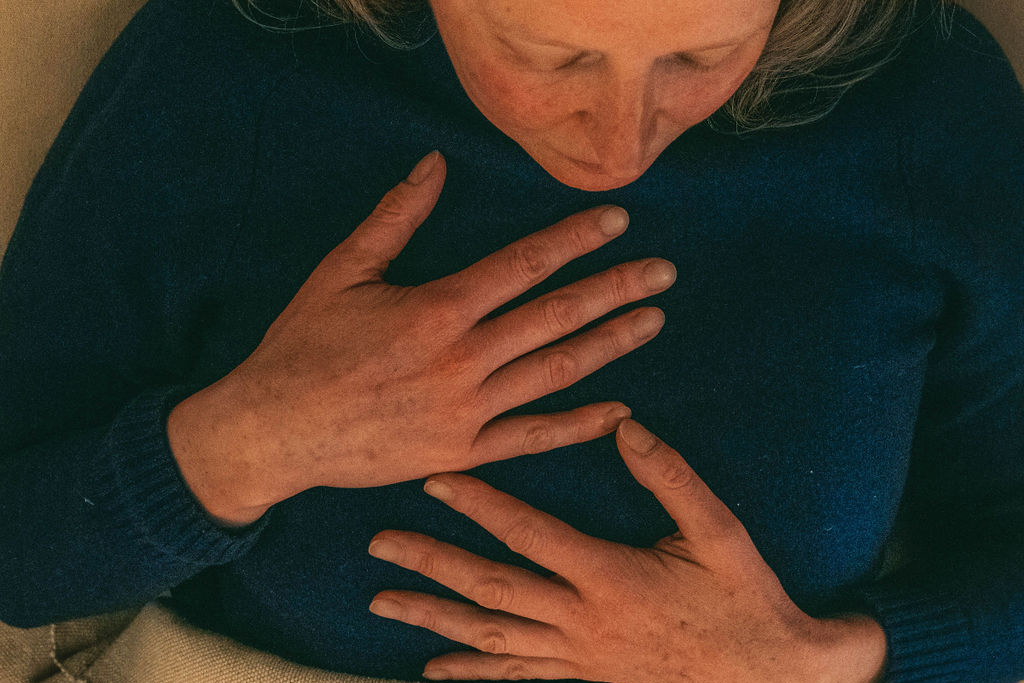
I use Reiki on myself as part of my regular wellbeing practice every morning and I really do mean every morning. I place my hands on my heart, stomach or head and allow myself to become still.
Sometimes I use it when I feel overwhelmed or emotionally full, which can be first thing in the morning. I am human too, despite being a wellbeing practitioner. At other times, I use it before sleep, during meditation or when I want to reconnect with my body.
I do not always begin with a particular goal. Often, I simply ask myself what needs my attention and allow my hands to move intuitively.
Reiki has taught me the difference between doing and being. It is a practice of listening without judgement and offering care without demanding an immediate outcome.
How I Share Reiki With My Children
I also share Reiki with my children, always with their knowledge and permission and often before bed.
Reiki with children does not need to be formal or lengthy. It can be a few quiet minutes, a gentle hand placed on their back or simply sitting beside them when they want comfort and reassurance.
Children should remain in control of the experience. If they do not want Reiki, have had enough or change their mind, that decision should always be respected.
For me, sharing Reiki with my children is not about treating something. It is about creating a calm, loving moment in which they feel safe, seen and supported. It is time for them, their energy and their wellbeing.
Distant Reiki
Reiki can also be offered from a distance. Within Reiki tradition, practitioners who have completed the relevant training learn methods for focusing a session towards someone who is not physically present.
I have offered distant Reiki to friends and clients living abroad. We agree on a time when they can sit or lie somewhere comfortable and I carry out the practice from my own space. We may speak before and afterwards or the person may simply rest during the agreed time.
Consent is always essential. I only offer distant Reiki when the recipient has clearly agreed to receive it. Distance does not remove the need for boundaries, confidentiality, permission and professional integrity.
Learning Reiki for Yourself
Reiki does not only have to be something received from a practitioner. It is also a practice that can be learnt and used for yourself.
Reiki training is traditionally taught in levels. Students begin by learning its history, principles, hand positions, ethics and self practice. As their relationship with Reiki develops, they may continue into practitioner training, distant Reiki and eventually Master or Teacher level.
Becoming attuned to Reiki gave me a practice I can carry with me wherever I go. I do not need equipment, a particular location or a perfect environment. I can simply pause, place my hands on my body and return to myself.
As a Reiki Master and Teacher, I offer Reiki sessions as well as training for those who feel called to begin or deepen their own Reiki journey.
If you would like to experience Reiki, learn how to practise it for yourself or explore becoming a practitioner, I would love to hear from you.
Visit www.iambeing.co.uk or email gizelle@iambeing.co.uk to get in touch.
Reiki is not about becoming someone new. For me, it is a way of returning to who we already are beneath the big noise we call the world.