Why Studying Cacao Matters: The Responsibility, Science and Art of Becoming a Cacao Practitioner
Discover why cacao practitioner training matters, from nervous system awareness and holding space to ethical cacao sourcing. Study with I AM BEING in London.
There is something quite wonderful happening in the world of wellness at the moment, and that is the growing number of people who are discovering cacao, attending ceremonies and exploring different ways of connecting with themselves and one another. I think, particularly in a world where we are so busy trying to achieve, produce, organise and generally keep everything moving, there is something rather beautiful about people choosing to spend a few hours simply being.
It is, of course, the very reason I created I AM BEING in the first place.
But as cacao ceremonies become increasingly popular across London and the UK, and as more people begin to consider becoming cacao practitioners themselves, there is something I feel quite strongly about discussing. It isn’t necessarily the most glamorous part of the wellness industry, and it probably doesn’t make for a particularly exciting Instagram reel, but I think it is one of the most important conversations we can have.
What does it actually mean to become a cacao practitioner, and why does studying matter so much?
Because there is a considerable difference between enjoying cacao, sharing a beautiful cup with friends and taking responsibility for guiding a room full of people through an experience that may involve their bodies, emotions, memories and vulnerabilities.
I think sometimes we forget that behind the beautiful photographs of candles, cushions, ceremonial bowls and carefully arranged flowers are actual human beings, all arriving with their own stories, experiences, expectations and challenges. Some people come to a cacao ceremony because they are curious, some because they are exhausted and need a little time away from everyday life, and others because they are going through something difficult and are looking for an opportunity to reconnect.
And the truth is that we rarely know the full story of the person sitting opposite us.
That person might have experienced loss, trauma, anxiety or a particularly difficult period in their life, or they might simply be looking forward to a lovely afternoon with a friend. Either way, when we invite somebody into a space that encourages reflection, stillness and emotional awareness, I believe we have a responsibility to understand what we are doing and why.
For me, becoming a cacao practitioner has never been about learning to deliver a beautiful meditation or knowing how to prepare the perfect cup of cacao. Those things are lovely, and of course they have their place, but the real work goes considerably deeper.
It is about understanding the cacao itself, the human body, the nervous system, the psychology of groups, the importance of boundaries and consent, and perhaps most importantly, understanding ourselves well enough to know when to guide, when to support and when to simply allow somebody to have their own experience.
And I think that deserves a little more than a weekend of learning how to make cacao and write a ceremony script.
Do you actually know what is in the cacao you are serving?
I want to begin with the cacao itself because, rather surprisingly, this is sometimes the part that gets overlooked.
We talk a great deal about the energetic properties of cacao, the feelings people associate with drinking it and the beautiful rituals that can accompany it, but how often do we stop and ask what is actually in the cup?
Cacao is an incredibly interesting and complex food, containing naturally occurring compounds including theobromine, caffeine, polyphenols, fats and minerals such as magnesium. These compounds interact with our bodies in different ways, and understanding them is an important part of being able to serve cacao responsibly.
Theobromine, for example, belongs to the same family of compounds as caffeine, although it has a different physiological profile. Both can influence the nervous and cardiovascular systems, and the effects can vary depending on the quantity consumed, the individual’s sensitivity and other factors such as their general health or medication use.
This matters because, while cacao is often described as a gentle, heart-opening alternative to coffee, we should be careful not to assume that everybody will experience it in the same way.
Something being natural does not automatically mean it is suitable for everybody, and I think this is an important distinction for anyone working in wellness to understand.
When I developed I AM BEING’s ceremonial cacao, I spent a considerable amount of time understanding where our cacao came from, how it was grown and processed, what it contained and how we could ensure that we were offering a product with appropriate quality and safety controls.
Our cacao comes from Flores Island in Indonesia, where it is grown within an agroforestry environment before being fermented, roasted and stone-ground into pure cacao. We have also undertaken laboratory testing, including testing for heavy metals and caffeine content, because I believe that if I am going to serve something to another human being, I should be able to answer their questions about it.
And I don’t mean with vague descriptions about energy or how wonderful cacao makes people feel. I mean properly answer them.
Where was it grown? What is in it? How has it been processed? Has it been tested? What is the recommended serving? What should somebody consider if they have a particular medical condition?
These questions are not particularly romantic, but they are important, and I would much rather somebody left one of my ceremonies understanding a little more about the cacao they had consumed than simply believing it was magical because somebody told them so.
This is also why I think it is important to understand that the term ceremonial grade cacao is not a universally regulated quality classification. There are some wonderful producers offering beautifully sourced whole cacao, but the words themselves do not guarantee a particular standard, so understanding the sourcing, ingredients and production methods is far more valuable than relying on a label.
If you are looking to buy ceremonial cacao in the UK, I would encourage you to ask these questions of any brand you are considering, because transparency should be part of the experience, not something you have to fight to find.
Understanding the nervous system changes the way we facilitate
My background is in applied psychology, and I think this has influenced the way I approach almost everything I do at I AM BEING, particularly when it comes to understanding why people respond so differently to the same experience.
Alongside cacao, I practise and teach modalities including yoga, meditation, Reiki, breathwork and sound healing, and one thing I have learned is that we cannot meaningfully talk about holding space for people without understanding at least the foundations of how our nervous systems work.
Our central nervous system, made up of the brain and spinal cord, is constantly processing information, while our autonomic nervous system helps regulate many of the functions we don’t consciously control, including heart rate, digestion and aspects of breathing.
Within the autonomic nervous system, the sympathetic and parasympathetic branches play important roles in helping us respond to challenges, conserve energy and maintain physiological balance.
Now, I don’t believe that everybody who wants to facilitate a cacao ceremony needs to become a neuroscientist, but I do think we need to understand enough to recognise that asking somebody to close their eyes, become still, breathe differently or turn their attention inward can create very different experiences for different people.
For somebody who feels comfortable and secure, lying down with their eyes closed and listening to a guided meditation might be the most wonderful part of their week. For somebody else, particularly someone who has experienced trauma, anxiety or panic, that same invitation might feel uncomfortable or even threatening.
And neither person is doing anything wrong.
This is something I find particularly important because the wellness industry can sometimes present relaxation as though it is something we can simply instruct somebody to do. We tell people to let go, surrender, release or drop into their bodies, often without considering that for some individuals these instructions may be much easier said than done.
If somebody’s nervous system is responding to perceived threat, telling them to relax does not necessarily help them feel any safer.
Understanding this changes the way we facilitate because we begin to offer choices rather than instructions that must be followed. We might invite people to close their eyes if they wish, or keep them open with a soft gaze. We might suggest noticing their breath rather than trying to change it, or remind them that they can move, sit upright or take a break whenever they need to.
These might seem like very small adjustments, but they can make an enormous difference to how included and respected somebody feels.
I think one of the most important things we can learn as practitioners is that our role is not to make everybody feel the same thing. It is to create an environment where people have the freedom to respond in their own way, without feeling that they are somehow failing because their experience looks different from somebody else’s.
Somatic awareness and learning to listen to the body
Another area I think deserves much more attention in cacao practitioner training is somatic awareness, which is essentially our awareness of the sensations and experiences taking place within our bodies.
We spend an extraordinary amount of our lives in our heads, thinking about what needs doing, replaying conversations, worrying about things that haven’t happened and trying to make sense of everything around us. I certainly know what that feels like, and I suspect most of us do.
What we don’t always do is stop and notice how those experiences might be showing up physically.
Perhaps our shoulders become tense when we feel under pressure, or our stomach feels unsettled before an important meeting. Perhaps we notice our breathing changing when we are upset, or feel a sense of warmth and ease when we are spending time with somebody we trust.
These are examples of the relationship between our physical sensations and our experiences, and developing awareness of them can be a useful part of reflection and self-understanding.
During a cacao ceremony, we might invite people to notice how their bodies feel, to observe their breathing or to become curious about sensations arising as they sit quietly.
But there is an important distinction between encouraging somebody to notice their body and telling them what their body is trying to communicate.
I sometimes hear very confident statements in wellness spaces about where trauma is stored, what a particular sensation means or why somebody is experiencing discomfort in a certain part of their body. While our psychological experiences and physical responses are closely connected, we need to be careful about making assumptions or presenting speculative interpretations as established facts.
A cacao practitioner is not automatically a somatic therapist, psychologist or trauma specialist, and completing a cacao training course does not qualify somebody to diagnose or treat psychological conditions.
For me, the beauty of somatic awareness is that we don’t need to interpret somebody else’s experience for them.
We can simply invite curiosity and give them permission to notice whatever is present, without needing to change it, explain it or turn it into something profound.
And sometimes, I think that is far more meaningful than being told what we ought to feel.
Holding space is a skill, not simply a beautiful expression
I think holding space has become one of those phrases we hear so frequently in wellness that we sometimes forget to question what it actually means.
People talk about holding space for one another, creating safe spaces and allowing emotional release, but there is a great deal of responsibility behind those words, particularly when we are facilitating experiences for people we may never have met before.
For me, holding space is about being present with somebody without feeling the need to fix them, rescue them, interpret their experience or make it about ourselves.
It involves being able to listen without immediately preparing a response, allowing silence without becoming uncomfortable and recognising that another person’s emotional experience belongs to them.
This might sound straightforward, but in practice it can be surprisingly difficult.
When we care about people, our natural instinct is often to help. If somebody begins crying, we want to comfort them. If somebody seems uncomfortable, we want to make them feel better. If somebody shares something painful, we may feel compelled to offer advice or reassurance.
And while those responses often come from a place of kindness, they are not always what the person needs.
Sometimes somebody simply needs to be heard, and sometimes they would prefer not to discuss what they are feeling at all.
I think this is where the difference between a practitioner who has learned to deliver a ceremony and one who has developed the skills to facilitate responsibly becomes particularly apparent.
The latter understands that not every moment requires intervention, and that being comfortable with uncertainty is part of the work.
I also think we need to be very careful about measuring the success of a cacao ceremony by how emotional it becomes.
There can be a tendency in wellness to celebrate dramatic experiences, particularly when people cry, describe having breakthroughs or tell us that something extraordinary has happened.
But somebody crying does not necessarily mean they are healing, just as somebody remaining quiet does not mean they have failed to connect.
I have facilitated ceremonies where people have experienced strong emotions, and others where the room has simply settled into a beautiful sense of quiet. Neither experience is more valuable than the other.
I don’t believe our job is to create a particular outcome. I believe it is to create an opportunity for people to experience whatever is appropriate for them, with enough care and awareness that they do not feel pressured to perform emotionally.
And that is something I think every cacao practitioner should spend time learning.
What happens when somebody becomes overwhelmed?
Let’s imagine you are facilitating a cacao ceremony and, halfway through a meditation, somebody begins to cry.
Perhaps they become visibly upset, perhaps their breathing changes or perhaps they tell you they are feeling overwhelmed.
What do you do?
I think this is a really important question because it is easy to imagine ourselves facilitating when everybody is comfortable, engaged and enjoying the experience, but much harder to consider how we might respond when something unexpected happens.
Do you approach the person? Do you ask if they need support? Do you offer physical contact? Do you encourage them to continue, or suggest that they take a break?
The answer will depend on the circumstances, the person’s wishes and whether there are any immediate safety concerns, but what matters is having enough understanding to respond thoughtfully rather than reacting out of our own discomfort.
We should never assume that tears mean somebody is releasing trauma, or that an intense emotional response is necessarily something they need to work through.
If somebody becomes distressed, a calm approach, clear choices and an awareness of when additional support may be necessary are far more useful than trying to turn the experience into a spiritual breakthrough.
This is also why I am cautious about encouraging intense breathing practices without appropriate training and screening. Breathwork can take many forms, and some techniques can cause dizziness, tingling, light-headedness or increased distress, particularly in people who are sensitive to changes in breathing.
A cacao practitioner needs to understand the difference between gentle breath awareness and more intensive techniques, and should only facilitate practices for which they are appropriately trained.
I think we sometimes underestimate the power of simply allowing people to feel comfortable enough to say that something isn’t working for them.
If somebody needs to sit out a practice, open their eyes, leave the room or choose not to participate, that should be entirely acceptable.
The experience belongs to them, not to us.
Boundaries are one of the kindest things we can offer
I want to spend some time talking about boundaries because I think they are particularly important in an industry built around connection, openness and care.
We often associate being kind with being endlessly available, giving our time and energy, listening to everybody and trying to make people feel better.
But the reality is that without boundaries, even the most well-intentioned relationships can become confusing, unsustainable or inappropriate.
When somebody attends a cacao ceremony, they are entering a professional relationship with the person facilitating it, even if the environment feels informal, warm and welcoming.
That means there should be clarity around what is being offered, what participants can expect and what falls outside the practitioner’s role.
If somebody shares a deeply personal experience after a ceremony, for example, we need to understand how to respond respectfully without unintentionally taking on the role of a therapist.
If somebody asks us for advice about medication, we need to recognise that this is something to discuss with an appropriately qualified healthcare professional.
If somebody becomes emotionally dependent on attending our ceremonies or contacting us for support, we need to be able to maintain compassionate but appropriate boundaries.
And if we offer hands-on practices such as Reiki or physical adjustments, we must understand that consent is not something we obtain once and then assume continues indefinitely.
People should know what is being offered, have a genuine opportunity to decline and feel able to change their minds at any point.
I think the same applies to sharing personal experiences in groups. We should never assume that because somebody has attended a cacao ceremony, they are comfortable discussing their emotions, history or private life with strangers.
An invitation to share should remain exactly that: an invitation.
There is something enormously reassuring about being in a space where you know your choices will be respected, and I think that is one of the foundations of good facilitation.
Boundaries do not make a practitioner less compassionate. If anything, I believe they make our compassion more responsible.
Understanding dosage, contraindications and individual differences
Alongside the emotional and psychological considerations, there is also the very practical responsibility of understanding the cacao we are serving and how it might affect different people.
Cacao contains naturally occurring stimulants, including caffeine and theobromine, and larger servings may not be suitable for everybody.
Some people may experience palpitations, digestive discomfort, nausea or difficulty sleeping, particularly if they are sensitive to stimulants or consume a larger quantity than they are accustomed to.
Others may have medical conditions, take medications or be pregnant or breastfeeding, all of which can make individual guidance particularly important.
A practitioner should understand how to explain the ingredients and serving sizes, ask appropriate screening questions and recognise when somebody should seek medical advice before participating.
We should also be careful not to repeat blanket claims about medication interactions without understanding the evidence behind them. Certain medications and health conditions may require additional caution, but it is important to consider the specific circumstances rather than treating every medication or individual in the same way.
At I AM BEING, we discuss the difference between everyday servings and larger ceremonial quantities, but I also think it is important to move away from the idea that everybody must drink the same amount.
Somebody might enjoy a smaller cup, somebody else might choose a larger serving, and another person may decide not to drink cacao at all.
None of those choices should make somebody feel less included in the ceremony.
I think this is an important lesson in itself because it reminds us that the cacao is part of the experience, but it is not the only reason people have come together.
The history of cacao and why cultural understanding matters
Cacao has a fascinating history, and I think it would be rather disrespectful to build a practice around it without taking the time to understand at least some of that story.
Cacao has long been significant in parts of Mesoamerica, where different Indigenous communities developed agricultural, culinary, social and ceremonial relationships with it over many centuries.
Its history is also connected to trade, colonialism, exploitation and the development of the global chocolate industry, and understanding those relationships helps us appreciate that cacao is not simply a fashionable wellness product.
It is something with a much deeper and more complicated story.
I think there is a responsibility to approach that history with curiosity and humility, particularly when using words such as ceremony, sacred or traditional.
There is a difference between appreciating a cultural practice and presenting ourselves as representatives of a tradition to which we do not belong.
At I AM BEING, I am very clear that our ceremonies are contemporary wellbeing experiences that bring together cacao with modalities such as meditation, breathwork, yoga and sound healing.
We can acknowledge the historical and cultural significance of cacao without claiming that our modern gatherings are identical to Indigenous ceremonial practices.
For me, this is about being honest, respectful and willing to continue learning, and I think that approach should extend to the way we source cacao and the relationships we build with those who grow and produce it.
The more we understand about something, the more thoughtfully we can share it.
Finding your own voice rather than becoming somebody else
Now, this is probably one of my favourite parts of teaching because I think it is where people begin to discover something rather wonderful about themselves.
When we first start learning a new skill, it is completely natural to look to other people for guidance. We listen to the way they speak, observe how they structure their ceremonies and perhaps find ourselves wanting to recreate an experience that made us feel something meaningful.
There is nothing wrong with learning from others, but at some point I think we have to begin asking ourselves who we are when we stop trying to sound like somebody else.
Because the truth is that I don’t believe there is one correct way to facilitate a cacao ceremony.
Some people are naturally quiet and reflective, while others bring humour, movement, storytelling or creativity into the room. Some have backgrounds in yoga, counselling, education or the arts, while others simply have a genuine interest in creating opportunities for people to connect.
And I think all of those differences can be valuable.
When I created the I AM BEING Cacao Practitioner Training, I was very clear that I didn’t want to produce a group of people who simply repeated my meditations, copied my ceremonies or tried to facilitate in exactly the same way I do.
What would be the point of that?
I want people to understand the foundations, develop their knowledge, practise their skills and then begin to discover what feels authentic to them.
That might mean learning how to write their own meditations, choosing themes that genuinely interest them, developing a particular style of facilitation or discovering how cacao can complement an existing practice.
It also means learning to become comfortable with silence, uncertainty and the fact that not everybody will connect with what we offer.
And that is absolutely fine.
One of the things I have learned, both in business and in my personal life, is that we cannot be everything to everybody, and trying to do so usually takes us further away from who we actually are.
The same is true of facilitating.
Some people will love your style, others will prefer somebody else’s, and neither of those things needs to be a reflection of your worth.
The more comfortable we become in our own voices, the less we need to seek validation from the people in the room, and the more freedom we can give them to have their own experiences.
Why understanding yourself is just as important as understanding others
Something I think we don’t discuss enough in practitioner training is the importance of understanding our own responses, beliefs and emotional patterns.
When we facilitate a ceremony, we don’t leave our personalities, histories or insecurities at the door. We bring ourselves into the room, whether we realise it or not, and those things can influence the way we respond to other people.
If we are uncomfortable with silence, we might rush to fill it. If we have a strong need to make everybody happy, we might find ourselves feeling personally responsible when somebody doesn’t enjoy a practice. If we are looking for reassurance that we are good at what we do, we might begin measuring the success of our ceremonies by the feedback we receive.
I think this is simply part of being human, but becoming aware of it can make us much more thoughtful practitioners.
It doesn’t mean we need to have resolved every difficulty in our own lives before we can work with others, because I am not sure any of us would ever reach that point.
It means being willing to reflect, to receive feedback, to recognise our limitations and to continue developing our own understanding.
I also think it is important to maintain a relationship with our own wellbeing outside the spaces we facilitate, because there is a real risk of building a career around caring for other people while gradually forgetting to care for ourselves.
For me, the purpose of training is not to arrive at a point where we believe we know everything. It is to develop enough knowledge and confidence to recognise how much there still is to learn.
And I actually find that rather exciting.
The art of creating a ceremony that has meaning
There is, of course, a creative side to facilitating cacao ceremonies that I absolutely love, and I think this is where all the knowledge and understanding we have been discussing begins to come together.
A beautiful ceremony isn’t simply a collection of lovely practices placed one after another. There should be thought behind how the experience unfolds, why certain elements are included and how participants are supported from the moment they arrive until the moment they leave.
For example, why are we beginning with a particular breathing practice? What is the purpose of the meditation? Are we inviting people to journal because it genuinely supports the theme, or simply because we think every ceremony should include journalling?
How might the music influence the atmosphere, and are we allowing enough time for people to settle between different experiences?
I think these questions are important because they encourage us to move away from simply following a formula and towards creating something with genuine intention.
There are also practical considerations that can have a surprisingly significant impact on how somebody feels.
Is the room comfortable? Have we considered accessibility? Is there drinking water available? Do people know where the toilets are? Is there somewhere quiet they can go if they need a break?
And perhaps most importantly, have we considered how we will close the ceremony?
If we have invited people into a period of stillness, reflection or emotional awareness, it is worth thinking carefully about how we bring the experience to an end and allow people to transition back into their everyday lives.
We cannot control what somebody takes away from a ceremony, but we can be thoughtful about the environment and structure we create.
For me, that is where the art of facilitation really lies.
Why I created the I AM BEING Cacao Practitioner Training
When I first began developing I AM BEING, I knew I wanted to create something that brought people together in a way that felt genuine, accessible and deeply human.
After spending many years working in business, I had come to understand that being successful and feeling connected to yourself are not necessarily the same thing, and that we can spend an extraordinary amount of our lives chasing things without stopping to consider how we actually feel.
My own experiences led me towards different wellbeing modalities, and eventually towards creating I AM BEING as a space where people could step away from the noise of everyday life and reconnect with themselves and one another.
Cacao became an important part of that journey, but when I began thinking about teaching others, I knew I didn’t want to create a course that simply showed people how to make cacao and lead a meditation.
I wanted to create something much more comprehensive, because I think that if somebody is going to invest their time, money and energy into becoming a practitioner, they deserve an education that helps them understand the responsibility as well as the beauty of what they are learning.
That is why the I AM BEING Cacao Practitioner Training in London is designed as an immersive programme across three months, with four in-person training days and opportunities to learn, reflect and practise between modules.
We explore cacao’s history, sourcing, ingredients, preparation and the importance of understanding what we serve. We look at the nervous system, emotional responses, boundaries, consent, professional responsibility and the foundations of creating thoughtful, inclusive experiences.
We also spend time developing practical skills, from structuring a ceremony and writing meditations to exploring different facilitation approaches and learning how to respond when things don’t go quite as expected.
There are workbooks, practical exercises, opportunities for reflection and, of course, plenty of cacao.
But one of the things I care about most is that the groups remain intentionally small, because I don’t believe this kind of learning should feel like sitting anonymously in a large room while somebody talks at you.
I want people to feel comfortable asking questions, exploring their ideas, practising in front of others and gradually developing the confidence to find their own way.
The training culminates in participants creating and facilitating their own cacao gathering, bringing together everything they have learned in a way that reflects their individual interests and style.
And because I want people to be able to continue working with cacao after completing the course, graduates also receive a lifetime 30% discount on I AM BEING cacao, whether they choose to use it for themselves, incorporate it into an existing practice or begin offering their own ceremonies.
For me, the aim is not simply to give somebody a certificate at the end of three months. It is to give them a foundation they can continue building upon, with a greater understanding of cacao, of other people and, hopefully, of themselves.
Do you actually need to study to become a cacao practitioner in the UK?
This is a question I think deserves a straightforward answer, because there is currently no single statutory qualification that everybody in the UK must hold in order to facilitate a cacao ceremony.
So, technically, somebody can begin offering cacao gatherings without completing a particular training programme, provided they comply with the laws and requirements relevant to their activities.
But I think there is a difference between being legally permitted to do something and being properly prepared to do it.
A qualification does not automatically make somebody a wonderful practitioner, just as attending a course does not guarantee that somebody will always make the right decisions.
What good training can do, however, is provide foundations that might otherwise take years to discover through trial and error, and when we are working with other people, I don’t believe trial and error should be our only approach.
Learning about food safety, nervous system awareness, boundaries, consent and responsible facilitation gives us a framework within which we can develop our own experience and judgement.
It also helps us recognise the situations in which we need additional training, professional advice or support.
I don’t believe education should be about creating an exclusive group of people who are somehow more entitled to share cacao than everybody else.
I believe it should be about encouraging people to approach their work with greater knowledge, humility and responsibility.
And that can only be a good thing.
Bringing cacao into everyday life
Of course, not everybody who enjoys cacao wants to become a practitioner, and I think it is important to remember that cacao can be something wonderfully simple as well as part of a more structured ceremonial experience.
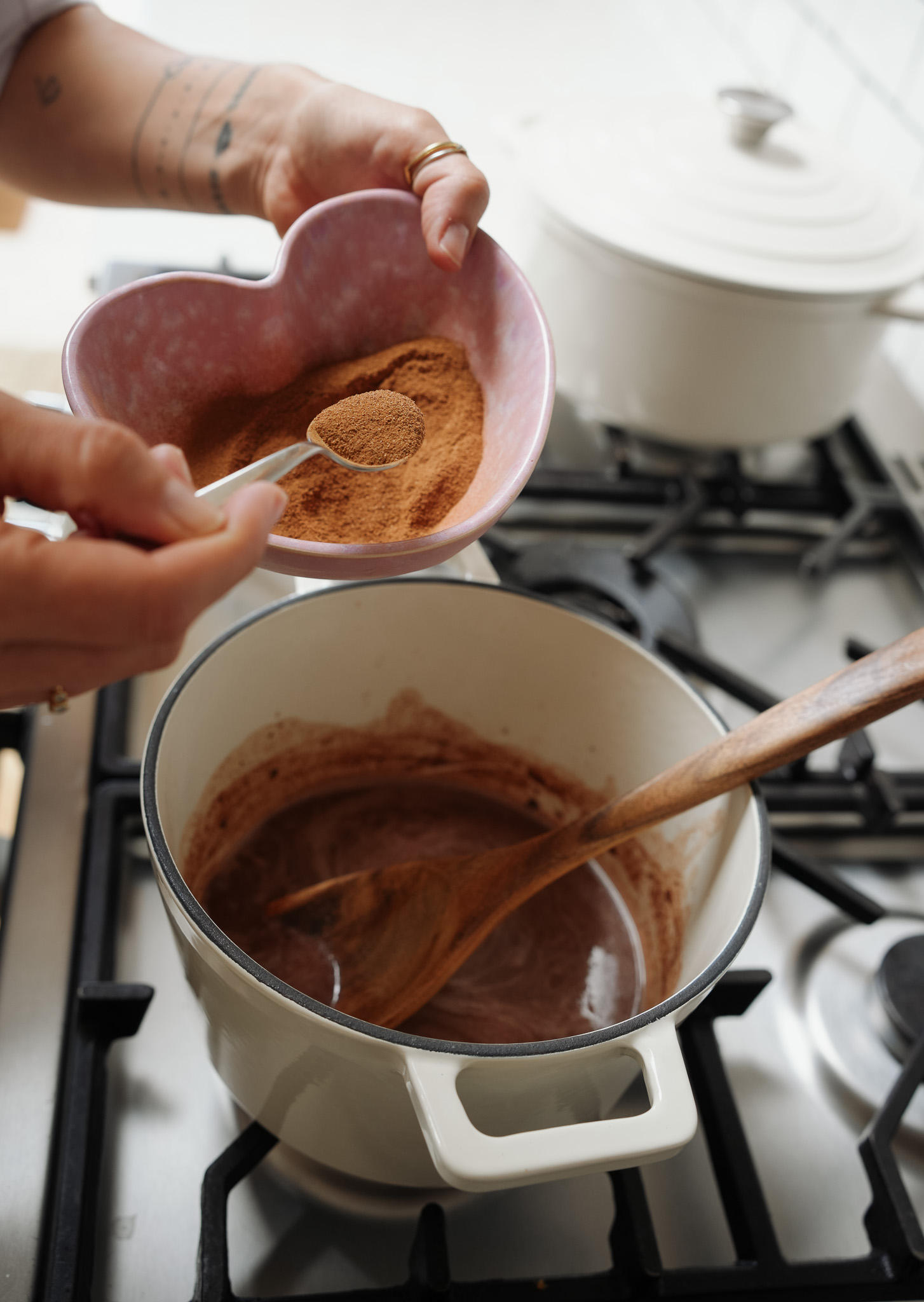
Sometimes it is about making a warm drink in the morning, finding ten minutes of quiet before the day begins or creating a small ritual that helps us step away from our phones, our responsibilities and the constant feeling that there is something else we ought to be doing.
One of the reasons I developed our range of I AM BEING ceremonial cacao products was to make this experience more accessible, without losing the care and quality that go into producing the cacao itself.
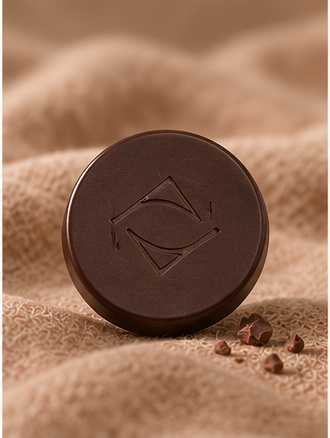
Our cacao is sourced from Flores Island in Indonesia and made from one single ingredient, pure cacao, which we offer in our traditional 500g block as well as our newer 500g cacao coins and three-coin travel pouch.
The coins were developed to make preparation a little easier, particularly for people who want to incorporate cacao into everyday life without needing to chop or weigh a block each time.
Each coin weighs approximately 9.5g, allowing people to choose a serving that suits their preferences and circumstances, while the travel pouch makes it easier to take cacao away with you.
If you are looking to buy ceremonial cacao in the UK, I would encourage you to think about the quality of the cacao, the transparency of its sourcing and the way you intend to use it, rather than feeling that you need to follow somebody else’s idea of the perfect ritual.
I love the idea that cacao can be meaningful without becoming complicated.
You don’t need a beautiful altar, a particular playlist or an elaborate morning routine to enjoy it. You can simply make a cup, sit somewhere comfortable and give yourself a little time.
And I think there is something quite lovely about that.
Experiencing a cacao ceremony in London and across the UK
If you are considering studying cacao but have never attended a ceremony, I would really encourage you to experience one first, because there is something valuable about understanding how it feels to be a participant before beginning to think about facilitating for others.
At I AM BEING, we offer cacao ceremonies in London, alongside private and bespoke experiences and selected events elsewhere in the UK, bringing together cacao with practices such as meditation, sound healing, breathwork, restorative movement and journalling.
Every ceremony is a little different, depending on the theme, the group and the experience we are creating, but the intention remains the same: to offer people an opportunity to step away from the demands of everyday life and spend some time reconnecting with themselves and one another.
I think attending different ceremonies can also be a wonderful way to begin discovering what resonates with you.
You might find that you love a particular approach to meditation, or that you feel more comfortable in a smaller group. You might discover that you enjoy the combination of cacao and sound, or that you prefer a ceremony with more movement and interaction.
All of these experiences can help you begin to understand what you might want to create yourself, should you decide to train.
And equally, you might simply discover that you love attending ceremonies and have no desire whatsoever to facilitate one.
That is rather wonderful too.
What I hope the future of cacao facilitation looks like
As more people discover ceremonial cacao and the number of cacao ceremonies across the UK continues to grow, I hope we also see a greater emphasis on education, transparency and professional responsibility.
I would love to see more practitioners asking questions about sourcing, understanding the compounds present in cacao and being confident discussing contraindications and serving sizes.
I would love to see nervous system awareness, consent and boundaries becoming normal parts of facilitator training rather than optional extras.
And I would particularly love to see us move away from some of the exaggerated promises that can appear in the wellness industry, where experiences are sometimes described as though they are guaranteed to heal trauma, transform lives or produce profound emotional breakthroughs.
I understand why this language can be appealing, because we all want to believe that something beautiful might make a meaningful difference to our lives.
And sometimes it does.
But I think there is something far more powerful about offering an experience honestly, without needing to promise what somebody will feel or achieve.
We can create opportunities for reflection, connection and rest without claiming to treat psychological conditions or control somebody’s emotional response.
We can be passionate about cacao while remaining curious about the science.
We can honour its history without claiming traditions that are not our own.
And we can create beautiful, meaningful ceremonies while recognising that the people attending them are individuals, not simply participants in an experience we have designed.
For me, that is what responsible cacao facilitation should look like.
A final thought: it has never really been just about cacao
When I think about why I created the I AM BEING Cacao Practitioner Training, I always come back to the same thing.
Human connection.
I think we are living through a period where people are increasingly connected digitally but can still feel extraordinarily disconnected from themselves and one another, and there is something important about creating opportunities where people can come together without feeling they need to perform, achieve or be anything other than who they are.
Cacao can be a lovely part of creating those opportunities, but I don’t believe the cacao itself is the whole story.
It is the way we welcome somebody into a room, the care we take to understand what we are serving, the thought we put into creating an inclusive environment and the respect we show for somebody else’s experience.
It is being able to sit with silence without feeling the need to fill it, recognising when somebody needs support and knowing when the most appropriate thing we can do is simply allow them some space.
It is understanding that we don’t need to have all the answers, and that becoming a practitioner is not about reaching a point where we somehow know more about another person’s experience than they do.
If anything, I think studying teaches us how much there is still to learn, and how important it is to remain curious, reflective and willing to develop.
I also think it teaches us something rather valuable about ourselves, because the more we understand our own motivations, boundaries and ways of responding to other people, the more confidently we can begin to facilitate in a way that feels genuine.
And perhaps that is what I love most about teaching.
Watching people realise that they don’t need to become somebody else to do this work well.
They don’t need to copy my ceremonies, speak in a particular way or create the kind of experience they think the wellness industry expects them to create.
They simply need the knowledge, the practical foundations and the willingness to keep learning, so that they can begin to discover their own voice and the kind of practitioner they want to become.
Because ultimately, I don’t think the people who come to our ceremonies are looking for somebody extraordinary to tell them how to live their lives.
I think, more often than not, they are simply looking for a little time, a little connection and an opportunity to feel comfortable being themselves.
And if we can offer that with care, integrity and a genuine understanding of the responsibility involved, I think we are doing something rather meaningful.
That, for me, is why studying cacao matters.
Not because a qualification makes us better than anybody else, but because the people who trust us with their time, their attention and sometimes their vulnerabilities deserve us to take that responsibility seriously.
And I think that is a beautiful reason to keep learning.
With love,
Gizelle Renee Founder, I AM BEING
Being. Being together.
Continue your cacao journey with I AM BEING
Become a cacao practitioner
If you are interested in understanding cacao more deeply, developing your facilitation skills and learning how to create meaningful, responsible ceremonies, explore our immersive three-month Cacao Practitioner Training in London. With intentionally small groups, four in-person training days, comprehensive workbooks and practical experience, the programme is designed to give you the foundations to begin finding your own way.
Explore I AM BEING Cacao Practitioner Training
Discover our ceremonial cacao
Our single-ingredient ceremonial cacao from Flores Island, Indonesia, is available in traditional 500g blocks, convenient 500g cacao coins and three-coin travel pouches, making it easier to enjoy cacao in a way that works for you.
Buy I AM BEING Ceremonial Cacao in the UK
Join us for a cacao ceremony
If you would like to experience cacao before considering training, join one of our cacao ceremonies in London or enquire about a private or bespoke gathering.
Discover I AM BEING Cacao Ceremonies
Please note: Cacao ceremonies are wellbeing experiences and are not a substitute for medical or psychological care. Practitioners should obtain appropriate training, insurance and professional guidance relevant to the activities they offer.