Not All Cacao Ceremonies Are the Same: Discovering the Different Ways to Experience Ceremonial Cacao
Discover different types of cacao ceremonies in London, from dance and breathwork to meditation and sound. Find the experience that resonates with you.
Finding the cacao ceremony that feels right for you
One of the things I love most about cacao ceremonies is that no two are ever quite the same. And actually, I think that’s something we should celebrate a little more.
When people hear the words cacao ceremony, they often imagine one particular experience. Perhaps sitting in a circle, drinking a warm cup of ceremonial cacao, closing their eyes and listening to a guided meditation. And whilst that is certainly one way to experience cacao, it’s only one of many.
There are cacao ceremonies centred around ecstatic dance, movement, music, breathwork, meditation, sound healing, silence, journalling, connection, creativity and even spending time in nature. Some are wonderfully energetic and expressive, whilst others are deeply restful and introspective.
And here’s something I really want to say.
If you’ve attended a cacao ceremony before and it didn’t resonate with you, please don’t assume that cacao ceremonies aren’t for you.
Perhaps you wanted more movement. Perhaps you found the music too loud, the sharing too personal, the meditation too long or the atmosphere a little overwhelming. Equally, perhaps you attended something full of dancing and expression when what you really needed was somewhere quiet to rest.
Neither experience is wrong. Neither facilitator is necessarily better. They’re simply different approaches to working with the same beautiful ingredient.
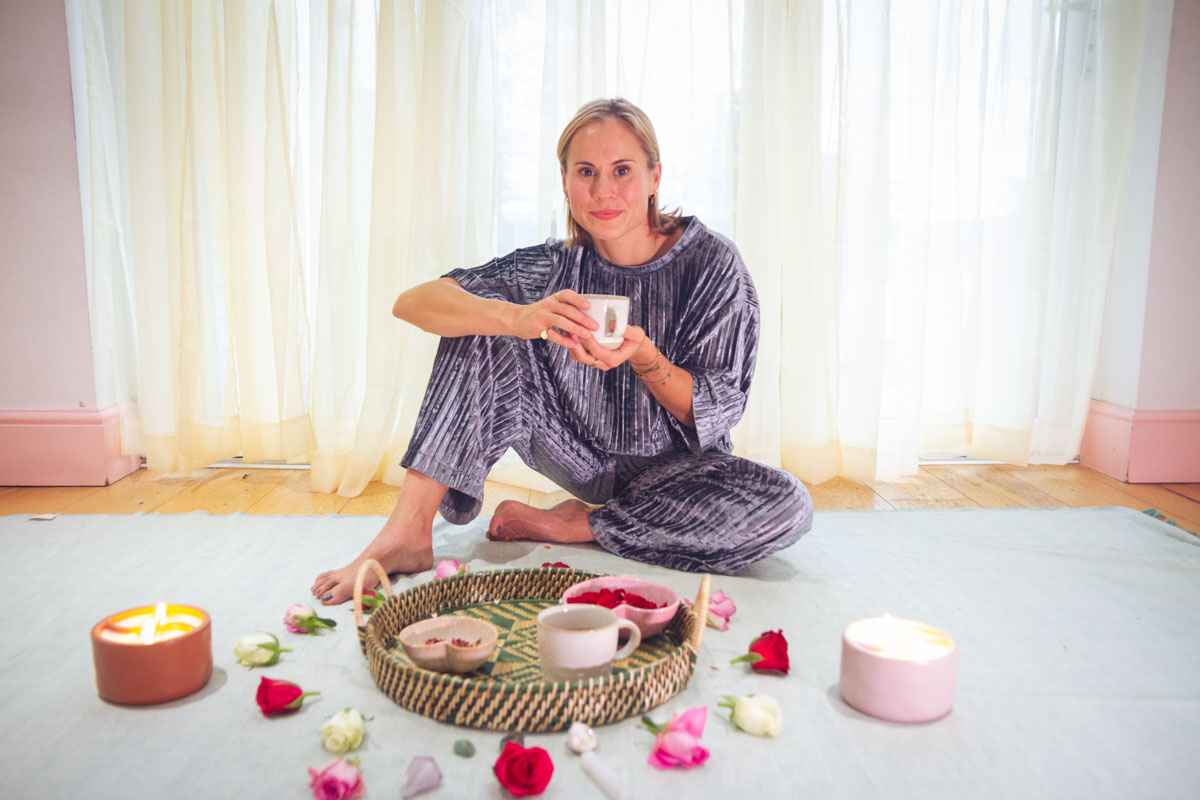
At I AM BEING, my cacao ceremonies in London are intentionally gentle. We explore meditation, restorative practices, breathwork, journalling, connection and sound. My approach is very much about slowing down, becoming present and creating space to simply be.
But if you prefer to move your body, dance freely and release through movement, my ceremonies might not be the ones that resonate most with you. And that’s absolutely fine.
In fact, I’d actively encourage you to experience different cacao ceremonies, meet different facilitators and explore different approaches until you discover what feels right.
I know that’s perhaps not the most conventional thing to say when you’re running your own cacao ceremonies in London, but I genuinely believe wellbeing should never be about convincing somebody that one particular practice is the answer for everyone.
It’s about helping people discover what supports them.
And sometimes, that means trying something different.
What actually is a cacao ceremony?
Before exploring the different types of cacao ceremonies, I think it’s worth understanding what we’re actually talking about.
A cacao ceremony is an intentional gathering centred around drinking ceremonial cacao, often accompanied by practices designed to encourage reflection, connection, presence or emotional expression.
Ceremonial cacao is typically made from minimally processed cacao mass, retaining its naturally occurring cocoa butter and many of the compounds found within the cacao bean.
At I AM BEING, we use our own 100% ceremonial-grade cacao, sourced from Flores Island in Indonesia. It’s a single-ingredient cacao that we have carefully selected for its quality, provenance and beautiful, smooth flavour.
Cacao contains theobromine, a naturally occurring stimulant related to caffeine, alongside minerals and various plant compounds. Although cacao is sometimes described as heart-opening, I think it’s important to distinguish the beautiful personal experiences people report from what science can confidently tell us.
The experience of drinking cacao can feel comforting, uplifting or grounding, but those feelings are influenced by much more than the cacao itself.
The environment, music, facilitator, people around us, our expectations and the practices we engage in all contribute.
For me, that’s part of what makes cacao ceremonies so interesting.
We’re not simply drinking something. We’re making time for ourselves, often in a world where that can feel surprisingly difficult.
And depending on how a ceremony is structured, that time can support us in very different ways.
1. Cacao and ecstatic dance: freedom through movement
Let’s begin with perhaps one of the most expressive forms of cacao ceremony: ecstatic dance.
Ecstatic dance ceremonies typically combine ceremonial cacao with music and free-form movement. Rather than following choreography or worrying about what anybody else thinks, participants are invited to move however their bodies feel comfortable moving.
Some people dance energetically, others sway gently, and some might spend part of the experience sitting or lying down.
The intention is often to move away from self-consciousness and towards a greater sense of freedom.
From a psychological perspective, dance and movement can offer some wonderful benefits.
Research into dance-based interventions suggests they may support mood, emotional expression, body awareness and psychological wellbeing. Moving to music can also provide an opportunity to express feelings that might be difficult to articulate through words.
And I think that’s an important point.
Not everybody processes their emotions by sitting quietly and reflecting.
Some people need movement. Some people need music. Some people need to feel their bodies doing something rather than their minds trying to understand everything.
For those who spend much of their day sitting, thinking, planning and analysing, the opportunity to move without a particular outcome can feel incredibly freeing.
Of course, ecstatic dance won’t resonate with everyone. For some people, dancing in a room full of strangers might feel intimidating rather than liberating.
And that’s okay too.
2. Cacao and meditation: finding stillness in a busy world
This is where my own approach to cacao ceremonies naturally begins.
I have always been drawn to the quieter moments, the spaces where we can soften, slow down and begin to notice what’s happening within us.
Cacao and meditation ceremonies usually involve drinking ceremonial cacao before moving into a guided or silent meditation practice.
Some facilitators use visualisation, others focus on body awareness, compassion, gratitude or mindfulness.
What I particularly love about meditation is that it doesn’t ask us to achieve anything.
We spend so much of our lives working towards something. A deadline, a goal, a result, a better version of ourselves.
Meditation offers something different.
It invites us to notice what’s already here.
Studies of mindfulness-based practices have found benefits for stress, anxiety and emotional wellbeing, although individual experiences vary and meditation isn’t necessarily suitable or enjoyable for everybody.
One of the things I often explain during my cacao and meditation ceremonies in London is that meditation doesn’t mean switching off your thoughts.
Our minds think. That’s what they’re designed to do.
Instead, meditation can help us develop a different relationship with those thoughts, noticing them without automatically becoming caught up in every one.
For somebody who feels mentally overwhelmed, this can be an incredibly valuable skill.
And when combined with the warmth of ceremonial cacao, a supportive environment and time away from everyday distractions, meditation can become a lovely way to reconnect with ourselves.
Not by becoming somebody different, but by giving ourselves permission to be exactly where we are.
3. Cacao and sound healing: allowing ourselves to receive
Sound is another practice that features heavily within my work at I AM BEING.
I use alchemy crystal singing bowls, alongside other carefully selected instruments, to create immersive sound experiences designed to encourage rest and reflection.
Cacao and sound bath ceremonies typically begin with drinking cacao and setting an intention, followed by a period of lying or sitting comfortably whilst listening to the sounds.
Some facilitators incorporate guided meditation, whilst others allow the sound to become the primary focus.
What I love about sound is that it gives the mind something gentle to follow.
For people who find traditional meditation challenging, listening to changing tones and textures can sometimes feel more accessible than sitting in silence.
Sound-based relaxation practices have shown promising findings for perceived stress, mood and anxiety, although the scientific evidence remains limited and we should be careful about making claims that particular frequencies heal specific conditions.
The benefits don’t need to be exaggerated to be meaningful.
Sometimes, simply lying down in a beautiful space, closing our eyes and having absolutely nothing expected of us is powerful enough.
In my own ceremonies and sound bath sessions in London, I pay particular attention to the atmosphere, pacing and volume.
Not everybody experiences sound in the same way, and what feels immersive to one person may feel overstimulating to another.
That’s why I believe sound should always be offered with sensitivity and choice.
For me, sound isn’t about creating the loudest or most dramatic experience.
It’s about creating an environment where people feel comfortable enough to rest.
4. Cacao and breathwork: reconnecting with the body
Our breath is something we carry with us every moment of every day, yet so many of us rarely pay attention to it.
Cacao and breathwork ceremonies bring awareness to breathing patterns, often through guided exercises that explore rhythm, pace and the relationship between breath and emotion.
There are many different styles of breathwork, and it’s important to understand that they don’t all have the same effects.
Gentle, slow breathing practices may help reduce perceived stress and support relaxation. Research suggests that certain paced-breathing techniques can influence aspects of autonomic nervous system activity, although responses vary.
More intense breathing practices can create very different physical sensations and may not be suitable for everybody.
At I AM BEING, I tend towards functional, gentle and accessible breathwork.
I’m particularly interested in how the breath can help us notice when we’re holding tension, rushing or struggling to settle.
Sometimes the most valuable exercise isn’t complicated at all.
It’s simply becoming aware of how we’re breathing.
Perhaps our shoulders are raised. Perhaps we’re taking shallow breaths. Perhaps we’re moving from one task to another without giving ourselves a moment to settle.
A guided breathing practice can create an opportunity to interrupt that pattern.
When combined with cacao, it can become a beautiful invitation to move from doing into being.
Breathwork can also be explored through a bespoke private wellbeing session, where the pace and techniques can be adapted to individual needs and preferences.
I would always encourage people to ask facilitators what kind of breathwork they practise, particularly if they are pregnant or have cardiovascular, respiratory or other relevant medical conditions.
A good ceremony should make room for individual needs rather than assuming that one technique suits everybody.
5. Silent cacao ceremonies: discovering the value of doing nothing
Now, this is one that I think can initially feel quite daunting.
A silent cacao ceremony might involve drinking cacao mindfully, sitting quietly, walking in nature or spending an extended period without conversation.
There may be minimal guidance, or none at all.
And for some people, the idea of sitting in silence with their own thoughts can feel more challenging than dancing in front of a room full of strangers.
But silence offers something we rarely experience in modern life.
Space without constant input.
We’re surrounded by notifications, conversations, music, television, responsibilities and an endless stream of information.
Even our moments of rest are often filled with something.
Silence allows us to notice what happens when that stimulation begins to fall away.
Mindful silence can encourage self-reflection, awareness and a sense of calm for some people. For others, especially those experiencing significant anxiety or difficult memories, extended silence may feel uncomfortable.
Neither response is a failure.
I think this is particularly important within the wellbeing world, where we sometimes unintentionally suggest that everybody should find the same practices peaceful.
We don’t.
And we shouldn’t have to.
A silent cacao ceremony may be exactly what one person needs, whilst somebody else might feel much more supported by gentle music or conversation.
Both experiences are valid.
6. Cacao and music: the emotional language we all understand
Music has an extraordinary ability to connect us with memories, feelings and experiences.
Sometimes a particular song can take us back years in an instant. Other times, a piece of music can shift our mood without us fully understanding why.
Cacao ceremonies incorporating music can take many forms.
Some include live musicians, acoustic instruments, singing, chanting or carefully curated playlists.
Others invite participants to sing together or listen quietly.
Music can influence emotional experience, attention and perceived stress, and research has explored its potential benefits for mood and wellbeing.
What I find particularly interesting is how personal our responses to music can be.
A piece that brings one person comfort might make another feel emotional. A rhythm that energises somebody might feel overwhelming to somebody else.
This is why I think the musical choices within a cacao ceremony matter so much.
They’re not simply background noise.
They help shape the emotional atmosphere.
In my own ceremonies, I tend to choose music that supports a gentle, reflective experience, allowing people to settle rather than feel stimulated.
But there are wonderful facilitators who work with much more expressive musical journeys.
Again, neither is right or wrong.
It’s about what resonates with you.
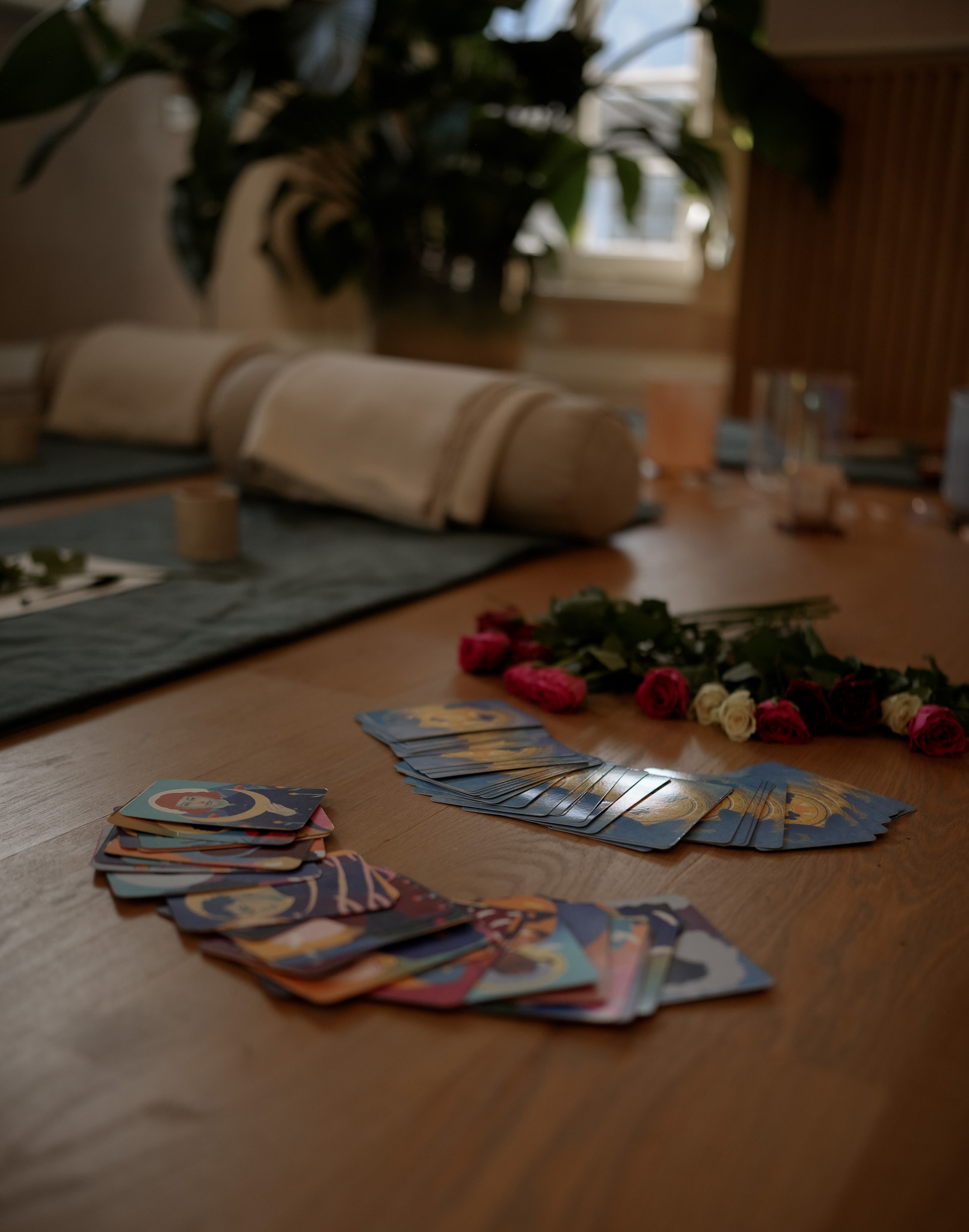
7. Cacao and journalling: giving our thoughts somewhere to go
Journalling is one of my favourite practices to incorporate into a cacao ceremony.
Not because everybody needs to write pages and pages about their feelings, but because sometimes putting something onto paper can help us understand it differently.
Cacao and journalling ceremonies often include reflective questions, intention setting, gratitude exercises or opportunities for free writing.
Some facilitators use specific themes, such as transitions, relationships, self-compassion or personal growth.
Others simply invite participants to write whatever comes to mind.
Expressive writing has been studied for its potential psychological benefits, with research suggesting modest and variable effects depending on the individual and the approach used.
For me, the beauty of journalling is that it creates a little distance between our thoughts and ourselves.
Something that feels enormous when it’s circulating around our minds can sometimes become easier to explore when we see it written down.
It can also help us notice patterns.
Perhaps we keep returning to the same worry. Perhaps there’s something we’re grateful for that we haven’t acknowledged. Perhaps we discover that what we thought we needed isn’t quite what we actually want.
And sometimes, we might write absolutely nothing.
That’s fine too.
There should never be pressure to produce a revelation during a cacao ceremony.
8. Cacao sharing circles: the importance of human connection
Some cacao ceremonies place community and conversation at their centre.
Participants may be invited to sit in a circle, introduce themselves, share an intention or speak about something they’re experiencing.
For some people, these sharing circles can be incredibly meaningful.
We live in a world where we’re more digitally connected than ever, yet many people still experience loneliness or a lack of genuine connection.
Having an opportunity to speak and be listened to without interruption can feel unusual.
And hearing somebody else describe an experience we’ve quietly been carrying ourselves can remind us that we’re not alone.
Supportive social relationships are strongly associated with wellbeing, and opportunities for meaningful connection can contribute positively to how we feel.
But I also believe that sharing should always be optional.
Not everybody wants to speak about their personal experiences in a room full of people they’ve just met.
Some people feel comfortable listening.
Some prefer to reflect privately.
And some may find group sharing emotionally overwhelming.
A well-held cacao ceremony should respect those differences.
At I AM BEING, I value connection enormously, but I never believe somebody should have to disclose something personal to demonstrate that they’re participating.
Sometimes simply being together is enough.
9. Cacao and gentle movement: connecting through the body
Between complete stillness and ecstatic dance, there’s a beautiful middle ground.
Some cacao ceremonies incorporate restorative yoga, slow movement, stretching, somatic awareness or gentle movement inspired by yoga.
These experiences can be particularly appealing to people who want to connect with their bodies without engaging in an energetic practice.
Gentle movement may help with body awareness, relaxation and perceived stress, whilst yoga-based practices have been associated with improvements in several aspects of psychological wellbeing.
I particularly enjoy incorporating restorative practices because they offer an alternative to the idea that movement must always involve effort.
Sometimes movement can be slow.
Sometimes it can be subtle.
Sometimes it can involve noticing where we’re holding tension and allowing ourselves to soften.
And sometimes the most supportive thing we can do is stop moving altogether.
This is something we also explore in our restorative yoga and sound sessions in Clapham, where gentle movement and stillness come together.
One of the things I often return to in my teaching is the importance of choice.
Our bodies don’t feel the same every day.
A practice that feels nourishing one week might feel uncomfortable the next.
The more we learn to listen to those changes, the more we can begin to approach our wellbeing with curiosity rather than expectation.
10. Cacao and nature: reconnecting with the world around us
Not all cacao ceremonies take place inside a studio.
Some are held in gardens, forests, parks, retreat spaces or other natural environments.
These ceremonies may include mindful walking, meditation, grounding exercises, reflection or simply sitting quietly outdoors with cacao.
There is growing evidence that spending time in natural environments can support psychological wellbeing and may help reduce perceived stress.
For me, nature offers a beautiful reminder that not everything needs to happen quickly.
Trees don’t rush to grow.
The seasons don’t apologise for changing.
And the natural world continues through periods of activity, rest, growth and renewal.
I often draw on the elements of the earth within my meditations because they offer such accessible ways to reflect on our own experiences.
Earth can remind us of stability.
Water can invite us to consider change.
Air can bring awareness to our breath.
Fire can represent warmth, creativity or transformation.
These are metaphors rather than scientific explanations, but they can provide meaningful starting points for personal reflection.
And sometimes, being outdoors with a warm cup of cacao is simply a lovely way to spend an afternoon.
That in itself is reason enough.
11. Cacao and creativity: making space for expression
Another beautiful approach is to combine cacao with creative practices.
This might include painting, drawing, poetry, letter writing, storytelling, collage or other forms of artistic expression.
What I particularly love about these ceremonies is that they invite people to explore creativity without necessarily focusing on the finished result.
So much of our adult lives revolves around performance and productivity.
We’re often evaluating whether something is good enough, successful enough or worth our time.
Creative cacao ceremonies can offer an opportunity to move away from those expectations.
Research into arts participation suggests that creative engagement may support wellbeing, emotional expression and social connection, although benefits depend on the activity and individual.
One idea I particularly love is the exchange of kindness through handwritten letters.
Imagine sitting with a warm cup of cacao, reflecting on what somebody else might need to hear, and writing a few thoughtful words to a stranger.
Those letters are then exchanged, and everybody leaves with a message of kindness from somebody they may never meet again.
There’s something incredibly moving about that.
Not because it needs to be a profound experience, but because it reminds us how much a small act of care can mean.
Sometimes wellbeing is less about looking inward and more about remembering our connection to other people.
12. Cacao ceremonies with Reiki and other restorative practices
Some cacao ceremonies also incorporate Reiki, energy-based traditions or other gentle restorative practices.
As a Reiki Master and Teacher, this is another area of my work that I feel personally connected to.
Reiki is a complementary practice originating in Japan, commonly involving light touch or hands held near the body.
Whilst people often describe feeling relaxed or comforted during Reiki sessions, scientific evidence does not establish the existence of a measurable healing energy or support claims that Reiki can treat medical conditions.
I think it’s important to be transparent about that.
We can appreciate the personal meaning of a practice without making promises that go beyond the evidence.
Within a cacao ceremony, Reiki-inspired practices might be combined with meditation, quiet reflection and sound to create a gentle, restful atmosphere.
For somebody who enjoys stillness, this may feel particularly supportive.
For somebody who prefers movement, music and expression, it might feel too quiet.
I also offer private sessions at I AM BEING, where Reiki can be experienced on its own or alongside other modalities in a completely bespoke session.
And that’s the wonderful thing about having different options available.
Why the facilitator matters just as much as the ceremony
Something I think we should talk about more openly is the role of the facilitator.
Two people can offer what appears to be exactly the same cacao ceremony, using the same cacao, music and practices, yet create entirely different experiences.
The way somebody welcomes you, explains the session, creates boundaries, responds to individual needs and holds the group can make an enormous difference.
This is one of the reasons I feel so strongly about proper cacao practitioner training.
Understanding cacao itself is important, including sourcing, composition, preparation, dosage and potential contraindications.
But facilitating a ceremony involves much more than making a beautiful cup of cacao.
It involves understanding people.
It involves recognising that participants may arrive carrying stress, grief, anxiety, exhaustion or difficult experiences.
It involves knowing how to create an environment that feels welcoming without promising emotional transformation.
And importantly, it involves respecting boundaries.
A facilitator should never pressure somebody to share, participate in physical contact, undertake intense breathwork or push through discomfort.
Consent and choice should be central to the experience.
These principles are at the heart of our I AM BEING Cacao Practitioner Training, an immersive programme exploring the history and composition of cacao, ethical sourcing, the nervous system, safe facilitation, consent, boundaries and the practical skills needed to guide others responsibly.
I believe the best facilitators are those who understand that their role isn’t to create a dramatic experience for everybody.
It’s to offer a thoughtful environment in which people can explore what feels right for them.
And that will look different for every person who walks through the door.
What if your first cacao ceremony wasn’t for you?
I really want to return to this because it’s perhaps the most important message of this entire article.
If you’ve attended a cacao ceremony and didn’t particularly enjoy it, please don’t feel that you’ve somehow missed the point.
Perhaps you found the meditation difficult.
Perhaps the music wasn’t your style.
Perhaps you wanted more conversation, or less.
Perhaps you were expecting something energetic and instead found yourself lying quietly for an hour.
Or perhaps you simply didn’t connect with the facilitator.
All of those things are completely normal.
Think about yoga for a moment.
Some people adore a strong, dynamic vinyasa practice. Others prefer restorative yoga, Yin or a gentle Hatha class.
We wouldn’t necessarily attend one yoga class, decide it wasn’t for us and conclude that every style of yoga must feel exactly the same.
Cacao ceremonies are no different.
The cacao may be the common thread, but the experience surrounding it can vary enormously.
And I think there’s something quite beautiful about that diversity.
It means there is room for different personalities, preferences and ways of experiencing wellbeing.
You don’t have to love silence.
You don’t have to enjoy dancing.
You don’t have to feel comfortable sharing your emotions.
You don’t even have to particularly enjoy meditation.
You can simply find a ceremony that meets you where you are.
And if you discover that cacao ceremonies aren’t something you enjoy at all, that’s perfectly okay too.
Wellbeing should never become another thing we feel we’re supposed to do.
Finding cacao ceremonies in London with I AM BEING
If you’re looking for cacao ceremonies in London and feel drawn towards something gentle, reflective and restorative, I would love to welcome you to I AM BEING.
My ceremonies are held in beautiful spaces, including our studio at 7 Lion Yard in Clapham, South West London, and at selected venues across the city.
They bring together ceremonial cacao, guided meditation, gentle breathwork, journalling, connection and immersive sound.
My intention is to create an experience where you can leave behind some of the noise of everyday life and spend a little time reconnecting with yourself.
There’s no expectation to have a particular experience.
No pressure to share.
No requirement to arrive feeling calm, positive or ready for some enormous personal breakthrough.
You can arrive exactly as you are.
Some people leave feeling rested. Others feel reflective, emotional, uplifted or simply grateful to have taken some time for themselves.
And sometimes, somebody might discover that they would actually prefer a ceremony with more movement, music or dancing.
I would genuinely encourage them to explore that.
Because I don’t believe my way is the only way.
It’s simply the way that feels authentic to me and the way I love to share cacao with others.
You can explore our upcoming cacao ceremonies, sound baths and restorative experiences in London and choose a session that feels right for you.
Can you create your own cacao ceremony at home?
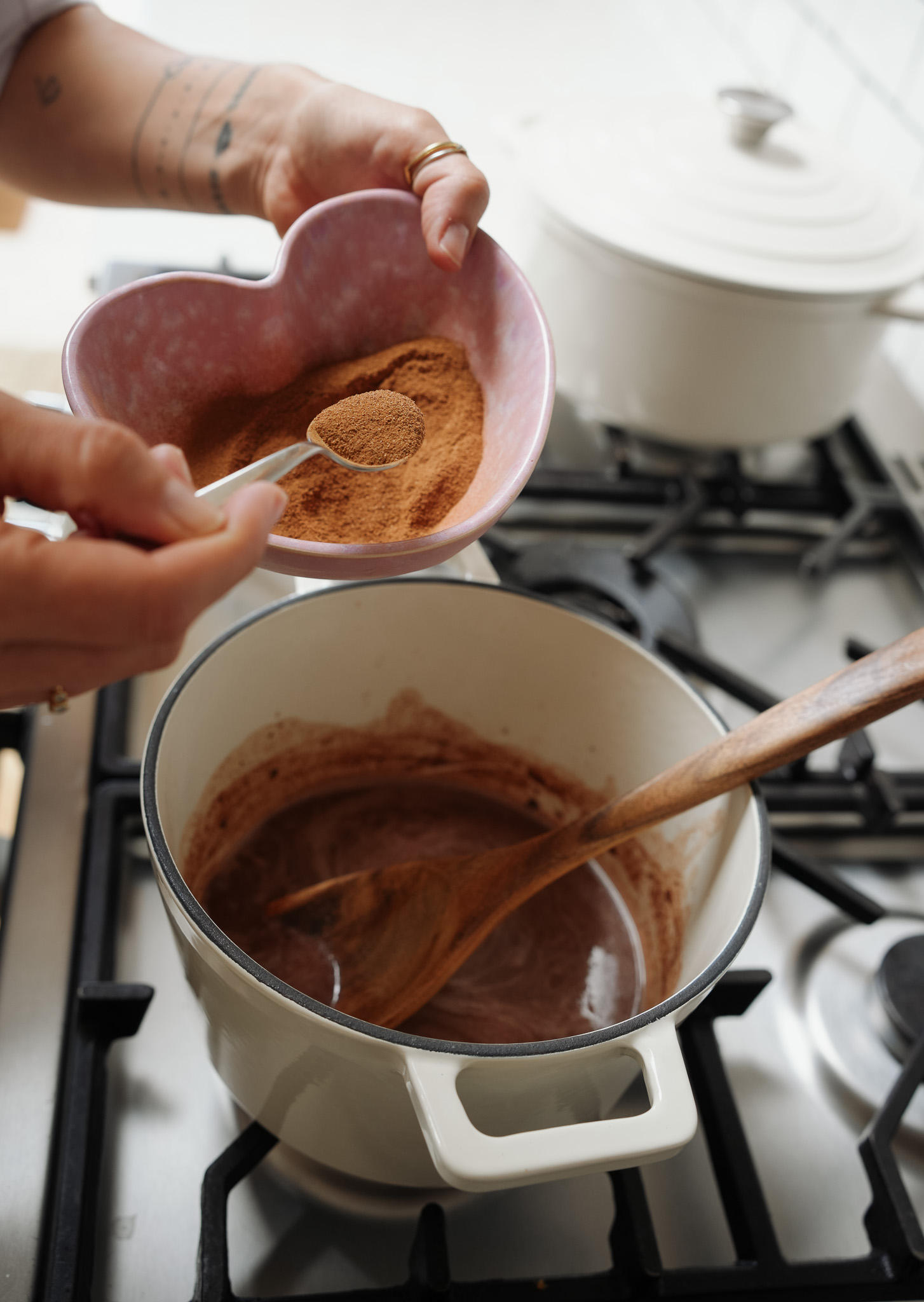
Absolutely. And I think this is another lovely way to explore what cacao means to you.
A cacao ceremony doesn’t necessarily need to involve a large group or a particular structure.
You might choose to prepare a cup of cacao in the morning, sit quietly for a few minutes and reflect on the day ahead.
Perhaps you enjoy drinking cacao before journalling, listening to music, meditating or practising gentle yoga.
Or perhaps you simply want to enjoy the flavour and warmth without attaching any particular meaning to it.
All of those approaches are perfectly valid.
Our I AM BEING ceremonial cacao collection includes traditional cacao blocks and convenient, pre-measured cacao coins, making it easier to prepare cacao at home.
Our cacao coins weigh 9.5g each, so you can choose a serving that suits your preferences and the time of day.
For me, one of the most beautiful things about cacao is that it can become part of everyday life without needing to become another complicated routine.
It can simply be a moment of care.
A pause between responsibilities.
An opportunity to put your phone down and spend a little time with yourself.
And sometimes that’s all we really need.
A final thought: there’s no right way to experience cacao
If there’s one thing I hope you take away from this article, it’s that cacao ceremonies are wonderfully varied.
From the freedom of ecstatic dance to the quiet reflection of meditation, from the emotional connection of music to the gentle rhythm of breathwork, each experience offers something different.
And each can have its own value.
Some of us find clarity through movement.
Some find comfort through sound.
Some feel connected through conversation.
And others discover that what they really need is a little silence.
Our needs can change, too.
What resonates with you today might be completely different from what you need six months from now.
So explore.
Be curious.
Try different cacao ceremonies in London, meet different facilitators and give yourself permission to discover what feels good for you.
You don’t have to find your perfect ceremony on the first attempt.
And you certainly don’t have to love every experience.
At I AM BEING, I’ll continue creating the gentle, restorative cacao ceremonies that feel true to me, welcoming those who resonate with that approach whilst celebrating the many other beautiful ways people choose to gather around cacao.
Because ultimately, I don’t think this is about finding the right ceremony.
It’s about finding the right ceremony for you.
And perhaps more importantly, remembering that wellbeing doesn’t have to look the same for everybody.
If you would like to join me, you can book your next cacao ceremony in London, discover our ceremonial cacao collection or explore our cacao practitioner training.
With love,
Gizelle Renee Founder, I AM BEING
Being and being together.
Please note: Ceremonial cacao contains naturally occurring stimulants, including theobromine and caffeine. If you are pregnant, taking medication or managing a health condition, check whether cacao and any accompanying breathwork or movement practices are appropriate for you. Cacao ceremonies and complementary wellbeing practices are not substitutes for medical or psychological care.