The First Time I Drank Ceremonial Cacao: The Cup That Changed My Life
The first time I drank ceremonial cacao it sparked a fascination with the science, history and magic of cacao that would ultimately change my life.
It is quite extraordinary when you look back at your life and realise that something seemingly insignificant was, in fact, the beginning of something much bigger.
For me, it was a cup of cacao.
There was no grand introduction, no elaborate ceremony and no explanation of what I was about to experience. I was attending a sound bath when I was handed a small cup of ceremonial grade cacao. I didn’t really know what ceremonial cacao was, why it was being served or what it contained.
As far as I was concerned, someone had given me a rather interesting cup of hot chocolate before I lay down to listen to some singing bowls.
Little did I know that this would become the beginning of a relationship with a plant that would influence my career, my understanding of wellbeing, my daily rituals and eventually lead me to create my own ceremonial cacao brand and train others to work with it.
But what fascinated me most about that first experience was not necessarily the cacao itself.
It was what I felt within my body, and the overwhelming curiosity to understand why.
My first experience of ceremonial grade cacao
I have always been fascinated by the human mind and body. Having studied Applied Psychology at university, I naturally find myself wanting to understand why we think, feel and behave in certain ways.
I am probably one of those slightly irritating people who wants to know the science behind everything, even when something feels wonderfully magical.
So, when I drank ceremonial cacao for the first time and began to notice changes within my body, my curiosity was immediately awakened.
There was a sense of warmth within my chest, a heightened awareness of my body and a feeling of being both relaxed and remarkably present.
I felt softer within myself, yet mentally awake. It was different from the stimulation I associated with coffee and different from the relaxation I had experienced through meditation alone.
There was something about the experience that I couldn’t quite put into words.
As I lay there listening to the sounds surrounding me, I became increasingly aware of what was happening internally. My breath, my heartbeat, the physical sensations within my body and the emotions that seemed to have a little more room to be felt.
It was as though the volume of the outside world had been turned down, allowing me to become more aware of my internal world.
And yet, nobody had explained what I had consumed.
What was in this extraordinary drink? Why might I be feeling this way? How much had I been given? Was what I was experiencing related to the cacao, the sound bath, my surroundings or a combination of everything?
I wanted answers.
And perhaps, without realising it at the time, that was the beginning of my journey with Mother Cacao.
What is ceremonial grade cacao?
One of the first things I discovered was that ceremonial cacao is very different from the chocolate products most of us have grown up consuming.
Pure ceremonial grade cacao is made from whole cacao beans, which are fermented, dried, roasted and ground into a rich cacao mass, retaining their naturally occurring cocoa butter and many of their original compounds.
Unlike many commercial hot chocolate powders, pure cacao contains no added sugar, milk powders, emulsifiers or artificial flavourings.
It is simply cacao.
Although the term ‘ceremonial grade’ does not have a universally regulated definition, it is commonly used to describe cacao that has been thoughtfully sourced and prepared for drinking, often within an intentional or ceremonial setting.
For me, the quality of ceremonial cacao goes beyond its ingredients. It encompasses its origin, the relationship with the farmers, the growing environment, the fermentation process, the preparation and the respect with which it is shared.
Cacao has a fascinating history spanning thousands of years, particularly within Indigenous cultures across Central and South America, where it has held spiritual, nutritional, social and cultural significance.
Long before chocolate bars and sweetened hot chocolate existed, cacao was already deeply woven into human relationships and traditions.
You can read more about its origins and contemporary uses in our journal, What Is Ceremonial Cacao?.
What happens in your body when you drink ceremonial cacao?
This was the question that really drew me into studying cacao.
I wanted to understand why something derived from a plant could influence the way we experienced our bodies and why so many people described similar sensations after drinking it.
What I discovered was a fascinating combination of naturally occurring compounds, minerals and physiological processes.
The more I studied, the more I appreciated that the science behind cacao did not take away from its magic. If anything, understanding it made the experience even more extraordinary.
Theobromine: a different kind of energy
One of the most interesting compounds found naturally within cacao is theobromine.
The name has its origins in the Greek words associated with ‘food of the gods’, which I find rather wonderful.
Theobromine belongs to the methylxanthine family of compounds, alongside caffeine. However, it generally has a milder stimulating effect on the central nervous system than caffeine.
Theobromine also has effects on the cardiovascular system and can influence blood vessel dilation.
These physiological effects may contribute to some of the sensations people associate with drinking ceremonial cacao, including warmth, increased alertness and a heightened awareness of their heartbeat.
This helped me begin to understand why cacao felt different from my usual cup of coffee.
Rather than seeking energy through another strong coffee, I became curious about this different experience of stimulation.
There is, of course, caffeine naturally present in cacao too, and some people may experience restlessness or palpitations, particularly with larger servings.
Our bodies are wonderfully individual, which is something I continually emphasise within my ceremonies and practitioner training.
Cacao, flavanols and blood flow
Cacao naturally contains flavanols, a group of plant compounds that have been widely studied in relation to cardiovascular function.
Certain cocoa flavanols can support the availability of nitric oxide, a molecule involved in the relaxation of blood vessels and the regulation of blood flow.
I found this particularly fascinating because ceremonial cacao is so often described as a ‘heart-opening’ plant.
Whilst the emotional experience of opening our hearts is not the same as the physiological functioning of our cardiovascular system, understanding the latter gave me another perspective on why people might become more aware of their bodies after consuming cacao.
The amount of flavanols present in cacao varies considerably depending on its origin and how it has been processed, so not every cacao will have the same composition or effects.
For me, this reinforced the importance of understanding not only what cacao is, but where it comes from and how it has been made.
Magnesium and the nervous system
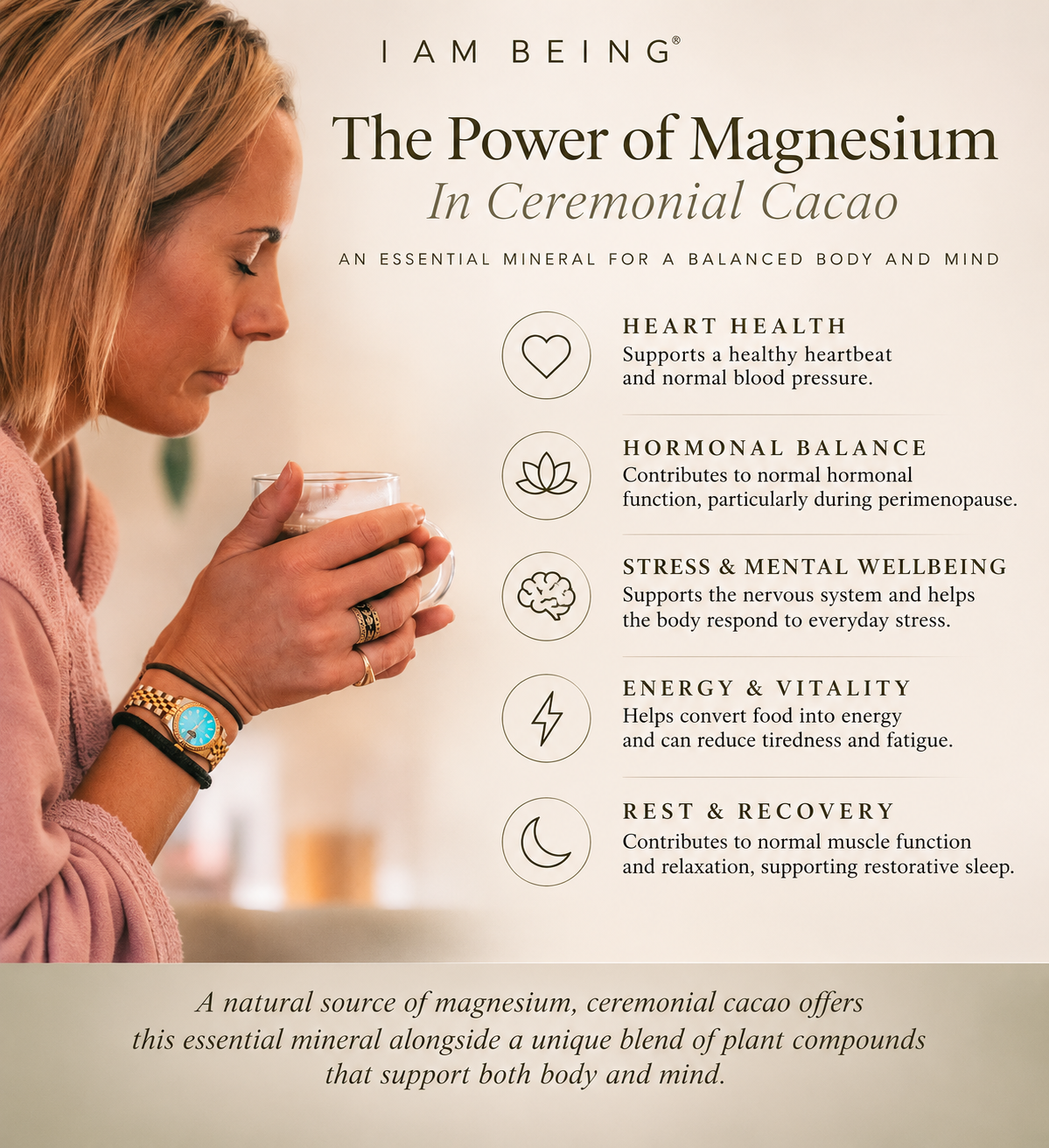
Another reason I became interested in cacao was its naturally occurring magnesium content.
Magnesium is an essential mineral involved in hundreds of biochemical processes throughout the human body. It contributes to normal muscle function, energy metabolism, psychological function and the functioning of the nervous system.
As someone who spent many years working in demanding corporate environments, whilst also navigating motherhood and the seemingly endless responsibilities of everyday life, I became increasingly interested in how we nourish ourselves.
So many of us are extraordinarily good at looking after everyone else, yet remarkably poor at remembering to look after ourselves.
Understanding the nutritional properties of cacao encouraged me to explore how simple daily choices could become part of a much wider commitment to wellbeing.
That does not mean that a cup of cacao will immediately relax your nervous system or correct a nutritional deficiency. But it can form part of a varied, balanced diet and a more intentional approach to everyday nourishment.
Cacao and our happiness chemicals
You will often hear cacao associated with serotonin, dopamine, endorphins and feelings of happiness.
Cacao naturally contains tryptophan, phenylethylamine and small quantities of anandamide, amongst many other compounds.
Anandamide takes its name from the Sanskrit word ananda, meaning bliss, which sounds rather beautiful when we consider the relationship people often describe with cacao.
However, one of the things I feel strongly about as a practitioner is distinguishing between what we know scientifically and what we experience personally.
The presence of these compounds in cacao does not mean that drinking it automatically increases serotonin or dopamine in the brain or produces a predictable emotional response.
Our experience is also influenced by taste, warmth, memory, anticipation, our surroundings and the people we are sharing the experience with.
From a psychological perspective, this is equally fascinating.
Perhaps the beauty of cacao lies not in one individual compound, but in the relationship between the food itself, the ritual surrounding it and the circumstances in which we choose to consume it.
Why I felt so connected to my body
One of the concepts I have become particularly interested in through psychology and my wellbeing training is interoception.
Interoception describes our ability to notice and interpret sensations arising from within our bodies. It includes awareness of our breathing, heartbeat, hunger, warmth, muscle tension and many other internal signals.
We spend so much of our lives directing our attention outwards.
We look at screens, respond to emails, manage responsibilities, look after children, anticipate problems and think about what we need to achieve next.
Rarely do we allow ourselves the opportunity to simply notice what is happening within us.
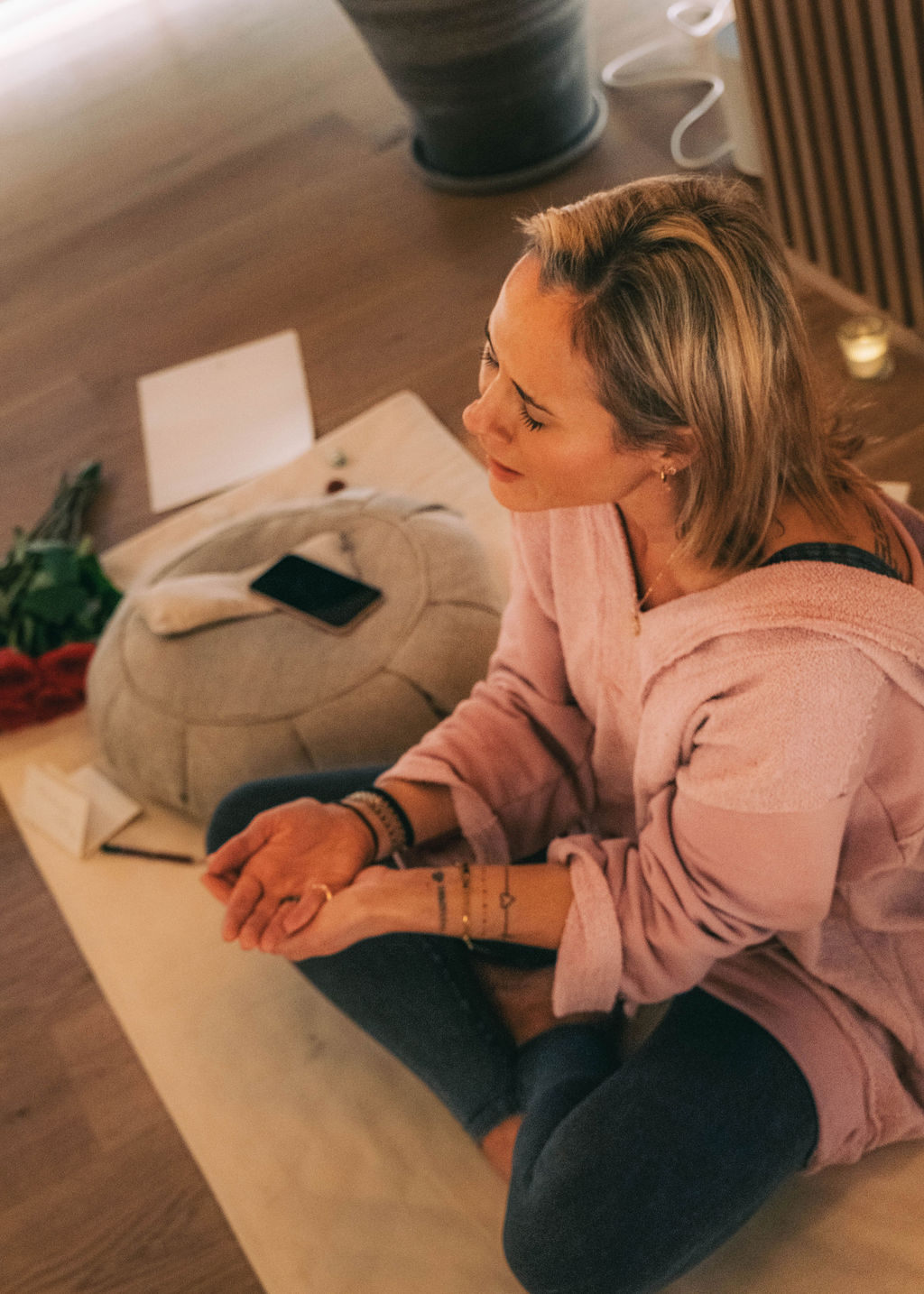
During my first cacao experience, I had been given permission to lie down, close my eyes and do absolutely nothing. The sound bath provided an environment in which I could redirect my attention inwards, and the sensations associated with drinking cacao gave me something to become curious about.
I cannot say with certainty which elements were responsible for everything I felt that day.
But that combination of cacao, sound, stillness and attention certainly inspired me to explore the relationship between physical sensation and emotional experience.
It also made me question how often we ignore what our bodies are trying to communicate.
How often do we recognise that we are exhausted but keep going?
How often do we feel tension but dismiss it?
How often do we answer ‘I’m fine’ without really checking whether we are?
Cacao became part of a practice through which I could begin asking myself those questions.
And, perhaps more importantly, giving myself enough time to listen to the answers.
Why I went on to study ceremonial cacao
After my first experience, I knew that I wanted to understand cacao properly.
I didn’t want to simply repeat what somebody else had told me. I wanted to explore its history, its origins, its composition and its significance to the cultures that had worked with it long before it became popular within Western wellbeing spaces.
I wanted to understand how cacao was cultivated, how the beans were fermented and how different growing environments influenced the final product.
I wanted to understand appropriate serving sizes, individual sensitivities, contraindications and the relationship between cacao and the other practices I was exploring.
Most importantly, I wanted to understand the responsibility that comes with giving cacao to another person.
My journey eventually brought together my background in psychology and my training in ceremonial cacao, Reiki, sound healing, yoga, meditation and functional breathwork.
Each modality offered me a slightly different way of understanding the human experience.
Yoga encouraged me to explore the relationship between movement, breath and awareness. Reiki invited me to explore stillness and presence. Sound introduced me to the experience of deep rest, whilst meditation encouraged curiosity about the workings of the mind.
Cacao became a wonderful thread connecting these different practices.
As my understanding grew, so did my desire to share what I was learning.
Why understanding what we consume matters
I often return to that first cup of cacao and wonder how different my experience might have been if somebody had explained what I was drinking.
I would have loved to know about the farmers who grew it, the history of the plant, the naturally occurring compounds and the sensations I might experience.
I would have loved to understand why cacao was being served alongside a sound bath.
It would have allowed me to approach that experience with greater awareness and make an informed decision about participating.
This is something I am incredibly passionate about today.
When somebody attends one of my cacao ceremonies, I want them to understand what is in their cup.
I want them to feel comfortable asking questions.
I want them to know that they can choose how much they drink, whether they drink it at all and how they wish to participate in the experience.
Cacao is not suitable for absolutely everybody, and its naturally occurring stimulants mean that individual circumstances should always be considered.
Pregnancy, breastfeeding, certain health conditions, medication and sensitivity to stimulants are all reasons to seek appropriate professional advice before consuming larger servings.
Being a responsible facilitator means recognising the limits of our knowledge, rather than feeling that we need to have an answer for everything.
It also means creating an environment where nobody feels pressured to experience something profound.
Why I created my own Cacao Practitioner Training
The creation of the I AM BEING Cacao Practitioner and Facilitator Training came from a genuine desire to help people develop a more informed relationship with cacao.
I wanted to create the training that I would have loved to discover when I first began my journey.
Something that brought together science and spirituality, history and contemporary practice, practical knowledge and personal exploration.
Something that encouraged people to ask questions, rather than simply accept everything they were told.
Over three months, across four immersive in-person training days, we explore the many different aspects of cacao and the art of sharing it responsibly with others.
We study:
- The history and cultural significance of cacao.
- Ethical sourcing, cultivation and production.
- The naturally occurring compounds found within cacao.
- The physiological and psychological aspects of the cacao experience.
- Preparation, recipes and serving sizes.
- Individual sensitivities and safety considerations.
- Intention setting, meditation and ceremony design.
- Consent, boundaries and professional responsibility.
- The art of holding space and developing an authentic facilitation style.
But the training is also about developing a relationship with yourself.
Before we can confidently hold space for others, I believe we need to become more aware of our own intentions, expectations and emotional responses.
We need to recognise that we are not there to fix somebody, rescue them or tell them what their experience means.
Sometimes, our role is simply to create the conditions in which another person feels comfortable enough to be themselves.
That is a skill that extends far beyond cacao ceremonies.
It can influence how we show up as parents, friends, partners, teachers and human beings.
You can explore more about my philosophy and the programme in Why Study Cacao Practitioner Training?.
From one cup of cacao to creating I AM BEING
If someone had told me during that first sound bath that I would one day leave my corporate career, create my own wellbeing company, develop my own ceremonial cacao products and train other practitioners, I would probably have laughed.
Life has a rather wonderful way of surprising us.
Today, I AM BEING brings together everything I have learnt about presence, intention, connection and the relationship between our minds and bodies.
Our ceremonial grade cacao comes from Flores Island in Indonesia, where cacao is cultivated within a biodiverse landscape by hundreds of family farms.
I wanted to create a product that reflected the respect I had developed for this plant throughout my years of studying and working with it.
Something pure, traceable and beautiful in its simplicity.
Our cacao contains one ingredient: 100% cacao.
We offer it in our traditional 500g ceremonial cacao block and our ceremonial grade cacao coins, which I developed to make preparing cacao a little easier within the realities of modern life.
Because, as much as I love the ritual of chopping cacao from a block, I am also a mother, a business owner and somebody who understands that mornings do not always unfold quite as peacefully as we might imagine.
Sometimes, simply finding five uninterrupted minutes to drink something warm feels like an achievement.
And that is absolutely enough.
What happens at an I AM BEING cacao ceremony?
Every cacao ceremony I facilitate is slightly different because the people who arrive, the intentions we explore and the circumstances surrounding us are always different.
However, I always make time to introduce cacao and share some of the knowledge I wish I had been given during my first experience.
Our cacao ceremonies in London bring together freshly prepared cacao with guided meditation, conscious breathing, journalling, reflection and immersive sound using alchemy crystal singing bowls and other instruments.
Sometimes there is laughter. Sometimes there are tears. Sometimes there is simply silence.
Nobody needs to perform, achieve or become anything.
There is no expectation that you will experience an emotional release or have a life-changing realisation.
You are invited to arrive exactly as you are.
What I love most is witnessing people give themselves permission to slow down and noticing how meaningful that can be in a world that continually encourages us to do more.
How to experience ceremonial cacao for the first time at home
You do not need to attend a ceremony to begin developing your own relationship with cacao.
Start simply.
Choose a pure ceremonial cacao that has been thoughtfully sourced, begin with a modest serving and gently melt it into warm water or your favourite milk.
You might choose to add cinnamon, vanilla or a little honey.
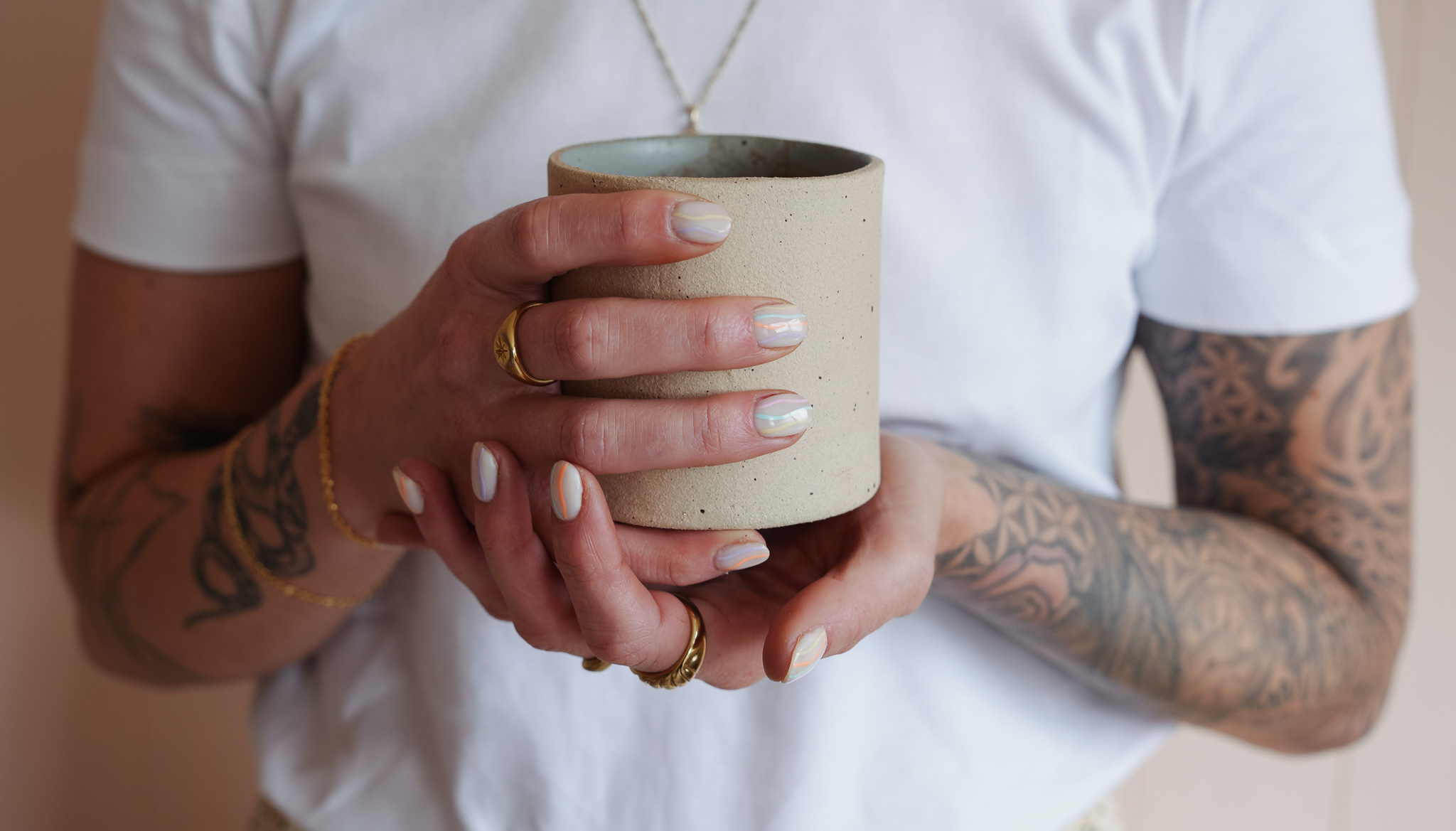
Find somewhere comfortable to sit. Put your phone away for a few minutes and notice the warmth of the cup in your hands, the aroma of the cacao and the richness of its flavour.
As you drink, become curious about your experience without expecting anything particular to happen.
Notice your breathing. Notice how your body feels. Notice where your thoughts go when you are not giving them a task.
Perhaps ask yourself:
How am I feeling today?
What do I need a little more of in my life?
What might I be ready to let go of?
You do not need to find an answer. Sometimes simply creating the opportunity to ask yourself is enough.
For more guidance, explore our journal on ceremonial cacao coins, their benefits and how to prepare them.
The real magic of Mother Cacao
When I speak about cacao as a plant medicine, I am speaking about my personal and spiritual relationship with the plant, rather than suggesting that cacao is a medical treatment.
I believe there is something extraordinary about the relationship human beings have developed with plants over thousands of years.
Their history, chemistry, cultivation and cultural significance offer us so much to learn.
And I believe that understanding the science does not diminish the spiritual or emotional meaning we might discover through working with them.
For me, knowledge deepens appreciation.
The more I understand cacao, the more I respect it.
The more I understand the human body, the more fascinated I become by it.
And the more people I welcome into ceremony, the more I realise how much we all share, despite our seemingly different lives.
We want to feel connected.
We want to feel understood.
We want somewhere we can put down the weight of everything we are carrying, even if only for a little while.
That first cup of cacao led me towards a life I could never have imagined. And now, every time I prepare cacao for somebody experiencing it for the first time, I think back to the person I was when I received mine.
Except this time, I make sure they know what they are drinking.
I tell them about its history, its origins, its naturally occurring compounds and the people who have grown it.
I encourage them to listen to their own bodies, remain curious and approach the experience without expectation.
Because I don’t simply want people to drink cacao.
I want them to understand it, appreciate it and develop a relationship with it that feels authentic to them.
And perhaps, along the way, develop a deeper relationship with themselves.
Begin your own journey with ceremonial cacao
Whether you are curious about experiencing ceremonial cacao for the first time, looking to introduce a more intentional ritual into your everyday life or feeling called to share cacao with others, I would love to welcome you into the world of I AM BEING.
Discover our 100% pure ceremonial grade cacao
Explore our ceremonial cacao coins
Join an immersive cacao ceremony in London
Become a trained cacao practitioner and facilitator
Discover the story behind I AM BEING
You never quite know where your first cup might take you.
I certainly didn’t.
With love and cacao,
Gizelle Renee
Founder, I AM BEING
Being and Being Together.
Ceremonial cacao is a food, not a medical treatment. Individual experiences vary. If you are pregnant, breastfeeding, taking medication or living with a medical condition, seek advice from an appropriate healthcare professional before consuming larger servings of cacao. Cacao ceremonies are not a substitute for medical or psychological care.